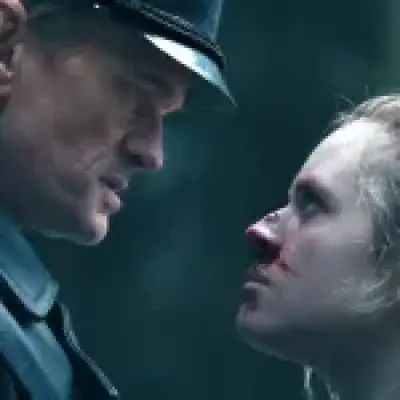
Christine Molloy and Joe Lawlor, Irish artists and film-makers, have created eerie and suspenseful psychological dramas alongside a strand of complex, self-questioning essay movies. They explore ideas about history and identity, ruminating on their creative selves and metatextually examining their own work. Their documentaries often act as a commentary on the fiction feature they are developing at the same time, as seen with The Future Tense, a film about ideas encountered during a planned movie about the pro-IRA English heiress Rose Dugdale, which later became the drama Baltimore.
A deeply personal and stylised dialogue
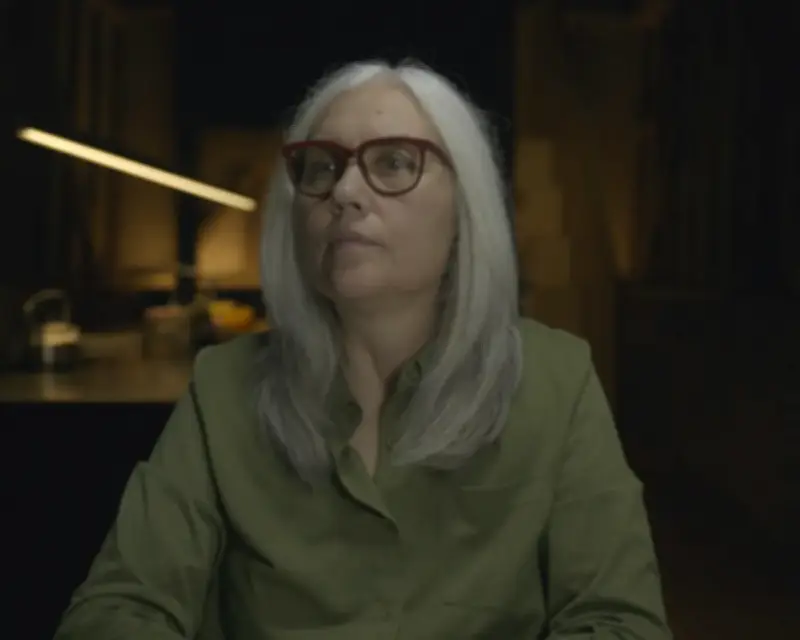
Their latest work, Act 3, is a strangely mesmeric, deeply personal, and mysteriously stylised film, structured around Molloy and Lawlor having a self-aware dialogue about their lives together over 40 years. Filmed singly in shot-reverse-shot, they speak quietly and slowly, as if under hypnosis.
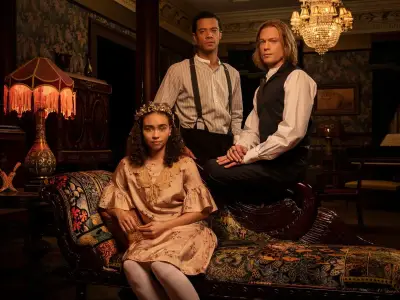
The film discusses their planned project about Lucy Schwob and Suzanne Malherbe, the 20th-century French artist couple who might now be called genderqueer. They styled themselves with the masculine-sounding names Claude Cahun and Marcel Moore, and were lovers who became stepsisters when their parents married. They lived in an attic room in Nantes, which the film reveals is now screen 12 of the city’s Pathé cinema. They frequented Parisian surrealist salons in the 1930s and were arrested for anti-Nazi activism in 1944 in occupied Jersey, but were spared execution due to the liberation.

Money troubles and the third act
Lawlor and Molloy’s movie about them is having money troubles because funding bodies are worried about a problem with its third act. As the two artists survived the war and lived on uneventfully in Jersey, that does seem anticlimactic. The film-makers use this as a springboard to muse on their own “third act”; they are in their 60s, in the final stage of their lives. They talk about their young selves, their wedding in their early 20s, and about Joe’s brother John, who lives in Thailand with his partner.
They had a deeply disturbing experience in south-east Asia, seeing a corpse drifting down a river, a trauma they processed into the movie Mister John, with Aidan Gillen as a man who travels to Thailand for his late brother’s funeral and finds himself drifting into the dead man’s identity. The couple have circled back to this film because it had meaning and relevance that were not clear to them at the time. It was about death and the eternal repetition of death. Lawlor reflects tenderly on his father’s death from a heart attack and wonders if the same fate is written in his stars or in his DNA. This film delivers a mighty third-act payoff.
Artistic energy in the gap
So what does it have to do with the dramatic and heroic artistic lives of Cahun and Moore, whose work is only now being rediscovered? Perhaps nothing in any obvious sense; perhaps the departure, the digression, is the point. Lawlor and Molloy are an artist-couple trying to make a film about another artist-couple, but may have nothing in common with them. Yet bridging or not bridging the gap is where the mystery and artistic energy is to be found. Their film is an austere experience in some ways, and although this is very personal work, the film-makers’ personalities on screen are in fact rather opaque. Yet there is a richness and a maturity in it that is absorbing. Act 3 screened at the Telluride film festival.