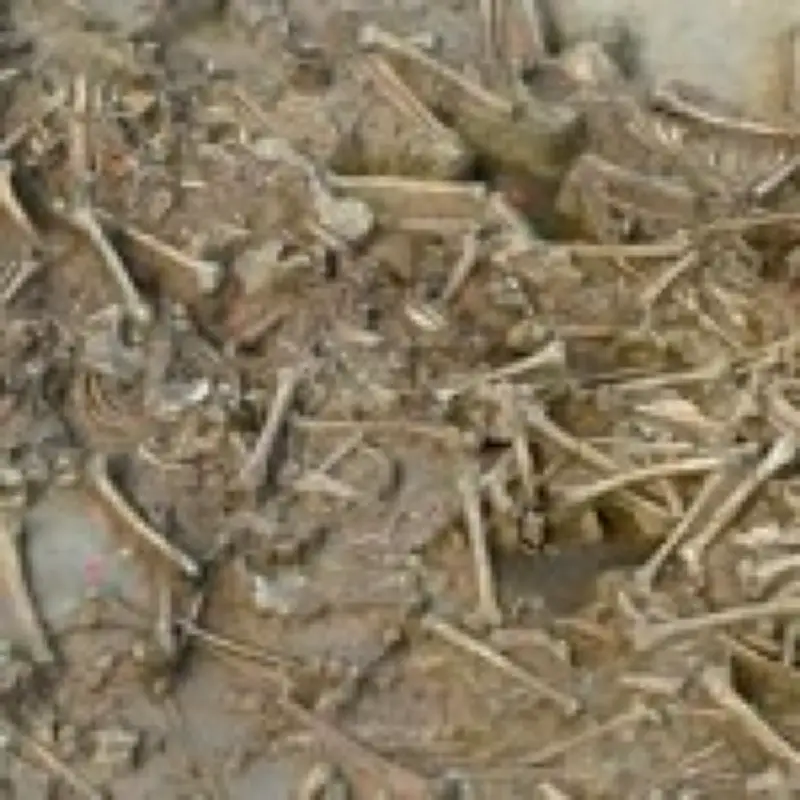
Archaeologists have been left baffled after discovering dozens of human skeletons, almost all of them missing their skulls, in a 7,000 year-old settlement in Slovakia. The 'zombie' burials – reminiscent of how one removes the head of the undead in horror movies – are described by researchers as one of the most unusual burial sites from Europe's Early Neolithic period.
Discovery at Vráble
The remains were discovered in a ditch at Vráble, a large farming settlement that flourished between about 5250 BC and 4950 BC. At first glance, the discovery appeared to suggest a massacre. Bodies were found lying on top of one another in different positions, with no obvious order or pattern. However, a new study published in the journal Proceedings of the Prehistoric Society argues that the remains are more likely to reflect complex burial practices than evidence of large-scale violence.
The excavation team, led by Martin Furholt of Kiel University, speculate that they might be an example of a shared ritual to ward off magic or some form of crisis that panicked our ancestors. Despite being perplexed, they said they hoped further research would help uncover whether the skull removal was a result of 'possible ritual, magical,' or 'cosmological' beliefs.
Scale of the Findings
Vráble is one of the largest known settlements of the Linear Pottery culture, often known as LBK, which spread across much of Central Europe during the Early Neolithic period. Archaeologists have identified more than 300 house remains at the site, with around 80 homes occupied simultaneously during some phases of its history. Part of the settlement was enclosed by a ditch system featuring several entrances. Human remains had been discovered there during previous excavations, but the scale of the latest findings surprised researchers.
Excavations carried out since 2022 revealed a concentration of bodies in one section of ditch near an entrance. Initial investigations identified 37 individuals, but continued work has increased that number to at least 78. Researchers say 77 of those individuals were missing their skulls. Only one child was found with its skull still attached.
Burial Patterns
The bodies had been placed in a variety of positions. Some were lying on their backs, while others were face down. Several appeared twisted or partially overlapping, and researchers found no consistent orientation among the remains. Bones from other individuals were also scattered around the burials. Radiocarbon dating indicates that the remains date from the period when the settlement was occupied. The dates are closely grouped, suggesting the bodies were deposited over a relatively short period rather than being a burial site where the dead were placed across several centuries.
The Missing Skulls
Despite extensive research, the team are mystified by the absence of the skulls. They write: 'At the moment, we cannot assess in more detail what kinds of actions, intentions, and motivations were involved, nor do we yet know if or to what degree violence played a part in them.' Early analysis of neck vertebrae suggests the heads were deliberately removed using sharp tools. Researchers found little evidence of forceful chopping, with the marks instead indicating careful separation of the skull from the body.
Other evidence suggests the heads were removed shortly after death. Many of the skeletons remained well preserved and articulated, including fragile joints in the neck, hands and feet. Researchers say those joints would probably have separated had the bodies been left to decompose for a long period before burial. The fate of the missing skulls remains unknown as only a small number of skull fragments have been recovered from the ditch system. While some prehistoric societies are known to have stored or displayed human heads separately from bodies, archaeologists have found no direct evidence of such practices at Vráble.
Broader Context
The mass burial forms part of a broader pattern across the settlement. More than 100 individuals have been identified in and around the enclosure ditches. Among the discoveries are complete burials, isolated bones, pairs of headless individuals and mixed groups of skeletal remains. Similar sites dating from the final centuries of the LBK culture have revealed unusual deposits of human remains, leading some archaeologists to associate them with conflict or social instability. However, the authors of the new study believe the evidence from Vráble suggests a more complex explanation.
According to the research team, the placement of bodies and body parts appears deliberate and meaningful. They suggest the repeated removal of skulls indicates that heads may have held a special significance in local beliefs surrounding death, identity or ancestry. Exactly what those beliefs were remains unclear. Further investigations are continuing, with specialists examining cut marks, possible injuries and patterns of decomposition.