Behind the modest front door of 575 Wandsworth Road in south London lies a hidden masterpiece of wood carving, a work of national significance. The house, owned by the National Trust, is open for pre-booked tours from May to October.
A Modest Exterior Hides a Rich Interior
From the outside, No. 575 Wandsworth Road is a charming late-Georgian terraced house, two storeys high, built in brick and stucco with a basement and iron railings. But clues hint at its special nature: no number on the door, dark windows, and often a small crowd waiting outside. It is listed, placing it in the top two per cent of the country's building stock for historic significance.
Khadambi Asalache's 25-Year Obsession
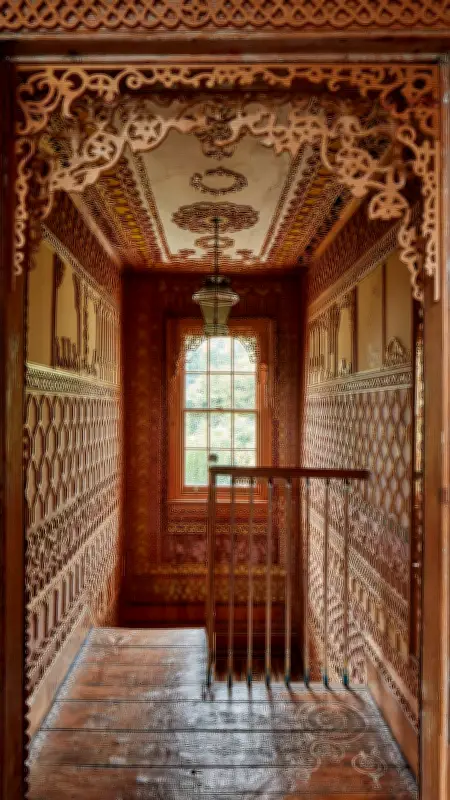
Inside, the house is a confection inspired by Granada's Alhambra and the Great Mosque of Córdoba, with echoes of Constantinople, Damascus, and Zanzibar—a mixture of Ottoman, Moorish, and African decoration. The transformation was the work of Khadambi Asalache, a Kenyan-born civil servant and architect, artist, writer, broadcaster, teacher, and gardener.
Asalache moved to England in 1960 and worked for the BBC African Service. In 1981, he bought the house for less than the £31,000 asking price. He restored it, initially carving to conceal damaged walls and damp plaster, but the work became an obsession. Over many years, he filled every surface with carved pine, using abandoned doors, wine boxes, and old floorboards to create fretwork panels depicting flowers, stars, crescents, and hearts.
Birds, Elephants, and Muqarnas
Animals also feature: birds perch below windows, elephants march across painted walls, and villagers walk to market. Ceiling corners are filled with cascades of carving, tiered niches like honeycombs, miniature wooden versions of muqarnas found across the Islamic world. Asalache also collected 19th-century English lustreware, pottery with an iridescent glaze rooted in Middle Eastern and North African ceramic traditions.
A Breathtaking Place
Asalache died in 2006 and bequeathed the house to the National Trust. It opens for small, pre-booked tours on Wednesdays and Thursdays from May until the end of October. Visitors must bring slippers or thick socks, as no shoes or bare feet are allowed to protect the hand-painted floors. Tim Knox, then director of Sir John Soane's Museum, called the house "a work of national significance." John Darlington, Director of Projects for World Monuments Fund, describes it as "a breathtaking place" and "a hidden treasure in an everyday house."