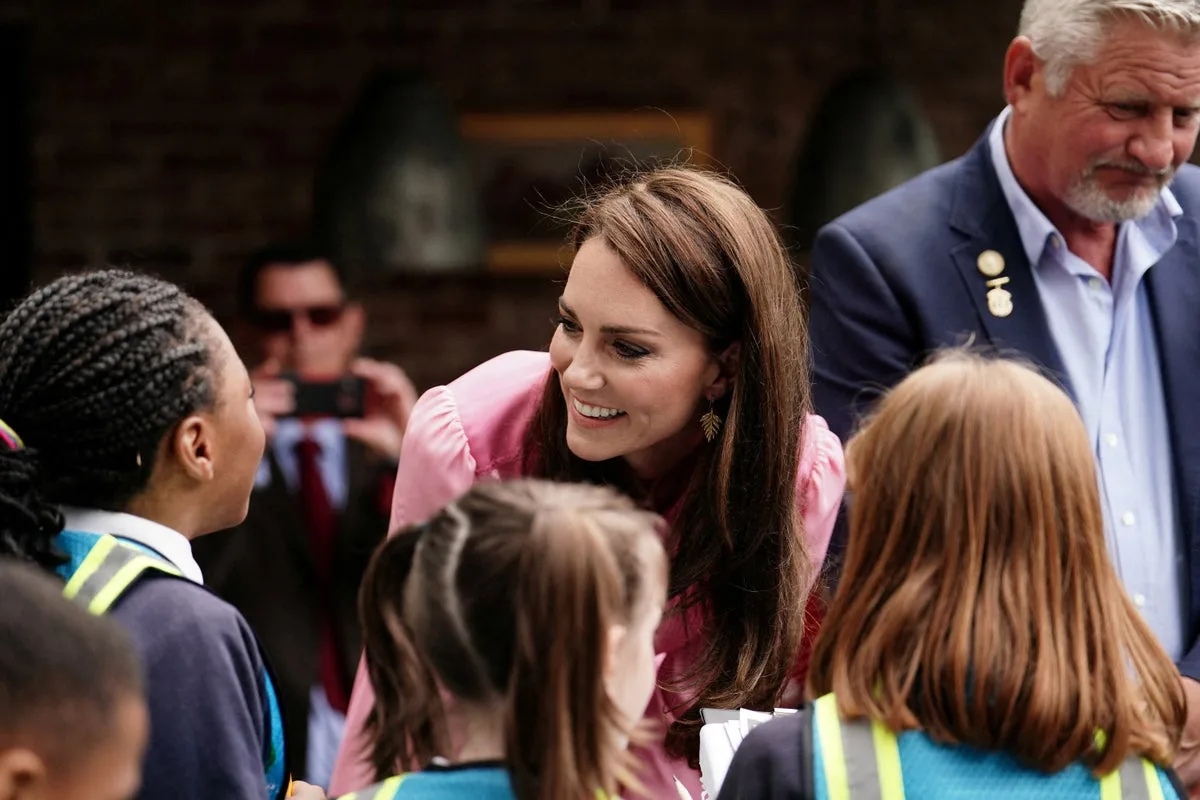
The Princess of Wales is set to embark on her first official overseas engagement since completing cancer treatment, with a visit to northern Italy next week. Kate will travel to Reggio Emilia to observe how local communities, in the aftermath of the Second World War, ingeniously repurposed abandoned military equipment, including a tank, to establish a globally influential model of early-years education.
Origins of the Reggio Emilia Approach
The visit will highlight the origins of the renowned "Reggio Emilia approach." Following the war, residents – many of them women – financed some of Italy’s inaugural nursery schools by selling scrap metal salvaged from equipment left behind by retreating German forces. These pioneering efforts laid the groundwork for the educational philosophy, which is now influential worldwide and aligns closely with Kate’s focus on children’s social and emotional wellbeing.
Royal Foundation Centre for Early Childhood
The wife of the heir to the throne, Prince William, and mother of three, launched the Royal Foundation Centre for Early Childhood in 2021. This initiative aims to consolidate expertise and research within the field of early childhood development. The trip, scheduled for 13 to 14 May, marks a significant return to international duties for the Princess.
Local Interest and Engagement
"Some time ago, British representatives visited our city and our early childhood education services, and shortly afterwards we heard of the Princess’s interest in coming to see us," Marwa Mahmoud, Reggio Emilia’s councillor for education, told Reuters. Italian officials said Kate's interest was focused on the historical roots of Reggio’s schools, their public character, the role of women, the link between nature and education, and strong community involvement.
Reggio Emilia's Educational Model
The medium-sized city of Reggio Emilia has one of the highest levels of preschool participation in Italy, with enrolment among children aged three to six close to universal and attendance at infant-toddler services more than twice the national average. Here, pioneering schools for children under six took shape decades before a national law followed in 1968. In the Reggio Emilia approach, the child is seen as an active learner, with the potential to explore and understand the world through many forms of expression – often described by educators as the "hundred languages" of children.
Classes are organised around communal spaces known as piazzas, with in-house kitchens and ateliers where children are encouraged to experiment with materials, colours, and sounds. Today, Reggio Emilia has 89 infant-toddler centres and preschools, most operated by the municipality or the state, with fees set according to family income.
International Recognition
International attention grew after U.S. magazine Newsweek cited a Reggio Emilia preschool among the world’s top ten schools in 1991. "For years, Britain looked to Reggio Emilia as a model, with hundreds of teachers visiting annually," said Maddalena Tedeschi, president of Reggio Children, an international centre that promotes research. "Policy changes and funding cuts in the UK later reduced travel, but interest remained and evolved into new forms of exchange."