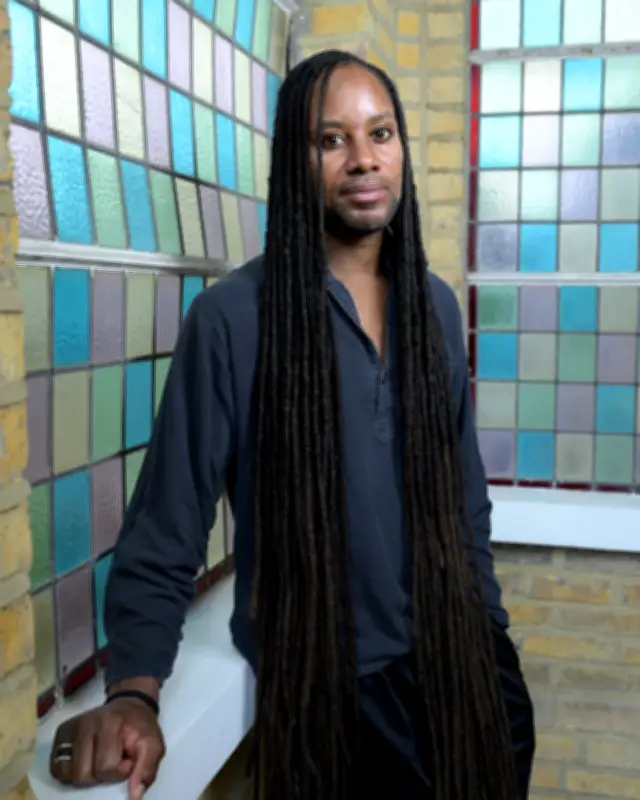
Last week, a row erupted over the academic work of Jason Arday, the youngest black professor in Cambridge University's history. The Telegraph reported that analysis had found more than 100 passages in his PhD were similar to a thesis by Paula Zwozdiak-Myers, a student at Brunel University in London, published six years earlier.
The report followed a Substack post by Nathan Cofnas, an academic previously embroiled in a free speech row at Cambridge after he suggested in a blogpost that, in a meritocracy, there would be “close to zero” black professors at Harvard. Cofnas, a self-defined “race realist”, was sacked by Cambridge's Emmanuel College in 2024 but was cleared of discrimination or harassment. He now works at Ghent University in Belgium. Cofnas claimed he had put Arday's PhD through plagiarism detection software, which found that “many passages are lifted with minimal editing, sometimes retaining copy-editing mistakes from the original source”.
A talk about a playbook
Arday had addressed the British Sociological Association's 75th anniversary conference earlier this year with a talk called Wanted Dead or Alive: the Playbook. He told fellow academics that conservative “activists” were trawling through the work of black academics, looking for inconsistencies, citation errors and passages similar to existing papers. Once an error was identified, rightwing media outlets and politicians joined the pile-on.

He cited Claudine Gay, the first black woman to become president of Harvard, who was forced out over plagiarism allegations after just seven months. Others felt like “sitting ducks”, and some academics have killed themselves after being hounded out of positions. “The instruments that are designed to protect academic integrity, designed to protect our wellbeing and our intellectual property, are weaponised,” he told the audience. “There isn't any room to sit there and watch your fellows suffer for no reason. It's abhorrent, it's a disgrace and, quite frankly, evil. That's the cancer that we need to eradicate from academia.”
Plagiarism allegations and Cambridge's defence
Another critic of Arday was Dr David Harris, professor emeritus at Plymouth Marjon University, who had previously written to Cambridge with claims about Arday's work. Harris had been stripped of his professor emeritus title after writing a post about critical race theory deemed “controversial” by colleagues, but it was reinstated in 2026. After Harris's earlier queries, two corrections were made to papers released in 2018 and another in 2020.
Cambridge called the claims a “vile smear campaign to undermine his credibility”. An open letter in support of Arday, signed by Green party leader Zack Polanski and black studies academic Kehinde Andrews, argued there was “an orchestrated and grim effort to delegitimise a brilliant, young, working-class academic for the sin of being successful while Black”.
Cambridge said it had passed complaints to Liverpool John Moores, where Arday completed his PhD, and that the university had reviewed the work and found he had not plagiarised it. “We take allegations of academic misconduct incredibly seriously,” a Cambridge spokesperson said. “It is university procedure that investigations are carried out by the institution at which the research was undertaken. This is standard practice in the sector because that institution has access to the information to ensure a full and fair investigation.”
Arday told the Guardian he fully supported “fair investigation processes for genuine concerns”. He added: “To clarify, there have been multiple thorough investigations across several institutions as a result of the allegations, and immense scrutiny, including with an academic misconduct panel who concluded that there was no plagiarism or academic misconduct.”
Academics respond
But prominent academics of colour told the Guardian the claims were legitimate, and that Arday's alleged actions risked undermining others who study race. One academic working in race and education, speaking anonymously, said: “I think it's plagiarism and it's obvious.” John Preston, emeritus professor of sociology at the University of Essex, said: “Having seen the evidence, it triangulates and there is, in my judgment, a case to answer here.”

Some argued Arday had come under unfair scrutiny, but those the Guardian spoke to said it was “fair for someone at Cambridge”. The Telegraph described Arday as a “diversity poster boy”. In an interview with the Times, Arday said: “I am accountable for the mistakes I've made. I hold myself accountable and other people should hold me accountable. We're talking about academia here. I didn't murder somebody. I think the cruelty that I've experienced, and the positioning of me as this kind of liar and fantasist, is totally unacceptable.”
Charity claims under scrutiny
Arday's backstory made his appointment newsworthy. Diagnosed with autism and global developmental delay at age three, he could not speak until 11 and could not read or write until 18. He has claimed to have raised £5m for charities over 20 years, sometimes £5.5m, through endurance feats including running 30 marathons in 35 days and running 600 miles in six days. When asked, Arday clarified the money was raised with “many fundraising collectives over a two-decade period”, but said NDAs prevented him from identifying others. He also said the 600-mile challenge was completed over 12 days, not six, because of rest days.
Southampton Solent University removed the 600 miles citation from his honorary degree, and Anglia Ruskin University changed the six days claim to 12 days. In 2012, Arday was an Olympic torchbearer and met Andy Murray via Surprise, Surprise. Murray said Arday told him he was an epileptic who ran 30 marathons in 35 days, fell on the 20th day, had a seizure and a hairline fracture, but continued. Arday said he carried on because he didn't want to pay back thousands of pounds. Doctors told the Guardian running with a hairline fracture would be painful but not impossible.
Abuse claims
Arday has said he was harassed and intimidated. In an open letter to minister Jacqui Smith in July 2025, he claimed he had been “threatened with a knife, physically assaulted and spat on; [had] rape and death threats being made to him and his family; bananas and bullets being posted to him via the university campus; and corrosive substances and mutilated animals sent to his family home”. He later told the Guardian that a masked man confronted him twice at his faculty building, producing a knife on the second occasion, and that a panic alarm he pressed drew no response.
The Guardian reported that the intruder was not picked up by CCTV and no one reported seeing anyone suspicious. Arday did not report either intrusion at the time, and continued his working day, conducting a PhD viva less than two hours after the alleged second incident. He told the Guardian the “mutilated animals” included a severed pig's head delivered to his parents' home, which he said he intercepted and threw away. He claimed police investigated and checked butchers, but the butchers he named said no police had asked. The Metropolitan police said the details he gave were “categorically” incorrect and no investigation had taken place. Arday produced no photographs or messages showing the items.
A Cambridge University spokesperson said: “As soon as Professor Arday shared concerns with the faculty a number of enhanced security measures were urgently taken in response, with the advice and continuing engagement of university security and the police. These include the installation of panic alarms, screening of emails, post and packages, upgraded CCTV and revised security protocols.” When asked about his claims, Arday told the Guardian: “To be honest with you, I thought you'd just believe me. Why would I lie?”
The wider impact
The row has raised concerns for the study of race in British academia. Preston warned: “The whole area of the sociology of education, and particularly race studies within that, is very fragile. It is primarily Black, Asian and minoritised people who work and study in those subjects. Professor Arday probably holds the top position in the world in sociology of education. It's important for the whole discipline that he addresses these claims.”
In his forthcoming memoir, Great and Unfortunate Things, Arday writes that he has faced harassment and persecution as “the subject of targeted campaigns driven by racial animus”. He recently compared himself to Icarus: “I always wanted to be a person who flew close to the sun. But sometimes I wonder: did I fly too close?”