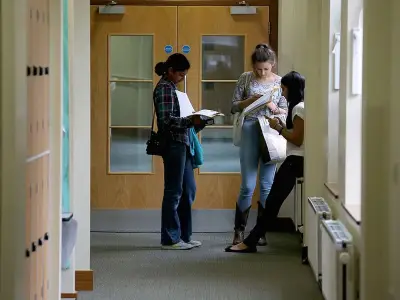
A major investment of £4 million into over twenty schools in Salford is being hailed as a 'game-changer' for families with children with special educational needs and disabilities (SEND). The local authority has committed to supporting 21 schools across the city to improve their SEND support and facilities, helping young people with special needs become part of the local community.
Funding and Impact
Council bosses accepted a £9.2 million grant from the Department for Education at a Cabinet meeting on Tuesday, June 9. The cash will help fund 120 school places for children with educational needs such as autism, ADHD, learning disabilities, or physical disabilities in mainstream school settings. Around 21 schools across the city will receive different amounts of the funding to support specialized teacher training or the creation of SEND spaces like support centres, therapy rooms, and sensory rooms.
The investment is supposed to mark a 'culture shift' in the way SEND education is treated in schools after decades of 'under-investment', according to council bosses and local educators.

Mayor's Perspective
Speaking on a visit to St Ambrose Barlow RC High School, city mayor Paul Dennett said: 'Historically, what we did was segregate children with SEND and disconnect them from their local communities. Some families also opted for home schooling. This is an entirely different approach. We're seeing it as everyone's responsibility – not just the schools, but the local authority, and the city.'
Mr Dennett added: 'I've met a number of families who've literally put their lives on hold to look after their children and young people, who've had to become legal experts on SEND, or homeschool their kids because their needs won't be met elsewhere. Now there's some families who feel they can send their children to [mainstream] environments like this. That's game-changing. Because the benefit to those families is massive.'
Blueprint for Success
Mr Dennett spoke in the speech therapy and support room at St Ambrose's Francis Centre, a special autism hub at the secondary school in Swinton. The site was set up three years ago because of 'forward-thinking people' at the school and local authority, according to headteacher Ben Davis. Now it's serving as one of the blueprints for how to transform the approach to SEND across the whole city.
The site takes on children referred from the local authority, who receive extra support, such as during the beginning or end of the school day, or special speech and language therapy sessions, or small mixed-age classes for those who find being in a classroom with 25 pupils overwhelming. However, most of the children take part in the majority of mainstream classes alongside their peers.
Mr Davis said: 'We think it matters to make young people feel a part of school and part of the community. It's easy to break that bond by imposing things on them that they find very, very hard to do because they just can't meet that standard. Instead, let's meet them where they're at and make them part of things.'
He added: 'That has a ripple effect across the whole school. In the three years since we opened the centre, we've noticed that kids in the mainstream classes don't turn around and say 'these kids aren't like us'. They completely absorb them. It's also about showing there's a strong destination for these kids post-16, that these young people feel that they've got something to offer and that they can participate in society.'
Student Voices
Children at the Frances Centre gave a series of touching presentations to the mayor, where they shared their ambitions – which included aspiring geography teachers, games' designers, and meteorologists – and how the centre made them feel more confident.
'You've got to understand the Francis Centre like a kind of nest,' said Parks, 12, speaking off-the-hoof to the Mayor of Salford. 'Not all chicks learn to fly at the same time. The Francis Centre is that extra, supportive nest that helps us all get into the air.'

Schools Receiving Funding
The schools due to receive extra funding for the 2026/27 academic year are: Irlam and Cadishead Academy, The Albion Academy, Oasis Academy Media City, Westwood Park Primary School, The Friars Primary School, Chatsworth High School and Community College, St Philips CE Primary School, Fiddlers Lane Community Primary School, St Lukes RC Primary School, Wharton Primary, Greater Manchester Independent School, and The Deans Primary.
Those receiving funding for the 2027/28 academic year are: Mesne Lea Primary, Chatsworth Futures, New Park Academy, Innovation Education, St Pauls CE Primary, Irlam Endowed Primary, Mossfield Primary, The Friars Primary.
The grants are part of a wider scheme of investment of almost £18 million to improve SEND provision across the city region.