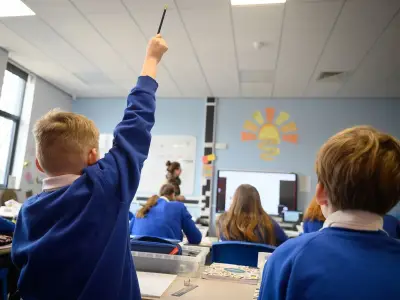
Philip Morant School and College in Colchester has scrapped its controversial ‘no physical contact’ policy, now allowing pupils to shake hands and ‘dap’ each other up. However, any touching that results in ‘bone squashing’ will still be banned.
The school faced criticism after parents claimed some pupils had been given detentions for hugging or high-fiving friends. On Monday, the school published a five-page slideshow document outlining permitted physical contact, which includes ‘fist bumps’ and handshakes.
New policy after backlash
Head teacher Stephanie Neill said the school had worked ‘closely’ with students to establish the new policy. The initial no-contact rule was introduced at the start of term, with students informed during assembly. It followed ‘an increase in overly physical behaviour last term that disrupted learning and raised safety concerns,’ Neill said.
An online petition protesting the rule garnered 350 signatures, prompting the school to backtrack. Now, Neill said an ‘appropriate’ level of physical contact will be permitted, with the school having consulted with parents and ‘student leaders’.
What is now allowed
Examples of ‘appropriate’ physical contact include handshakes; ‘dapping’, a more informal type of handshake popular among young people; fist bumps; and high fives. The school said these interactions are only permitted if both people have consented and the action is not malicious or disrespectful.
The school also stated that physical contact should not cause students to be late, take place in classrooms, or involve ‘bone squashing’. Tripping up and ‘birthday bumps’ remain not permitted.
School response and guidance
In a statement, Neill said: ‘We would also praise our students who have continued to conduct themselves as we would expect.’ Asked by the BBC about the no-contact policy, the Department for Education said last month that it provided guidance and measures to help schools make their own choices.