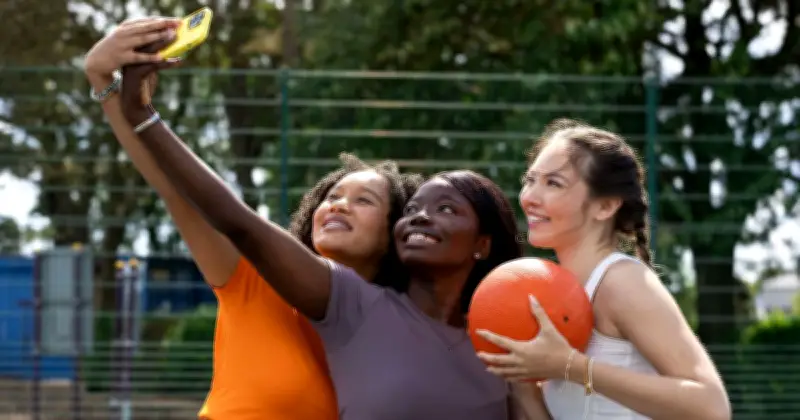
Half of 15-year-old girls avoid school sport because of a fear of failure, according to a new analysis by the Centre for Social Justice (CSJ). The think tank warns that one in five of the girls says her school offers no activity she enjoys.
It was discovered that a fifth of them spend no evenings out with friends – an increase of nearly half on 2002 – compared with one in six boys. The CSJ is putting forward a new plan to get teenagers “off screens and into sport”.
Alarm over 'bedroom generation'
The CSJ is sounding the alarm about a “bedroom generation” of isolated youngsters for whom face-to-face socialising is being replaced with life online. Researchers found that while boys are allowed to go out alone at an average age of 10.54, girls have to wait until 11.24.
One schoolgirl in Year 8 told the research team: “Since I got my new phone, I don’t want to come out of my bedroom, and I’ve been more short-tempered and not feeling as energetic and active as I used to be. I keep losing track of the time and getting distracted.”
Cost and safety barriers
Money may also be a major reason for not going out. More than half of the girls said cost was a barrier to spending more time with friends. One third said there is nowhere nearby they want to go. Almost one in four cited feeling unsafe.
The polling of 15-year-olds found that one in four girls now spends at least six waking hours in their bedroom on a normal weekend day, compared to one in five boys.
Report urges 'right to sport'
The report, Inactive Nation: Getting England’s Teenagers Moving, warns that sedentary screen time has filled the space once dedicated to hobbies and in-person friendship. Three-quarters of all 15-year-olds say they often use phones or screens because they have nothing else to do. Nearly half say they spend more time in their bedroom than they would like.
The CSJ argues that sport and physical activity offer “one of the clearest routes out of this cycle” and will deliver the mental health benefits that come with exercise and the “resilience needed for employment” – plus “role models and friends”. But half of the girls say they sometimes avoid school sports because they worry they will not be good enough, compared with fewer than four out of 10 boys.
Tabby Fitzgerald, a senior researcher with the CSJ, said: “Too many teenage girls are retreating into their bedrooms and onto screens while the independence that should be part of coming of age slips away. The answer is not just to restrict social media, but to put something better in its place. Sport and physical activity are good for our health, our resilience and for the friends we make along the way, so it’s no wonder it’s been described as a miracle cure. We need to get England’s teenagers moving again.”
The think tank estimates there are now nearly 100,000 more completely inactive 11 to 16-year-olds than in 2018. It is calling for a new “right to sport” for every secondary school pupil to receive two hours of PE plus two hours of extracurricular sport or physical activity each week. The proposed right is intended to level the playing field between state and fee-paying schools.
Government response
A Department for Education spokesperson said: “It is our mission for every child to have an active, healthy and happy childhood, and it is totally unacceptable that so many young girls feel shut out from participating in PE, sport and physical activity. Our new partnerships network will connect schools with community clubs, protect PE time, and work with organisations like Women in Sport to open up opportunities for every child to stay active. Alongside this, our new Enrichment Framework provide schools with practical guidance to make sure all children get equal access to activities – whatever their gender, ability or postcode.”