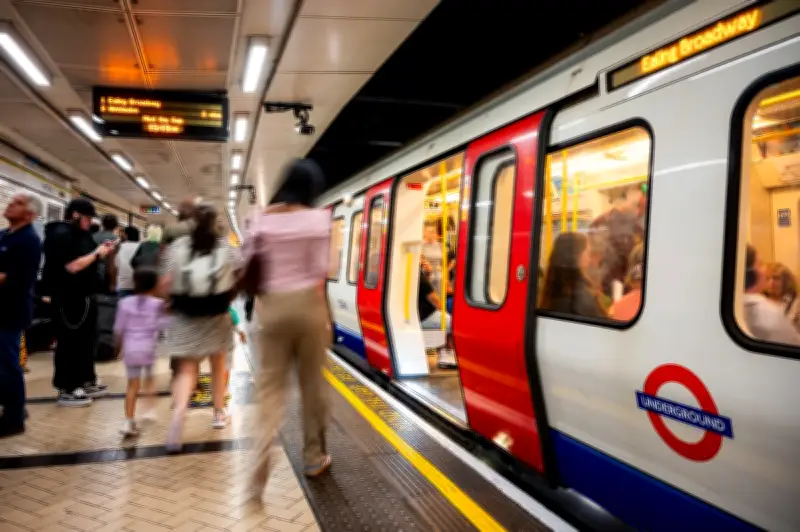
The Central and Northern lines have been identified as London’s most crime-affected Underground routes, as offences across Transport for London (TfL) services continue to rise despite fewer passenger journeys. TfL figures show 24,750 offences were reported to police across London’s buses, Tube, DLR, Elizabeth line and Overground network in the first six months of this year.
This marks a 4.4% increase compared with the same period last year, equating to 1,053 additional offences. Public order offences saw a sharp rise, with 4,178 reported — up 34.6%. TfL attributes part of this increase to the introduction of a new sex-based harassment offence on April 1, which accounts for 200 of the offences.
Theft remains most common offence
Theft of passenger property remains the most frequently reported offence, with 10,069 reports in the first six months of the year, although this was down 7.7%. Violence on the network has increased, with 5,036 offences reported this year — a rise of 14.5%, or 639 additional offences.
Criminal damage, including graffiti such as that seen on Bakerloo line trains, also increased, with 2,149 offences reported, up 26.6%. Separate statistics show Tube assaults rose 20% year-on-year to a record 5,534 reported incidents between April 2025 and March 2026.
Central and Northern lines lead in crime numbers
TfL data for January to June 2026 shows the Central and Northern lines — the two longest on the London Underground — recorded the highest number of crimes, with 1,098 on the Central line and 972 on the Northern line. The Piccadilly line had the third-highest number, with 857 crimes reported.
Stratford was the station with the highest number of reported crimes, with 258 offences, followed by King’s Cross (216), Tottenham Court Road (213), Liverpool Street (172) and Oxford Circus (170).
Hate crime and violence rise
Hate crime on the TfL network increased sharply, rising 43.5% from 598 to 858 offences. Work-related violence and aggression was also up 13.1%, from 619 to 700 offences. However, TfL chiefs noted that despite the rise in violent offences, 78.6% of those recorded on the London Underground did not involve injury.
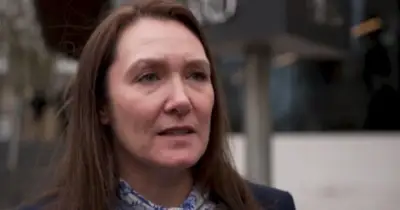
Siwan Hayward, TfL’s Director of Security, Policing and Enforcement, said: “Millions of journeys are made on London’s public transport network every day without incident, and the overall risk of crime remains low at 14.3 crimes per million passenger journeys, which is significantly lower than on the National Rail network.”
Hayward added: “Reports of Public order offences - where an individual’s behaviour could cause alarm, harassment or distress by being abusive, have risen, as have reports of hate crime on London’s transport, mirroring the rise in reports of anti-semitism and anti-Muslim hate nationwide.”
TfL says tackling hate crime is a top priority and has strengthened policing, staff training and enforcement across its network. It has held over 1,000 hate-crime engagement events since 2015, trained frontline staff who can support victims and involve police, and regularly hosts ongoing awareness campaigns and training.
Responding to the sharp rise in hate crimes, Ms Hayward added: “All hate crime is completely unacceptable, and we continue to take substantial and wide-ranging action with the police to encourage more reporting of incidents and to stamp this out.”
Fare evasion and sexual offences
The TfL figures do not include fare evasion or other bylaw offences. Fare evasion has become a growing problem on the TfL network in recent years, putting serious pressure on the transport authority’s finances as well as its frontline staff. TfL previously said it loses £190 million a year to passengers who do not pay for their journeys on the network — around 3.5% of all journeys. Transport chiefs have said they want to bring the rate down to 1.5% by the end of 2031.
But the transport authority has now admitted that the amount lost to fare evasion could actually be as high as £211 million a year. Meanwhile, sexual offences rose network-wide from 903 to 924. While there was a drop on the London Underground and London Buses, there was a particularly large increase on the DLR and Elizabeth lines. The boroughs with the most sexual offences on buses were Barnet (27), Croydon (26) and Ealing (20).
Theft — typically pick-pocketing — accounted for 40% of all crime on the TfL network, while violence accounted for just over 20%.
TfL has said live facial recognition (LFR) technology will be deployed at key stations across London to identify people on police watchlists. The technology was introduced in August as part of a trial by the British Transport Police and Transport for London, with Victoria Underground station the first location to be targeted. The trial is due to run until November 2026.
Siwan Hayward previously said: “Everyone should be able to travel without fear of harassment, intimidation or violence.” TfL encourages anyone who experiences or witnesses a crime on London Underground or rail modes to report it to the British Transport Police by texting 61016. Customers can report an incident on the bus network at met.police.uk or by calling 101. In an emergency, or if the suspect is still on scene, customers should call 999.