Teenage Speakers Allege Censorship by Tech-Backed Internet Safety Charity
An internet safety campaign supported by prominent US technology companies has faced serious allegations of censoring two teenage speakers it invited to address critical online issues affecting children. Childnet, a UK-based charity that receives partial funding from corporations including Snap, Roblox, and Meta, reportedly edited out stark warnings from young speakers Lewis Swire and Saamya Ghai. According to documented edits reviewed by the Guardian, their original statements described social media addiction as an "imminent threat to our future" and obsessive scrolling as making people "sick."
Speeches Watered Down Ahead of High-Profile Event
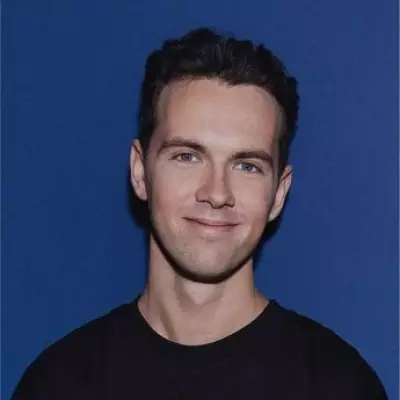
Swire, who was 17 at the time from Edinburgh, and Ghai, then 14 from Buckinghamshire, had been selected to speak at a significant event marking Safer Internet Day in 2024. The gathering took place in London before an audience comprising government officials, charity representatives, and technology company executives. Further edits removed references to children feeling unable to cease using platforms like TikTok and Snap, social media worsening a "devastating epidemic" of isolation, and a passage questioning why individuals would dedicate years to "scrolling TikTok and binge-watching Netflix."
The 2026 edition of this Childnet-organised event is scheduled for Tuesday, with over 2,800 schools and colleges listed as supporters. Childnet, whose fundamental mission is "helping to make the internet a great and safe place for children," is among several internet safety charities that receive financial backing from technology firms. The charity has firmly denied making edits to appease its tech funders, asserting it would not prevent young people from expressing their viewpoints.

Young Speakers Express Feelings of Betrayal and Hypocrisy
Lewis Swire stated he "felt censored" by the charity's treatment of their speeches. One excised line cautioned: "Young people are begging for a rope to pull them from the quicksand," characterising social media as "one of the worst psychological addictions in history." Another removed statement asserted: "Social media companies are in bed with the very same psychology used to exploit gambling victims." Upon discovering this deletion at the eleventh hour, Swire hastily reinstated a similar line into his speech.
"I was pretty surprised because at this stage I didn't know there was a conflict of interest with where their funding was coming from," explained Swire, who served on Childnet's youth advisory board. "I felt like we were being censored and almost betrayed by this organisation which we wanted to represent with integrity. It was a pretty difficult experience."
Saamya Ghai, now 16, remarked: "It was quite shocking because the stuff that they deleted was bringing to light a lot of things that were happening in the industry. It felt hypocritical because they were asking us to speak up against this and then at the same time they watered down what we wanted to say so much." Swire noted that some cuts only became evident in a final paper copy of the speech distributed shortly before they were due to address the audience.
Charity Leadership Denies Influence from Tech Funders
Will Gardner, the Chief Executive of Childnet, refuted claims that edits were made to satisfy technology funders. "If young people want to make a point we allow them to make a point but there are constraints – not due to who gives us money, there are constraints in the nature of the event that we're running, and the time constraints," he clarified. "We would certainly advise and edit around tone and language but we wouldn't stop young people making a point."
Gardner emphatically stated it was "not true" that edits were implemented to safeguard the charity's relationships with its social media company funders. "I completely refute that," he declared. "Because we work in the online safety space we do get some funding from tech companies … but that doesn't compromise our voice." Aspects of the approved speech did acknowledge that excessive screen time could lead to depression and anxiety, and suggested social media companies should reduce features like notifications and autoplay that prolong user engagement.

Campaigners Condemn Censorship and Commercial Interests
Daisy Greenwell, co-founder of the Smartphone Free Childhood campaign, argued that teenagers "should not be asked to censor themselves to protect the commercial interests of Big Tech." She elaborated: "Young people's voices are often positioned as the moral authority in debates about online safety, but too often those voices are only welcomed when they align with an organisation's existing policy position. When young people are filtered until they echo a pre-approved line, that isn't participation – it's cover."
Harry Amies, co-founder of Unplug.Scot, a network of Scottish parents concerned about screen impacts and educational technology in classrooms, expressed dismay: "The evidence that Lewis has presented has left us speechless. Most parents across the UK will be shocked to learn that Safer Internet Day is actually funded by Snapchat and other addictive social media platforms."
Original Speech Content Reveals Unheard Warnings
Lewis Swire, now 19 and campaigning for a social media ban for under-16s, originally included a poignant anecdote in his speech about a schoolfriend who felt "terrible" spending 40 hours weekly on social media. The friend wished to stop but felt unable because "I can't delete TikTok because I make £10 a month on the app. I can't delete Twitter because that's where I get my footy news. I can't remove Snapchat because I'll lose my streak." This entire section was omitted from the final delivered speech.
Another deleted portion referenced research indicating "excessive social media consumption is exacerbating a devastating epidemic of loneliness." The controversy highlights ongoing tensions between youth advocacy, corporate funding, and the authentic representation of young people's concerns in digital safety discussions.