Working in libraries taught me a great deal about the city I lived in. Ten years ago, I worked for two municipal library services in Melbourne. When I applied for my first library job, I thought libraries were just about borrowing books, but I quickly realised otherwise. The role of public libraries in our communities extends far beyond books – at their heart, libraries are about social equity.
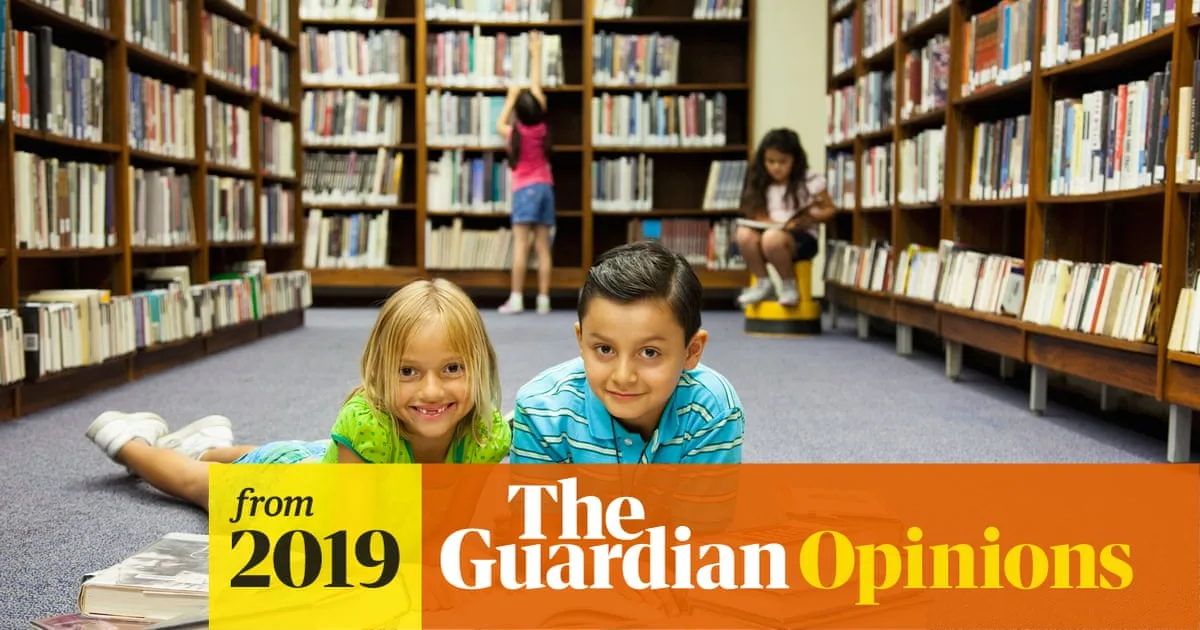
Having spent many slow afternoons with my kids in the children's section while on maternity leave, I know from experience that the library can be a sanctuary for isolated parents who need to get out of the house, especially on a rainy day. Rhyme Time at my local library offered a valuable opportunity to connect with other parents and engage in adult conversation. Your local public library is a community hub, a refuge where people, especially those who are homeless or live in overcrowded housing, can find shelter, company, a place to rest and use the bathroom. When vast tracts of our towns and cities are controlled by commercial operators, a library offers a rare neutral space for people to meet.
Libraries are immensely popular among older people, who visit to read newspapers, make use of large print and audio collections and, importantly, chat. In an era when social isolation is a huge health risk, contributing to heart attack, stroke, depression and even early death, 'solitude' is hardly what we should be fostering in public libraries. Our libraries also play a crucial role in improving digital inclusion, a significant social justice issue. As the 2018 Australian Digital Inclusion Index shows, digital exclusion often goes hand in hand with social disadvantage. Australia's most digitally excluded groups include people in low-income households, mobile-only users, those aged 65 and over, people who did not complete secondary school, and people with disability. For these groups, libraries are often the only place to go online to access essential services and connect with friends and family.
If English is your second language or you are a student from a lower socioeconomic background, libraries are an ideal place to study, find learning resources and ask for help. Libraries often serve as the sole connection residents have with community organisations and local government, the one place people can seek help navigating bureaucracy. Opening up a library to uses other than borrowing books doesn't diminish it – it enhances communities and guarantees the library's ongoing relevance in a digital era. 'We try to provide services that meet all the needs of the community around us,' says Sue McKerracher, CEO of the Australian Library and Information Association. 'We're not going to exclude people who are disadvantaged… far from it, we want to bring them in and help them build their digital skills, because otherwise, where else do they go?'
Some wish to rewind the clock to a time when libraries were 'hallowed sanctuaries of silence and solitude'. Yes, libraries can be noisy – but the alternative is the hush of an empty building before it is repurposed into apartments. Fortunately, library use is up. According to ALIA statistics, visits to Australia's 1,400-odd libraries and branches rose from 110 million in 2012 to more than 114 million in 2017. Membership grew from 8.6 million in 2014 to 9.3 million in 2017. 'Libraries are one of few industries that has adapted well to the new digital environment,' says McKerracher.
Working in libraries, I learned so much more about the city I lived in than I ever would café hopping. Each branch had its own character, reflecting the community it served. When library closures are the norm overseas, I'm thankful that Australian libraries have moved with the times. The books are still there, and we lose nothing by making the library a safe space for the community – especially vulnerable groups increasingly left behind by growing inequality. As US academic and library advocate R. David Lankes said, 'Bad libraries build collections, good libraries build services.'