Danish Warship Wreck from Nelson's Battle Discovered in Copenhagen Harbour
More than two centuries after being sunk by Admiral Horatio Nelson and the British fleet, the wreck of a Danish warship has been located on the seabed of Copenhagen harbour by marine archaeologists. Divers are now engaged in a critical race against time to excavate the 19th-century vessel before it becomes part of a construction site for a new housing district off the Danish coast.
Urgent Underwater Excavations Underway
Working in thick sediment and near-zero visibility at a depth of 15 metres (49 feet), the team from Denmark's Viking Ship Museum, which is leading the months-long underwater excavations, announced its findings on Thursday. This date marks exactly 225 years since the Battle of Copenhagen in 1801. Morten Johansen, the museum's head of maritime archaeology, emphasised the significance of the discovery, stating, "It's a big part of the Danish national feeling." He added that while much has been written about the battle by enthusiastic spectators, the wreck could reveal untold stories of what it was like to be onboard a ship under heavy fire from English warships.
The Historic Battle and Its Aftermath
In the Battle of Copenhagen, Nelson and the British fleet attacked and defeated Denmark's navy, which was forming a protective blockade outside the harbour. The brutal hours-long naval clash resulted in thousands of casualties and is considered one of Nelson's "great battles." The British aimed to force Denmark out of an alliance with northern European powers, including Russia, Prussia, and Sweden. At the centre of the fighting was the Danish flagship, the Dannebroge, commanded by Commodore Olfert Fischer.

The 48-metre (157-foot) Dannebroge was Nelson's primary target. Cannon fire tore through its upper deck, and incendiary shells sparked a fire onboard. Johansen described the scene as "a nightmare to be onboard one of these ships," noting that wooden splinters from cannonball impacts caused severe damage, akin to grenade debris. The battle is also famously linked to the phrase "to turn a blind eye," stemming from Nelson's reported remark after ignoring a superior's signal due to his lost sight in one eye.
Archaeological Finds and Challenges
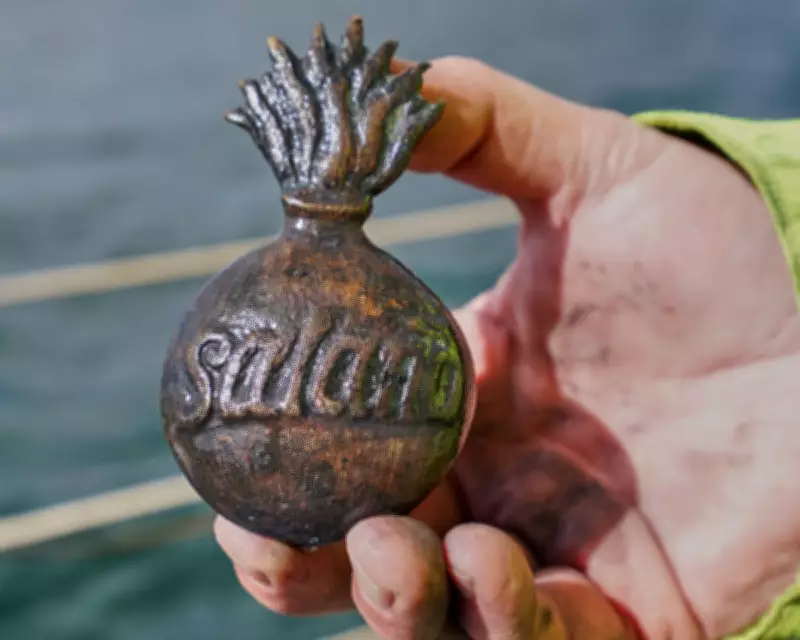
Marine archaeologists have recovered a range of artifacts from the wreck, including two cannons, uniforms, insignia, shoes, bottles, and even part of a sailor's lower jawbone, possibly belonging to one of the 19 crew members unaccounted for after the battle. The dig site is set to be enveloped by construction work for Lynetteholm, a mega-project to build a new housing district in Copenhagen harbour, expected for completion by 2070.
Experts have confirmed the wreck's identity through dendrochronological dating, which uses tree rings to establish the age of wood, matching it to the year the ship was built. The darkened dig site is hazardous for divers, filled with cannonballs and obscured by clouds of silt stirred from the seabed. Marie Jonsson, a diver and maritime archaeologist, explained, "Sometimes you can't see anything, and then you really have to just feel your way, look with your fingers instead of with your eyes."
Chronicled in books and depicted in paintings, the 1801 battle remains deeply embedded in Denmark's national narrative, making this discovery a poignant reminder of its historical impact.