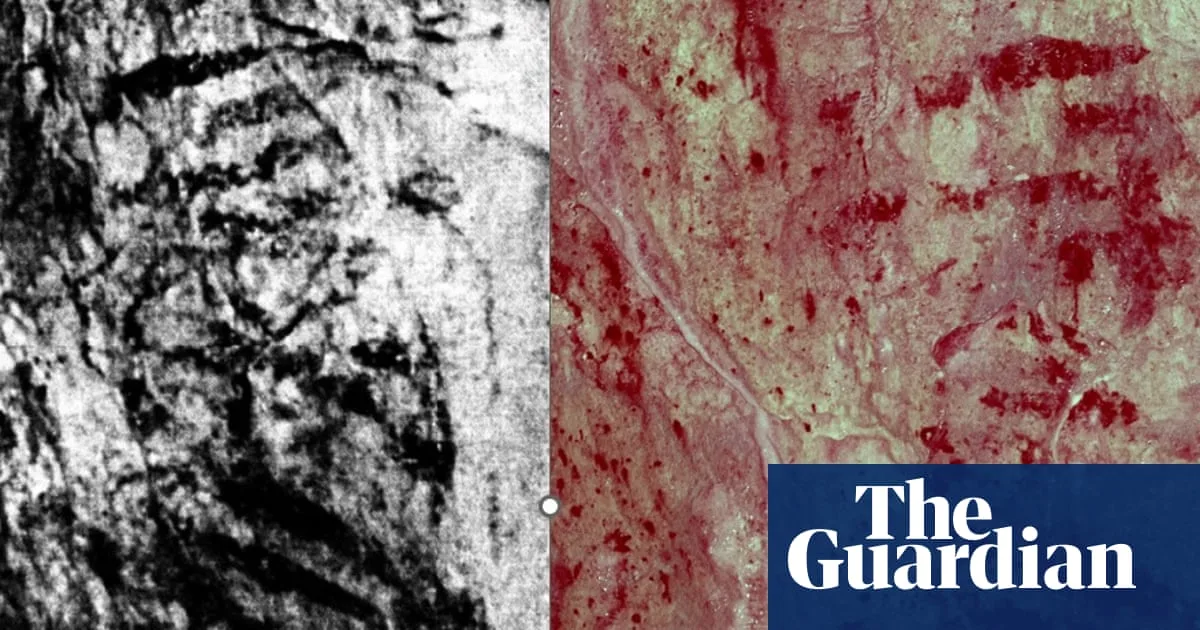
A striped rock in a Welsh cave, dismissed as a natural phenomenon in 1928, has been reclassified as the oldest known cave art in Britain. Scientists have dated the red horizontal bands on the wall of Bacon Hole, near the Mumbles in south Wales, to 17,100 years ago, making it the earliest example of prehistoric art in the British Isles and north-western Europe.
The initial discovery was reported by the Guardian in 1912, when professors William Sollas and Henri Breuil identified the markings as Palaeolithic rock art. However, by 1928, the panel was dismissed as a natural mineral seepage. The Guardian later published a correction stating that the red streaks were red oxide mineral seeping through the rock, not prehistoric art.
Dr George Nash, a specialist in prehistoric art from the University of Liverpool, led an international team that used uranium-thorium dating to analyse the pigments. He said: 'This is the earliest prehistoric art we have in Britain. We've used uranium-thorium dating for the pigments. We've got data 17,100 years before present, which makes it the oldest rock art in the British Isles.'
The research revealed that the paint was applied by finger and contained a mix of calcite and clay residues, indicating an intentional 'pigment recipe'. The academics concluded that the horizontal lines were deliberately created by human agency, not natural processes, concurring with the original 1912 interpretation.
Bacon Hole is located in the limestone cliffs of south Gower, overlooking the Bristol Channel. The cave is under the custodianship of the National Trust of Wales, which will officially announce the research this week. The archaeologists argue that the site should now be protected as a scheduled monument.
The study, published in the journal Quaternary, notes that 17,100 years ago, Wales was emerging from a severe cold phase of the Devensian glaciation. The Bristol Channel area would have been a favourable catchment for migratory megafauna, and Bacon Hole likely served as a habitation site for hunter-fisher-gatherer groups.