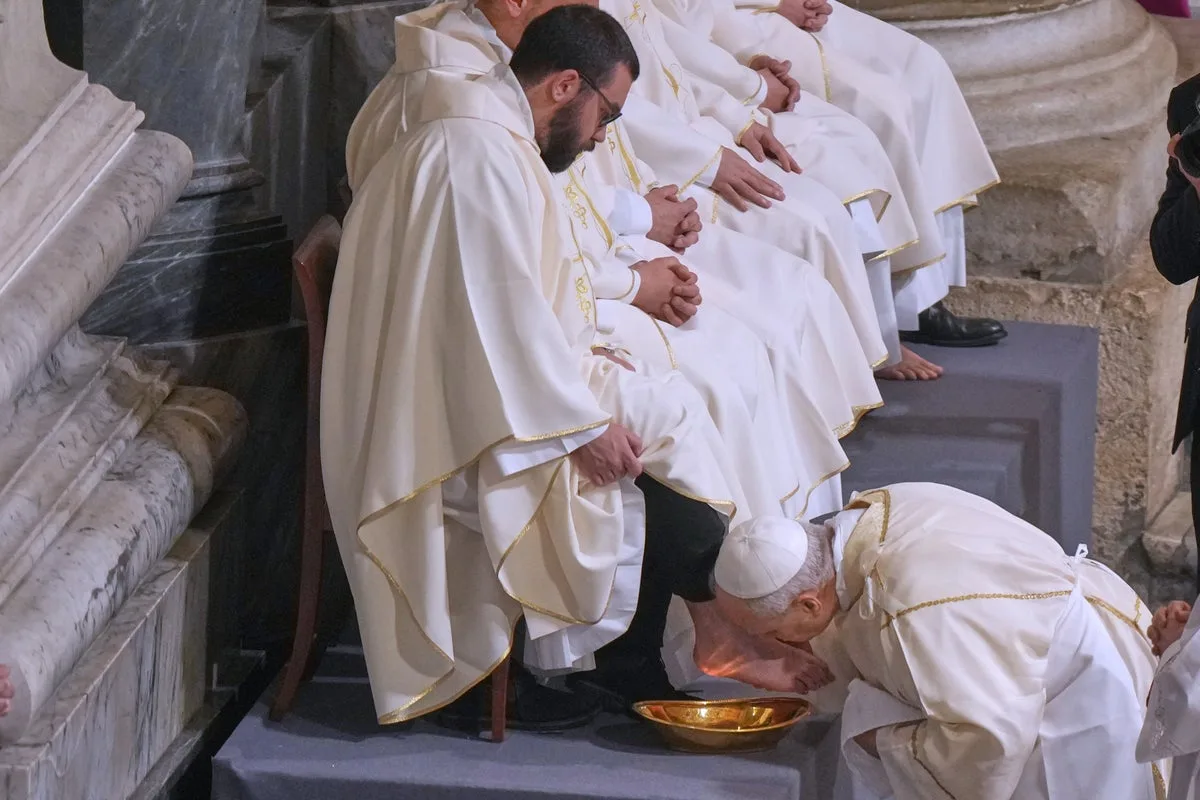
Pope Leo XIV has reinstated the traditional Holy Thursday foot-washing ceremony, performing the ritual on twelve priests in a significant departure from the inclusive practices of his predecessor, Pope Francis. The ceremony took place on Thursday, 2nd April 2026, at the Archbasilica of St. John Lateran in Rome, the official ecclesiastical seat of the pope as bishop of Rome.
A Return to Tradition
The priests included eleven who were ordained by Pope Leo XIV last year, along with the Rev. Renzo Chiesa, the director of the Rome Diocese's primary seminary. During the ceremony, Pope Leo poured water from a golden pitcher over the priests' feet, dried them with a white cloth, and bestowed a kiss. In his homily, he described this as a "gratuitous and humble gesture" that demonstrates "the true omnipotence of God."
Symbolic Significance
The Holy Thursday foot-washing ceremony is a hallmark of every Holy Week, recalling the act Jesus performed on his twelve apostles at The Last Supper before his crucifixion. Pope Leo emphasised that through this ritual, "Jesus purifies not only our image of God – from the idolatry and blasphemy that have distorted it – but also our image of humanity." He added, "For we tend to consider ourselves powerful when we dominate, victorious when we destroy our equals, great when we are feared. In contrast, as true God and true man, Christ offers us the example of self-giving, service and love."
Reversing Pope Francis's Inclusive Approach
Pope Francis had revolutionised the ritual for the Vatican by insisting, from his first Holy Thursday as pope in 2013, that it include women and people of other faiths among the twelve participants. Previously, popes performed the ritual exclusively on Catholic men at the Rome basilica. Francis's inclusive ceremonies often took place at prisons, juvenile detention halls, and centres for asylum-seekers, aiming to broaden the ritual's reach beyond the clergy.
Encouraging Catholic Clergy
Pope Leo XIV's decision to restore the prominent place of priests during the ritual is both a return to tradition and a gesture consistent with his apparent effort to encourage Catholic clergy and reinforce his appreciation of their service. This move contrasts sharply with Pope Francis's frequent criticisms of priests and what he termed the "clerical" culture that places priests on a pedestal above the laity. Francis believed such an attitude contributed to abuses of power and authority, epitomised by the clergy sexual abuse crisis.
Supporting Priests in Crisis
Pope Leo XIV has spoken out about the need to protect priests' rights and devoted his April prayer intentions to priests in crisis, those who have lost hope due to loneliness, exhaustion, or doubt. In prayer intentions released this week by the Vatican, he said, "Let them feel they are not mere functionaries or lonely heroes, but beloved sons, humble and cherished disciples, and pastors sustained by the prayer of their people." He asked for God to teach the faithful to care for their priests, "to listen without judging, to give thanks without demanding perfection," and to accompany them with prayer.
A Broader Context
This restoration of the traditional foot-washing ritual highlights ongoing shifts within the Vatican's approach to liturgy and clergy relations. While Pope Francis focused on inclusivity and addressing clericalism, Pope Leo XIV appears to be prioritising the reinforcement of priestly roles and traditions. The ceremony underscores the pontiff's commitment to humility and service as core Christian values, even as it marks a clear departure from recent practices.