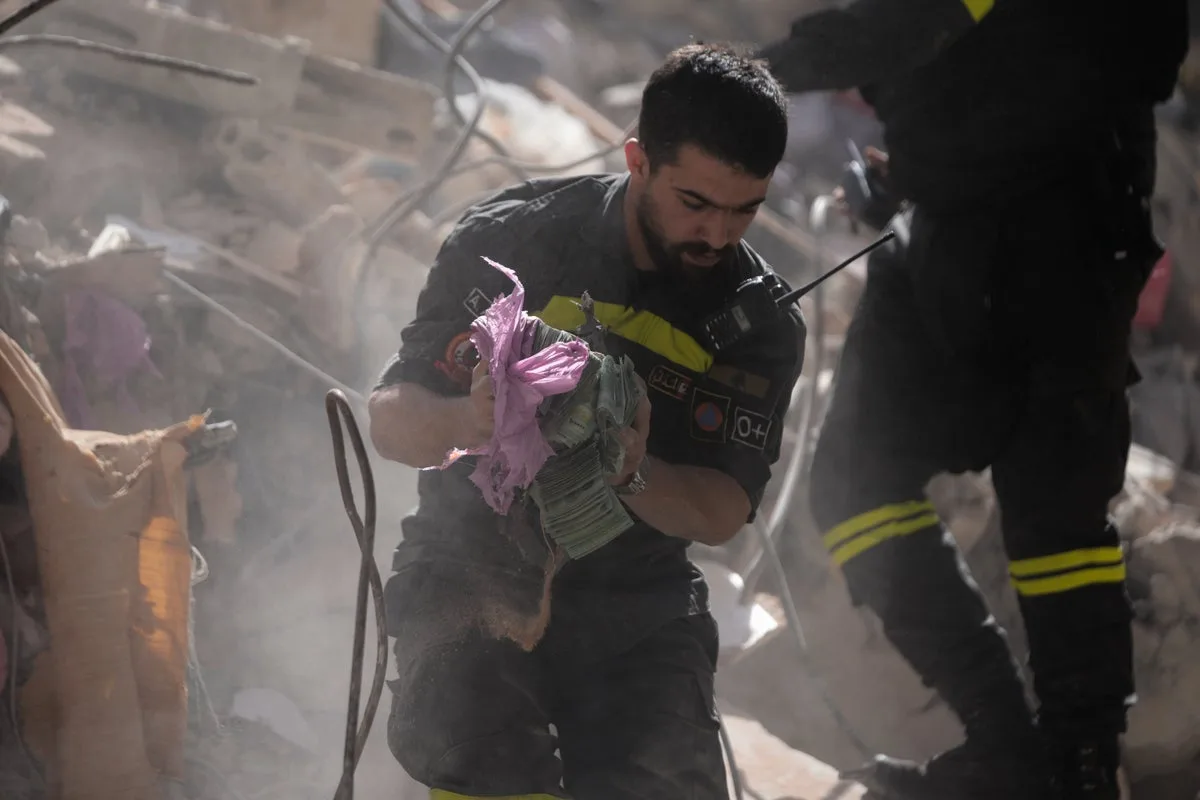
Lebanon reeled on Thursday after the deadliest day in more than five weeks of renewed war between Israel and Hezbollah, as rescue workers in Beirut and elsewhere searched for survivors and bodies amid the rubble. Wednesday's Israeli strikes killed at least 203 people and wounded more than 1,000, according to Lebanon's health ministry.
The Israeli military said it targeted sites of the Iranian-backed Hezbollah militant group, but several strikes hit densely packed commercial and residential areas without warning during rush hour, leading to widespread civilian casualties. Lebanese President Joseph Aoun called the attacks “barbaric,” while Israel stated that the ceasefire in the Iran war does not apply to its fight against Hezbollah.
Lebanese Civil Defense spokesperson Elie Khairallah reported that a wounded woman was found alive under the rubble overnight in the Beirut neighbourhood of Ain Mreisseh, and a man was rescued alive from his collapsed apartment building in the southern suburbs. However, many others waited anxiously; Mohammad Chehab, a Syrian man, said six of his ten family members had been found dead in a destroyed building, with searches ongoing for the rest.
Israel announced on Thursday that it had killed an aide and nephew of Hezbollah leader Naim Kassem, Ali Yusuf Harshi, in the strikes. Hezbollah did not immediately comment. Israeli Prime Minister Benjamin Netanyahu vowed that strikes would continue “with force, precision and determination,” while the military accused Hezbollah members of blending into civilian areas outside their main strongholds.
Lebanese Prime Minister Nawaf Salam said Lebanon will file an urgent complaint with the UN Security Council, calling the attacks a “blatant violation” of international and humanitarian law. He also ordered security forces to tighten control over the capital by enhancing state authority and restricting arms to legitimate forces. More than a million people have been displaced by the war, many fleeing from southern Lebanon and Beirut's southern suburbs.
Meanwhile, the main border crossing between Lebanon and Syria reopened on Thursday, five days after the Israeli military warned of plans to strike it, alleging Hezbollah was using it to smuggle military equipment—a claim denied by both Lebanese and Syrian authorities. Over 200,000 people have fled Lebanon into Syria since the war resumed.