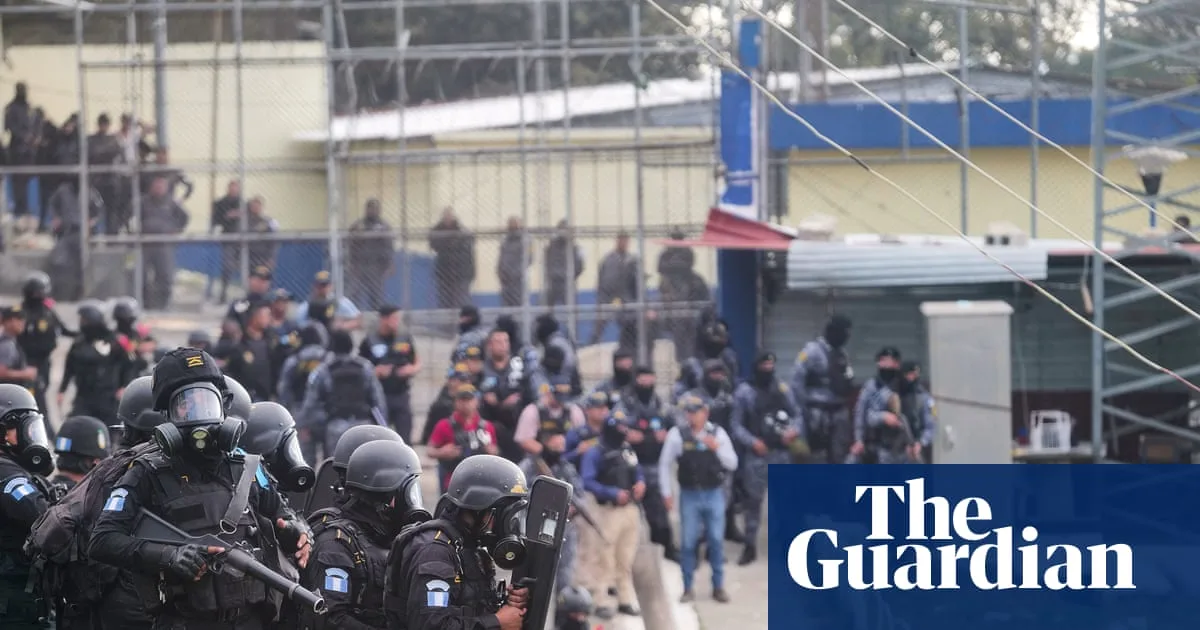
Guatemala’s government has ended a 30-day nationwide state of emergency declared last month following the killing of eight police officers and a prison hostage crisis. The measure, which suspended the right to assembly and allowed warrantless arrests, was imposed after gang-affiliated inmates took 46 people hostage at three prisons to demand the transfer of incarcerated gang leaders to lower-security facilities.
President Bernardo Arévalo announced on Monday that authorities had regained control of all three prisons without casualties. The crisis began when inmates held 45 guards and a psychiatrist hostage, prompting police and army operations using armoured vehicles and tear gas. The interior ministry confirmed the rescue of all hostages, including nine at Renovacion I maximum-security prison in Escuintla, south of the capital.
The police deaths were described by Interior Minister Marco Antonio Villeda as retaliatory attacks by “terrorists” against state actions. Ten other officers were wounded, and one suspected gang member was killed. The violence was linked to the Barrio 18 and Mara Salvatrucha (MS-13) gangs, which Washington has designated as terrorist organisations.
During the emergency, authorities arrested Aldo Dupie, alias “El Lobo,” the alleged leader of Barrio 18, who was seen in bloodstained clothing in a video released by the interior ministry. Defence Minister Henry Saenz said the army would remain on the streets to continue dismantling criminal groups. The US embassy had advised personnel to shelter in place, and schools were closed for a day.
The state of emergency required approval from the opposition-controlled Congress, whose president, Luís Contreras, called for unity during “one of the most painful and challenging moments” in the country’s history. Guatemala’s homicide rate in 2025 stood at 16.1 per 100,000 inhabitants, more than double the global average.