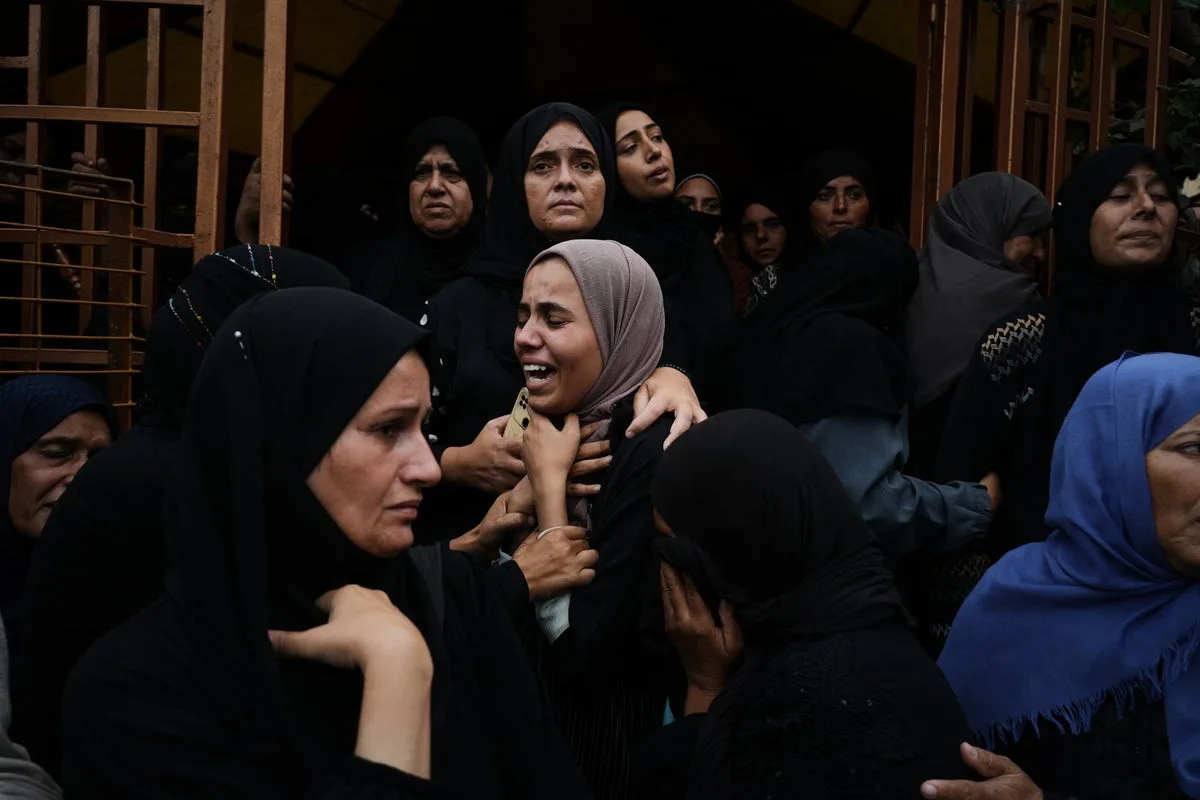
Gaza's Unidentified Dead: DNA Testing Blockade Leaves Families in Agony
In the crowded corridors of a Gaza hospital, Mahmoud Ashour witnesses a heartbreaking scene unfold daily. Multiple families gather around a single decomposed body, each clinging to the desperate hope that it might be their missing loved one. This tragic uncertainty has become a grim reality for countless Palestinians, as a critical lack of DNA testing capabilities leaves the dead without names and their relatives in perpetual limbo.
The Scale of Unidentified Loss
New data reveals that at least 1,129 bodies recovered in Gaza remain unidentified, according to figures provided by Gaza's forensic evidence department. Experts warn this number likely represents a significant underestimate, given the staggering death toll from the ongoing conflict. More than 70,000 Palestinians have perished in the territory since the war began in October 2023, with local officials estimating an additional 10,000 people dead beneath the rubble.
"In some cases, multiple families gather to identify the same body, each believing it belongs to their missing relative," explains Mr. Ashour from Gaza's forensics department. "We are often unable to determine which family the body belongs to due to the absence of advanced DNA identification capabilities."
Systematic Obstacles to Identification
Authorities report that the Israeli government is blocking both excavation equipment needed to recover bodies and DNA testing tools essential for identification. This obstruction has created a humanitarian crisis within the larger catastrophe. Of the 360 bodies handed over to the Red Cross as part of ceasefire agreements between Israel and Hamas, only 101 have been positively identified.
Mr. Ashour states that Israeli authorities are preventing the entry of equipment, devices, and laboratories necessary for conducting DNA examinations, significantly hindering the identification process. He has called on international governments and the United Nations to increase pressure on Israel to allow DNA testing laboratories into Gaza.
The Physical and Emotional Toll
After more than two years of daily bombardment, authorities face the monumental task of clearing an estimated 60 million tonnes of debris. The Red Cross reports there is only one fully functioning digger in the entire enclave, making rubble clearance alone an overwhelming challenge.
Pat Griffiths, a spokesperson for the International Committee of the Red Cross in Gaza, describes how the uncertainty has left families in a state of "ambiguous loss"—trapped between hoping for reunion with loved ones and confronting the painful reality that they may already be dead.
"All of this work that we do with forensics and speaking to families who are missing loved ones has the goal of them eventually receiving answers, so that they have some form of closure," Griffiths explains. "We do it so they can mourn in their own way, and bury their loved ones according to their own traditions and with dignity. For many of them, the saddest thing is that they won't be able to do that."
Burial Without Dignity
The dead are everywhere—recovered from roads, beneath destroyed buildings, and through Red Cross transfers. Last year alone, more than 1,000 bodies were recovered from various locations across Gaza. Many have been buried without identification in what families describe as undignified circumstances.
Mr. Ashour reports that Israeli forces have buried bodies "using military machinery" and "piled them together, on top of one another, without identifying them." Last October, 54 unidentified Palestinians handed over by Israeli authorities were buried in the sandy soil of Deir al-Balah, while countless others were laid to rest haphazardly in side streets, public spaces, and the remains of gardens.
International Concerns and Responses
The United Nations Office for Human Rights in the Occupied Palestinian Territory expressed grave concern about reports of missing, unidentified individuals and those "subjected to enforced disappearance by Israeli authorities."
"Hundreds of bodies remain unidentified, including remains reportedly recovered from several mass graves in Gaza; and many remain unrecovered," the office stated. "Israel continues to block the access of forensic and identification tools, including DNA kits and other essential equipment."
They emphasized that the lack of equipment leads to "improper burials, loss of evidence, preventable mis-identification, and prolonged anguish for families and loved ones."
A Pattern of Dehumanization
Husam Zomlot, Palestinian ambassador to the United Kingdom, connects the situation in Gaza to broader patterns. "More than a thousand bodies remain unidentified in Gaza because the means to identify them are being denied, amid the bombing of cemeteries and the desecration of graves," he states.
"This dehumanization extends beyond Gaza: in the occupied West Bank, hundreds of Palestinian bodies are withheld for years as a form of collective punishment against families. From mass graves near hospitals to the missing under the rubble, even death is denied dignity. Forensic and DNA equipment must be allowed in immediately."
The Israeli military denies allegations of improper treatment, stating they have "employed a wide range of technological and forensic methods to determine whether remains found in Gaza belong to Israeli hostages" and took "all appropriate steps to preserve the dignity of the deceased in accordance with international law."
Yet for the families waiting in Gaza's hospitals and makeshift morgues, the absence of definitive answers creates a unique agony that may continue for years, mirroring prolonged identification processes seen in conflicts like Bosnia and Afghanistan. As the recovery of bodies continues amid mountains of debris, the fundamental human need to mourn with certainty remains systematically denied.