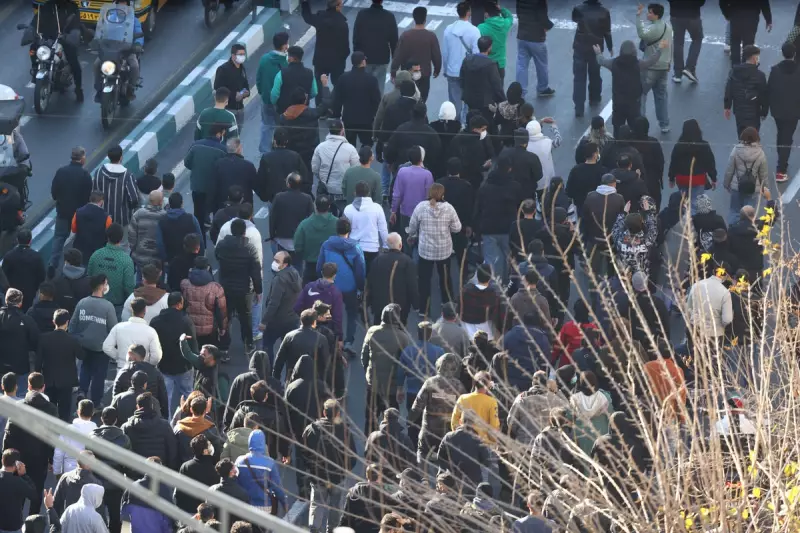
Iran's widening protests over the country's severe economic crisis have turned deadly for the first time among security forces, with authorities confirming the killing of a volunteer member of the powerful Revolutionary Guard.
First Fatality Marks Potential Escalation
Authorities stated on Thursday that a 21-year-old volunteer serving in the Guard's Basij paramilitary force was killed on Wednesday night in the western province of Lorestan. This marks the first confirmed fatality among security personnel since the latest wave of demonstrations began, potentially signalling the start of a more forceful crackdown by the Iranian theocracy.
The protests, which have slowed in the capital Tehran but expanded to other regions, are rooted in the nation's ailing economy, rampant inflation, and the rapid depreciation of the Iranian rial. The US dollar now costs approximately 1.4 million rials, crippling purchasing power for ordinary citizens.

Official Blame and Wider Arrests
The death occurred in the city of Kouhdasht, located over 400 kilometres southwest of Tehran. Saeed Pourali, a deputy governor in Lorestan province, was cited by the Iranian Student News Network as stating the Guard member "was martyred ... at the hands of rioters during protests in this city in defence of public order." Pourali added that another 13 Basij members and police officers were injured.
While acknowledging the economic pressures driving the unrest, Pourali urged citizens not to let their demands be exploited. Separately, state television reported the arrests of seven individuals, including five described as monarchists and two allegedly linked to European-based groups. Security forces were also said to have confiscated 100 smuggled pistols in another operation.
Broader Context of Unrest and Diplomacy
These demonstrations represent the most significant wave of protests in Iran since the nationwide unrest triggered by the 2022 death of Mahsa Amini. However, the current protests have not yet reached the same intensity or geographical spread.
The Iranian government, led by reformist President Masoud Pezeshkian, has attempted to signal a willingness to engage with protesters, though Pezeshkian has conceded his limited power to swiftly remedy the economic situation. The nation's leaders are also grappling with the aftermath of a 12-day war with Israel in June, during which the US bombed Iranian nuclear sites.
In a related diplomatic move, Iran has stated it is no longer enriching uranium at any site within the country, a gesture seemingly aimed at the West to indicate openness to negotiations over its atomic programme. These talks, however, remain stalled amid warnings from US President Donald Trump and Israeli Prime Minister Benjamin Netanyahu.