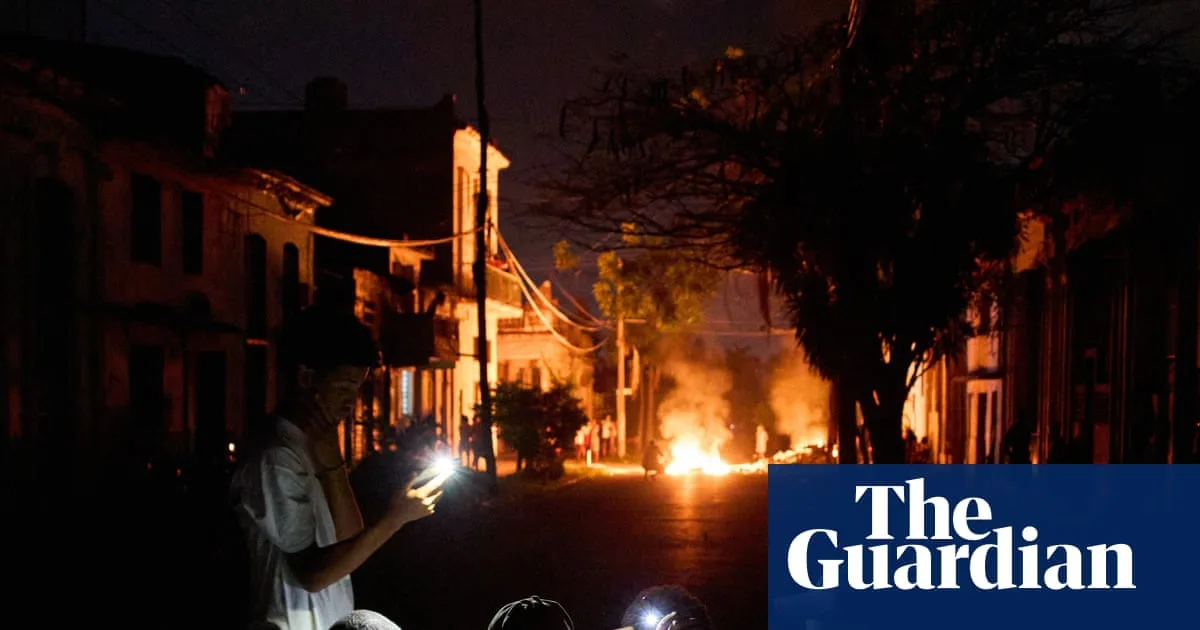
Cuba's national electricity grid collapsed for the third time in 10 days on Tuesday, pushing the island nation closer to a breaking point. The 777-mile-long country of 9.5 million people has been sweltering under a six-month oil blockade imposed by the United States, part of a pressure campaign aimed at toppling its communist government. However, the decay of Cuba's energy infrastructure predates the current crisis.
“The backbone of the system is still the big power plants,” said Jorge Piñon, a senior energy researcher at the University of Texas. “And they’re old, broken and tired.” With summer temperatures in the mid-30s Celsius and humidity at 80 per cent, tempers are fraying. Nationwide blackouts blend with local outages, and the banging of pots and pans—cacerolazos—has become a nationwide protest against sleepless nights, spoiled food and dashed hopes.
The government says it has few options. “We’ve said it before, there is a total absence of fuel,” said Energy Minister Vicente de la O Levy. “And we do not have access to spare parts for our thermoelectric units.” Since January, the US has tightened sanctions, driving out foreign companies from hotel operators to miners. An electric car importer lamented that seven containers are stuck in Kingston and 40 more in China with no arrival date.
The crisis has also fuelled a rise in crime. Cuba, once one of Latin America's safest countries, now sees street fights, break-ins and muggings, with police response times stretching to hours. Meanwhile, political repression has intensified; Prisoners Defenders, a Madrid-based group, reports 1,306 political detainees, including protesters against blackouts and water shortages.
Adding to the tensions, the US has leaked details of secret talks with Raúl Guillermo Rodríguez Castro, grandson of former President Raúl Castro. In an interview last week, the 42-year-old said, “It pains me that many people can’t live the way I do,” while wearing designer accessories. He said he has no interest in politics but would step up if needed. The Cuban government's facade of unity appears increasingly strained.