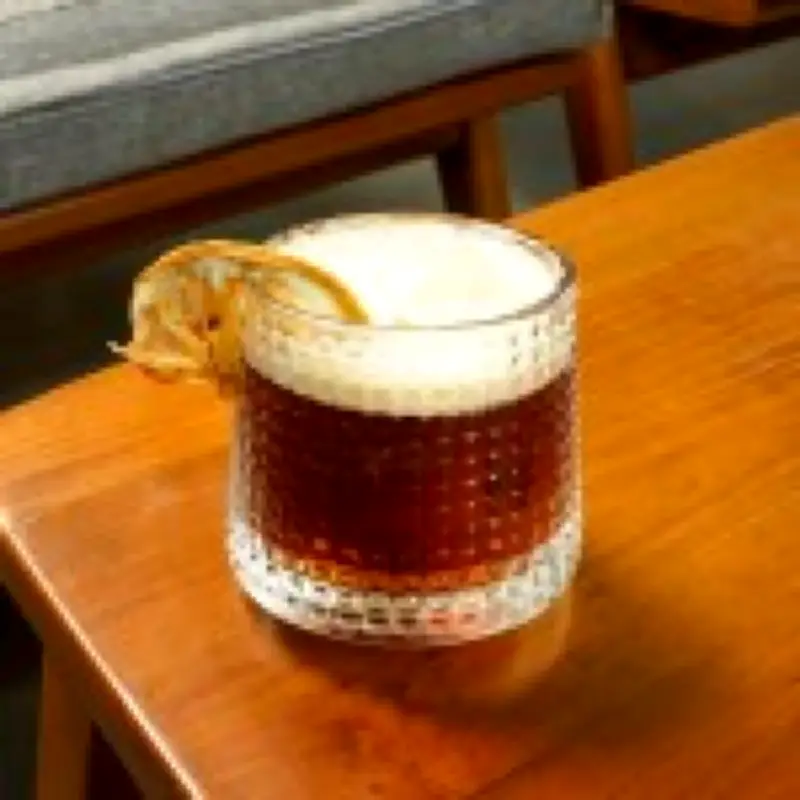
Spain may have won the World Cup, but its latest victory is on the bar. The carajillo - pronounced caah-raah-hee-yo - is being tipped as the new espresso martini. The two-ingredient cocktail is made from equal parts Licor 43 and espresso, shaken over ice and garnished with a ribbon of orange zest.
The drink is simple, potent and easy to put together. That, according to Joe Harper, head of food and beverage operations at The Zetter hotel, is its superpower. 'The carajillo is definitely a lot easier to put together than a good espresso martini,' Joe tells Metro. 'So I can totally understand the appeal.'
What is a carajillo?
It can be made with chilled, hot or warm espresso, and is served over ice. Three coffee beans are an optional garnish, representing health, wealth and happiness.

It is essentially Spain's answer to the Irish Coffee, Norwegian Karsk or Italian Caffe Corretto.
How do you make it?
- 50ml Licor 43
- 50ml freshly-pulled espresso
- Ice
Pour the liquid into a shaker with ice, shake well, and strain into an ice-filled tumbler. Garnish with a ribbon of orange, expressed over the drink beforehand.
Where does the name come from?
The PG version is that the name comes from the Spanish word 'coraje', meaning courage. Legend has it that Spanish soldiers stationed in Cuba laced their coffee with spirits for liquid bravery before battle.
The less wholesome theory is that it originated in Andalucia, where morning drinking was the norm. It could be a diminutive of the curse word 'Carajo!', meaning 's***' or 'f*** it'. Either way, through Spanish trade and migration, the boozy coffee digestif made its way to Mexico, where it is now one of the most widely-ordered drinks after tequila and mezcal, especially as a post-meal digestif.
The Spanish word for that is 'sobremesa', or 'over the table'. Younger generations have also started ordering carajillos on a night out as a pick-me-up, and you could also call it a vastly improved vodka Red Bull.
How is it different to the espresso martini?
The carajillo is served in a tumbler rather than a martini glass, so it looks like a frothy old fashioned. Because Licor 43 is named after the botanicals it contains, including vanilla, orange peel and cocoa, it is delicately spiced, rich and vanilla-forward. Paired with espresso, the result is light and delicately sweet with notes of orange, vanilla and chocolate.
Where can you order one in London?
Tapas venues including Camino and Las Iguanas are among the best bets. At the posher end, Viajante87 in Notting Hill uses cooled espresso and 15ml cold brew coffee liqueur (Mr Black) as well as Licor 43. Santo Remedio also does a carajillo, complete with a sugar rim and a £10 price tag.
Joe predicts the drink will have its own viral moment on UK bar menus soon. 'I can totally see it appealing for the same reasons as the espresso martini. When that's the case, a takeover is always possible.'
Britain's love affair with boozy coffee
In 2024, the espresso martini was the UK's most sought-after cocktail on the web, with 74,000 average monthly searches. Globally, it was number four on the list.
The UK's coffee habit is nothing new. In the seventeenth century, people drank something similar to Turkish coffee, and coffee houses soon began replacing taverns as places to network and socialise. By 1663, there were 83 coffee houses in London, exclusively for men to talk business.
Now coffee shops are everywhere, from high streets to drive-through Costas on motorways. The next logical step, it seems, was adding booze.