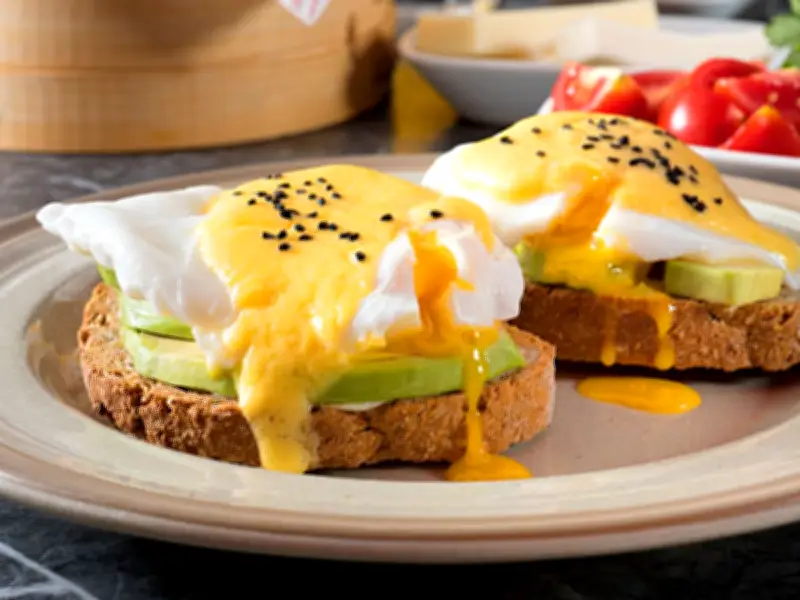
Michelin Star chef Alain Roux has shared a simple yet crucial ingredient that can transform your poaching technique: vinegar. According to Roux, "Vinegar will help the egg white to coagulate and keep its shape as it cooks," emphasizing the importance of using fresh eggs and maintaining a steady simmering water temperature.
The Science Behind Vinegar
Vinegar, an acid, lowers the pH of the cooking water, which causes the egg whites to coagulate more quickly and firmly. This prevents the whites from spreading out into wispy strands, resulting in a neatly shaped poached egg. Roux recommends creating a gentle whirlpool in the pan to encourage the whites to spiral and wrap around the yolk.
Expert Tips for Poaching
To avoid overcrowding, Roux advises cooking no more than four eggs at a time, calling it "enough of a challenge." He suggests testing for doneness by lifting each egg with a slotted spoon after two minutes, gently pressing the edges, and repeating every 30 to 60 seconds until cooked to perfection.
MasterChef star Monica Galetti also endorses the vinegar method. She says, "So, it's really straightforward. Ideally, it's best to have your eggs at room temperature when you're poaching them. Add water to a pot with a bit of vinegar, then bring it to a boil. It's always best to crack the eggs into a little bowl first."
Step-by-Step Poached Egg Recipe
Here is a detailed recipe for perfectly poached eggs, as shared by the experts:
Ingredients
- 1.5 litres of water
- 3 tablespoons of white wine vinegar
- 4 medium-sized St Ewe free-range eggs
- 4 teaspoons of white wine vinegar (for pre-soaking)
Equipment
- Casserole dish (20cm wide x 10cm deep)
- Ramekins or small bowls
- Kitchen paper
Method
- Crack the eggs into separate small bowls or ramekins. Drizzle a teaspoon of vinegar onto each egg. Gently swirl the bowls and wait for four to five minutes before poaching.
- Bring the water to a boil in the casserole dish, then reduce the heat to a rolling gentle simmer (small bubbles rising but not fierce boiling).
- Using a spoon, swirl the water around the edge of the casserole to create a whirlpool.
- One at a time, drop two eggs into the middle of the whirlpool. Gently re-swirl and add the remaining two eggs.
- Leave the eggs to poach for three to four minutes, or until fully cooked but with soft yolks. For medium eggs, allow an extra one to two minutes.
- Carefully remove the eggs with a slotted spoon and drain on a plate lined with kitchen paper.
- Using a small knife or kitchen scissors, trim off any ragged edges or stringy parts of the egg whites, if present.
- Season and serve immediately.
With these expert tips and the simple addition of vinegar, you can achieve restaurant-quality poached eggs at home, every time.