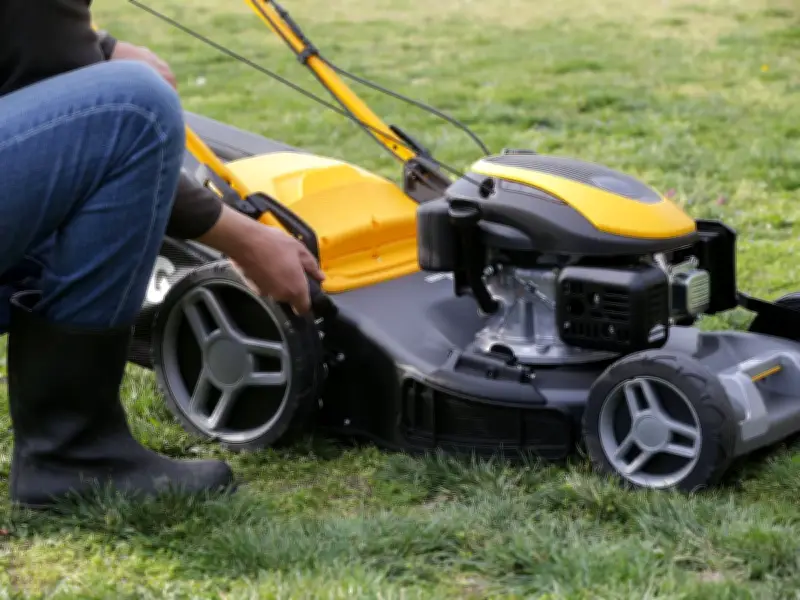
As lawns across the UK experience rapid growth following wet conditions after the late May heatwave, an expert has urged homeowners to exercise caution when mowing.
Expert warns of common mistakes
Nick Ee, product training manager at home improvement specialists BLACK+DECKER, said: "It's important to take precautions when mowing lawns after wet weather as damp grass tends to tear rather than being cleanly cut, causing jagged edges that leaves lawns more susceptible to pests and diseases. Not only that, but the grass clippings often clump together suffocating the grass beneath and creating an uneven finish."
Check the lawn is dry enough before mowing
Nick said: "One of the biggest mistakes homeowners make after periods of heavy rainfall is assuming a dry morning means the lawn is ready to mow. While the surface may look dry, the grass and soil underneath can still be holding a significant amount of moisture, particularly in gardens with poor drainage or compacted soil."

"Before mowing, I'd recommend walking across the lawn and checking whether your shoes pick up moisture or leave visible footprints behind. You can also brush your hand through the grass blades. If your hand comes away damp, it's a sign the lawn needs more time to dry out."
"Mowing wet grass doesn't just affect the appearance of your lawn, the damp clippings can also clog up the mower deck, put extra strain on the motor and dull the blades more quickly. Waiting until both the grass and the ground have properly dried will give you a cleaner cut, a healthier lawn and help protect your mower from unnecessary wear and tear."
Raise the cutting height
Nick added: "After weeks of wet weather, grass can grow quickly thanks to the combination of moisture and warmer temperatures. While it may be tempting to cut it back to its usual height straight away, lowering the mower too much can put unnecessary stress on the lawn and leave it looking patchy."
"I recommend raising the mower height by one or two settings and avoiding the temptation to remove too much growth in a single cut. As a general rule, never remove more than a third of the grass blade at once. Taking a gradual approach will help the lawn recover more effectively, encourage stronger roots and leave you with a healthier, more even finish."
Clear debris before you start
Nick said: "Before reaching for the lawnmower, it's worth taking a few minutes to clear the lawn of fallen twigs, leaves and other garden debris that have been blown around by the wind and rain. If left this debris can interfere with the quality of the cut and potentially damage the lawnmower."
"Running over sticks, stones and larger debris in particular can dull the mower blades, block the deck and put unnecessary strain on the motor."
Avoid mulching wet grass
Nick said: "Mulching can be a great way to return nutrients back into your lawn, but it's something I'd recommend avoiding after heavy rainfall. This is because the clippings are more likely to clump together when the grass is still damp rather than disperse evenly across the lawn."
"These wet clumps can block sunlight and airflow from reaching the grass underneath, potentially leading to patchy growth and an untidy finish. Instead, it's better to collect the clippings, which helps to keep the lawn healthy while reducing the risk of blockages in your lawnmower."