Ireland's Radical Basic Income Scheme Confronts Arts Sector's Class Crisis
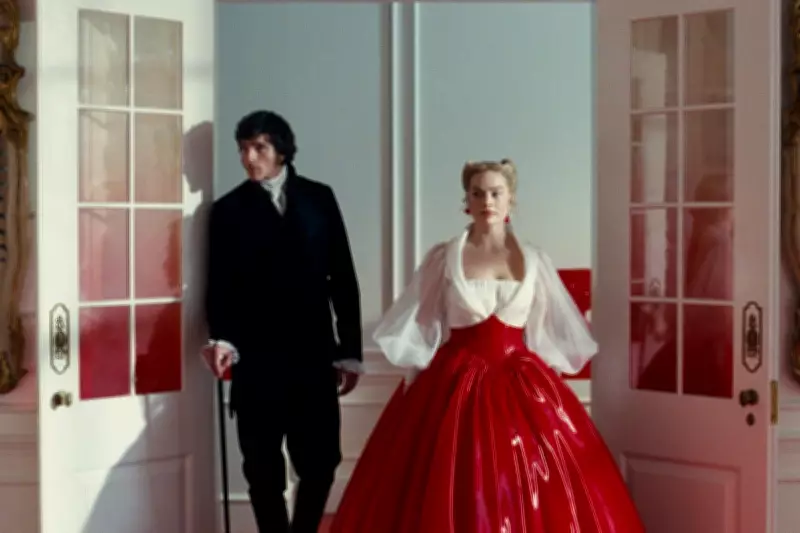
Emerald Fennell's adaptation of Wuthering Heights has ignited fierce debate by allegedly removing race and class themes from Emily Brontë's classic novel. Simultaneously, the BBC's production of Lord of the Flies highlights the persistent funding advantage for projects featuring privileged characters. These controversies arrive amid alarming statistics revealing a dramatic decline in working-class representation within the arts sector.
The Deepening Class Divide in Creative Industries
A recent report titled Class Ceiling confirms that working-class participation in the arts plummeted from 26 percent to just 19 percent between 2020 and 2023. The report's authors argue that unless class becomes a protected characteristic alongside gender and race, the arts will remain dominated by an elite minority. This troubling trend underscores systemic barriers preventing talented individuals from less affluent backgrounds from entering creative professions.
Ireland's Pioneering Solution: Basic Income for Artists
In response to this crisis, Ireland has launched a groundbreaking initiative that could not be more timely. The Basic Income for the Arts (BIA) scheme provides eligible artists with €325 (£283) weekly, totaling approximately £1,000 monthly. This financial support aims to reduce artists' reliance on non-creative work, allowing them to focus fully on developing their craft.

Irish Culture Minister Patrick O'Donovan has declared this three-year pilot program, supporting 2,000 artists in the Republic of Ireland, as "a gigantic step forward" and the first scheme of its kind globally. The initiative directly addresses the financial barriers that have long excluded working-class talent from artistic careers.
Financial Barriers and Cultural Alienation
Unpaid internships frequently receive blame for limiting access to creative industries, but the obstacles run much deeper. Emerging writers from provincial working-class backgrounds cite numerous challenges: reliance on precarious short-term contracts, exorbitant training costs, and overwhelming London-centric industry structures. Soaring transportation and housing expenses create prohibitive entry costs for those without parental financial support.
Even when talented individuals overcome these financial hurdles, many encounter alienating office cultures that have become increasingly monocultural and middle-class. Professor Dave O'Brien of the University of Manchester notes that limited access creates cultural consequences beyond mere exclusion. Numerous promising writers have simply abandoned their creative aspirations due to these compounded barriers.
Economic Imperative for Diversity
The class crisis in arts represents not only a social justice failure but also a significant economic miscalculation. The UK's creative sector consistently outperforms broader economic indicators, with music, video, and games industries projected to grow at more than four times the 1.5 percent GDP growth predicted by the Office for Budget Responsibility.
Industry leaders emphasize that working-class stories resonate powerfully with audiences. Director Stephen Daldry observes that "the really successful work in England tends to be working-class stories," while actor Christopher Eccleston criticizes the overwhelming predominance of "private school, Oxbridge actors." Netflix's hit series Adolescence demonstrates how productions created by working-class writers and actors, featuring relatable storylines, achieve remarkable success.
Investment Returns and Future Prospects
Evidence suggests that targeted support for diverse talent yields substantial economic returns. For every £1 invested in the arts, the broader economy generates more than £3 in value. Claire Malcolm, CEO of New Writing North, argues compellingly: "It's not a question of whether we can afford to invest in creatives, but of whether we can afford not to."

Funded talent development schemes have proven their effectiveness, with productions like Adolescence owing their existence to such initiatives. As the creative sector continues to outperform many other industries, ensuring access to the brightest talent from all socioeconomic backgrounds becomes not just an ethical imperative but an economic necessity.
Ireland's Basic Income for the Arts scheme offers a potentially transformative model for addressing the class ceiling that has constrained creative industries for decades. As the UK grapples with declining working-class representation and persistent privilege in artistic production, this innovative approach demonstrates that practical solutions exist to cultivate truly diverse creative ecosystems.