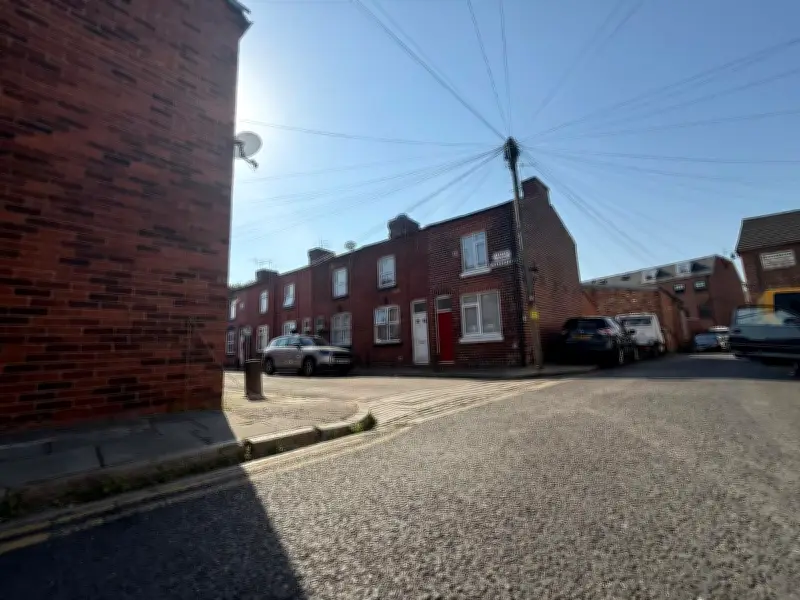
Almost a year after residents of Arnold Grove in Wavertree, Liverpool, took the unusual step of stringing a metal chain across the street to control the flow of tourists visiting George Harrison's childhood home, the measure remains in place and is widely considered a success. The chain, which can be untied to allow resident vehicle access, has established a clear boundary that has significantly reduced the disruption caused by the 'overwhelming' number of visitors.
Background: A Street Changed by a Blue Plaque
George Harrison, the youngest of four children, lived at 12 Arnold Grove until he was seven, after which his family moved to a council house on Upton Green in Speke. In 2024, Historic England unveiled a blue plaque on the property, marking it as the birthplace of the Beatles legend. This official recognition, combined with the enduring global fascination with the Beatles, led to a sharp increase in tourists visiting the quiet residential street. By July 2025, the situation had become so disruptive that residents collectively decided to attach a metal chain across the road to prevent tourists from entering the street itself.
Resident Perspectives: Relief and a New Normal
When the Liverpool Echo revisited Arnold Grove, residents shared their experiences since the chain was installed. Shingy Chiduku, 36, who moved to the street from the Wirral with his girlfriend and son, admitted he was unaware of the street's historical significance until the plaque went up. He told the Echo: 'I didn't know [about its history], I just found out when they put the plaque up. I was like why do people keep on coming here? And then I looked and saw the plaque there and I was like 'oh right, oh that's The Beatles'.'

While Chiduku has no issue with tourists standing at the end of the street, problems arose when they entered the street itself. He explained: 'It's just when they come in the street, they swarm the street and you can't park, you can't get out, it's just awkward to even open your door because they'll be looking and everything. There's no privacy.' Now, he says, 'it's much better, they're [the tourists] out there. Sometimes I feel tight on them because they can't really come in and take a picture of the plaque.'
Lewis Dohren, 36, who lives at the top of the street next to the chain, admitted initial skepticism but now fully supports the measure. He said: 'I wasn't sure about the chain to begin with, but now I think it is a good idea. The tourism was becoming overwhelming and intrusive and some visitors were unaware it was a real street with people living here. It was unclear on where to stand or how to be respectful of the residents while appreciating the location.' Dohren added: 'Now there is a clear boundary and the tourists can stand in a designated spot at the top of the street behind the chain. Here they can see the house and the blue plaque from a distance and take photos. Tourists feel more comfortable and so do the residents.' He noted that occasional rule-breakers 'sneak beyond the chain to get a closer look, but these are rare and tend to be people visiting the location without a tour guide.'
Martin, a resident at number five, expressed a balanced view: 'I think it's quite nice that people still have an interest in things like that, and the people and tour guides who come here are really respectful of the area. They don't come into the road, so it's working really well. The only thing that's a bit concerning is when you step out and you forget that there's going to be 60-70 people stood there at the end of the road.'
Broader Context: A Code of Conduct for Beatles Tourism
The resident-led initiative on Arnold Grove aligns with a new code of conduct launched in May 2025 by The Beatles Legacy Group. Peter Hooton, Chair of the group, said: 'We know the impact of The Beatles on our city's economy and over the past decade within The Beatles Legacy Group we have worked to boost the visitor experience. However, we do have to be mindful and conscious that much of The Beatles physical landmarks are within residential areas.' He added: 'Those residents have a right to privacy and consideration. We want people to get great pictures and capture their memories, but it is important we remind visitors of their responsibility to be respectful. These homes and locations are a part of history and we need to protect them.'

The chain on Arnold Grove, while a simple and low-tech solution, has proven effective in balancing the interests of Beatles fans with the rights of residents to enjoy their own homes without constant intrusion. As tourism to Beatles landmarks continues, this grassroots approach may serve as a model for other residential streets with historical significance.