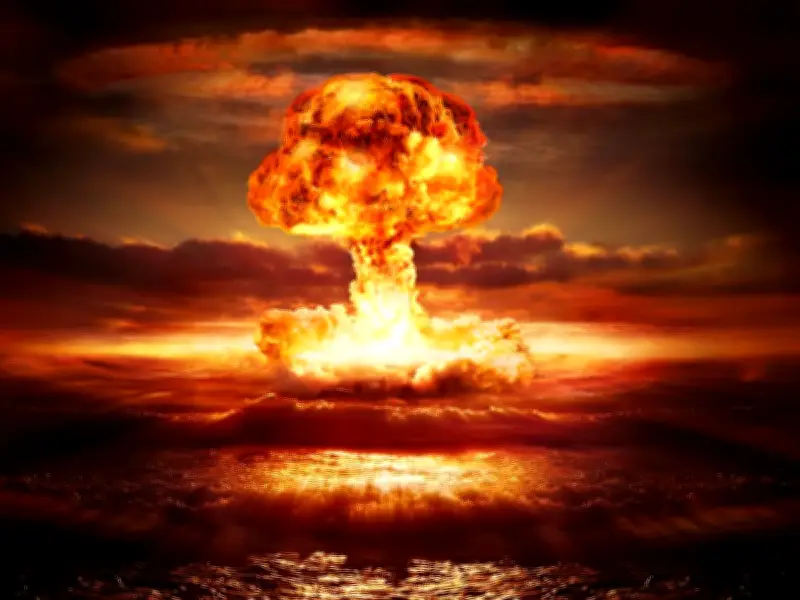
Fears of an imminent outbreak of World War Three are at an all-time high as signs that fresh global conflict continue to emerge. Some military commentators fear we are already entering a global conflict.
From raging conflicts in the Middle East to bloody civil wars in Africa, there are thought to be around 15-30 active armed skirmishes going on at the moment around the world. The US is still at war with Iran while Russia's war with Ukraine rages on.
Major conflicts merging
Similar to the 1930s, when a number of countries began acting on their imperial ambitions, we are now seeing a number of conflicts converge. The US, for example, joined with Israel's bombing campaign of Iran. Meanwhile, North Korea has sent soldiers to fight for Vladimir Putin in Ukraine. Nato allies have flooded the conflict with weapons and cash to help Kyiv fight back, without directly getting involved. Yet.

Putin has repeatedly hurled attacks and threats against Moldova, Poland and other countries while his political allies repeatedly call for direct strikes on Europe and the use of nuclear weapons against Ukraine.
'Axis of Authoritarians' emerge
Putin sent a message to North Korean leader Kim Jong-un on Pyongyang's National Liberation Day, highlighting the leaders' "unprecedented level of partnership." The Russian leader has been cosying up to allies China, Iran and North Korea, a bloc some have dubbed a "new axis of evil". President Zelenskyy has warned that the Kremlin has decided to deploy between 30,000 and 50,000 North Korean troops on Russian soil.
And there is China. A recent report suggested that if China did attack Taiwan – as is feared could happen – Beijing could call in its chips with Moscow by engaging the aid of Russia's powerful Pacific submarine fleet.
The West is a mess
Donald Trump has long complained about Nato allies' weaknesses and lack of military spending. Putin has already threatened to wipe out sleepy commuter town Swindon which is home to nine of Britain's drone manufacturing facilities.
Even Vladimir Solovyov, a close ally of Vladimir Putin, mocked Britain by ranting on TV: "Why are we yet to destroy factories in Britain? Will Britain use all of its might that it doesn't have?"
And the EU, long seen as a sign of European post-war unity and progress, is showing signs of fracture amid a mounting migration crisis and governments at loggerheads. This could be seen by hostile states as a great time to strike.
Allied forces 'not ready' to fight
Fears of a global conflict have sparked a conversation about military conscription for Brits. PM Andy Burnham was recently told Britain faces an "inevitable" Russian attack on its defence and security after declaring its unwavering support for Ukraine.
During World War Two, men aged between 20 and 22 in 1939 were conscripted up to six months before the actual outbreak of war. After the start of the conflict, conscription was immediately expanded to include any man aged 18 to 41.
US 'near economic brink'
One upside compared with the 1930s is that we are not in the midst of a worldwide depression. But as the cost of living crisis continues to bite, the warning signs of a sharp and abrupt downturn are everywhere.
Alarm bells have been ringing at the state of the US economy and its capacity to tackle a nuclear war with Russia and its 'axis of allies.' US national debt stood at just under $20tn in 2016 during Trump's first term and has now doubled in 10 years.
A global financial panic could be the trigger for an all-out conflict. Writing in the New York Times, Bret Stephens said: "In periods of economic distress, democracies almost always become more risk-averse, while dictatorships become risk-prone."