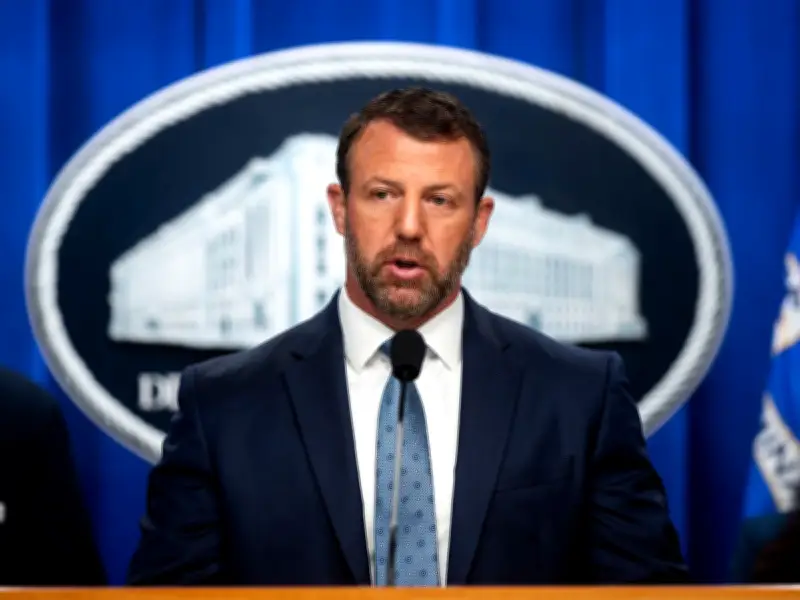
Markwayne Mullin, the United States secretary of Homeland Security, has sparked controversy by taunting Iran's national football team following their World Cup elimination. Mullin boasted that he 'danced a happy dance' upon learning of Iran's exit and confirmed that their ESTA visas for entry to the United States had been revoked. The comments have intensified tensions between the two nations, which were already strained due to political conflicts and the treatment of the Iranian team during the tournament.
Iran's World Cup Exit and Controversial VAR Decision
Iran were eliminated from the World Cup after a 1-1 draw with Egypt, which left them third in Group X with three points from three draws. Their fate was sealed when a 3-3 draw between Algeria and Austria, featuring a 95th-minute equaliser by Sasa Kalajdzic, ensured Iran could not advance. The draw with Egypt was marked by controversy, as a late winner by substitute Shoja Khalilzadeh was ruled out by VAR after an extremely tight offside call. An animated graphic showed the decision may have been settled by millimetres, raising doubts about the semi-automated system's accuracy.
Mullin's Taunts and Visa Revocation
Speaking to reporters, Mullin said: 'I'm just glad they're done, and they're not coming back. I was so happy when we were able to pull their visas and said they could leave the US soil. And I might've sung a song or two or maybe even danced a happy dance.' He added that Iran's team required more attention from his department than any other squad at the tournament. The visa revocation forced Iran to make an immediate exit from the United States, a requirement not imposed on any other participating nation.
Iran's Complaints of Unfair Treatment
Iran's head coach, Amir Ghalenoei, described his team as the 'most oppressed' at the tournament, citing the relocation of their training base from Arizona to Tijuana, Mexico, and travel restrictions. He said his side was given 'less than half' the training time needed to prepare. Captain Mehdi Taremi echoed these sentiments, stating: 'This kind of tension undermines the joy of the World Cup. I felt the tension from the first moment we arrived.' Iran's ambassador to the United Nations, Abolfazl Pasandideh, also raised concerns about a conspiracy, criticising 'pseudo-VAR' interventions and arguing that Iran battled 'fatigue, injustice, and hardships that rarely appeared before the cameras.'