Experts say public protection at UK zoos remains robust despite two tragic incidents in recent months: a man was mauled to death by a tiger at Yorkshire Wildlife Park, and a three-year-old boy was seriously injured in a crocodile enclosure at Johnsons of Old Hurst in Cambridgeshire.
On a busy Saturday afternoon at Yorkshire Wildlife Park in Doncaster, visitors watched in horror as a man climbed into a tiger habitat, minutes after posing for a photograph beside it. Eye witnesses said he scaled a metre-high viewing barrier before dropping into the enclosure, overpowering a woman who tried to pull him back. The resident 30-stone Siberian tiger, named Altai, was seen pawing at the man, who was dragged away and later declared dead at the scene.
Second Incident in Months
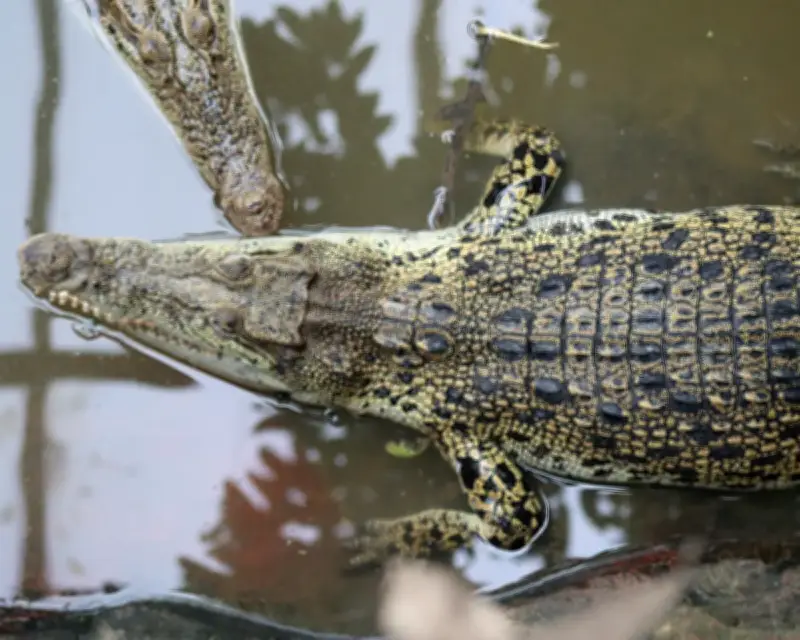
Yorkshire Wildlife Park remained closed on Monday, while a City of Doncaster council spokesperson said the local authority had launched a health and safety investigation. The incident marked the second serious case at a UK zoo in just a few months. In June, a three-year-old boy was seriously injured after being attacked by one or more crocodiles when he ended up in the enclosure at Johnsons of Old Hurst, near Huntingdon.
In the Cambridgeshire incident, the boy was allegedly thrown into the crocodile enclosure. Police arrested a 30-year-old man from Norfolk on suspicion of attempted murder at the time, and police said he was “assessed as not being fit for interview”. This week, a spokesperson for Cambridgeshire police said the investigation was still under way and the suspect had been bailed until 17 December.
Experts Defend Zoo Practices
Experts have said that recent events are not a reflection on zoo practices, and may instead point to issues with human behaviour, mental health, or support services. “These were two really terrible events, but rather than being about zoos themselves, I wonder whether they could reflect wider issues in society,” said Amy Dickman, professor of wildlife conservation and director of WildCRU at the University of Oxford. “Given how many millions of zoo visits there are in a year, these are vanishingly rare instances, although of course that doesn’t negate how deeply tragic they are when they occur,” she added. “I wouldn’t conclude that there was a major issue with zoo safety – the harsh reality is that it’s virtually impossible for zoos to stop people who are very determined to breach safety measures.”
Jo Judge, chief executive of the British and Irish Association of Zoos and Aquariums (BIAZA), said: “Two incidents have happened in the last few months, which is obviously really upsetting and distressing for the sector, but they are actually very, very rare.” There are hundreds of zoos, aquariums, and animal attractions in the UK, and around 32 million people visit BIAZA member zoos and aquariums across Britain and Ireland every year. “The industry has already put in place so many safety measures that it’s not being seen as a rising problem or something that we’re not doing enough about, these are just very unusual and very rare incidences,” she added. “It is unbelievable that these two incidents have happened so closely together.”
Safety Measures and Challenges
Dickman noted that because animals kept in enclosures do not come into contact with humans as those in the wild may do, “for someone to walk into that environment is probably far more dangerous, ironically, than if you were out in the wild with animals that were used to navigating those spaces alongside people.” She said she had “never visited a zoo in the UK and thought ‘this is dangerous’,” adding there was “layer upon layer of protection against people interacting with dangerous animals” and that “you do have to do it very intentionally”.
All zoos in the UK must be licensed and follow strict safety procedures to protect animals, staff, and visitors, with guidelines for enclosures, including sizing and perimeter fences. “There is no accidental falling into a category 1A dangerous animal enclosure, it just doesn’t happen – it’s not designed that way,” said Campbell Murn, a lecturer in conservation science at the University of Reading, who until recently sat on Defra’s Zoos expert committee. Category 1A refers to high-risk species capable of causing a human fatality, including rhinos, elephants, great apes, and big cats.
“In terms of preventing intentional entry to enclosures, there’s locks, there’s barriers,” Murn added. “But short of putting an electric fence [up], which of course has its own health and safety considerations, the protocol remains patrolling staff keeping an eye out for unusual behaviour. It’s simply not possible though, at an attraction like Yorkshire Wildlife Park that gets hundreds of thousands – if not over a million – visitors a year to keep an eye on everybody all the time.” He said safety had to be balanced against visitor experience, so zoo goers don’t get “a sense of walking into an electrified fence fortress where they can’t do anything other than look through heavy steel bars”, and used the analogy of “a determined thief”. “If a determined thief wants to get in your house, they’re going to get in your house,” he said. “You can mitigate risk to a certain point but there’s sometimes no stopping events from happening, unfortunately.”
Public Behaviour and Online Influence
Paul Rose, a senior lecturer in psychology (animal behaviour) at the University of Exeter, said that “public behaviour can be unpredictable, as we all know”. “There will be mitigation in place, such as high fencing, stand-off barriers, signage and explanation and a code of conduct for how to behave at the zoo (and for visitors to take responsibility for their actions),” he said. “Risk assessments will also be undertaken regularly.” Following Saturday’s incident, he said he imagined that “lessons will be learned regarding how zoos try to manage the behaviour of the public and how they instruct visitors to conduct themselves in and around enclosures”. “The majority of visitors behave in a way respectful of the animal and environment at the zoo, but there is always a risk of rogue or unusual behaviour and this will continue to be risk assessed and part of zoo personnel training,” he added.
Experts did express some concerns about the role the internet and social media may play in encouraging people to interact with wild animals. Judge said: “We do unfortunately see on social media quite often videos of people, mostly in other countries, entering the enclosures with some of these animals, and that is something that we do not support at all.” “They are dangerous wild animals and they should be respected as such,” she added, but said it wasn’t something UK zoos are “hugely concerned about” as they “will make it very, very clear that these are dangerous animals”. Dickman, however, said online content was definitely of concern. “Though it may not have been a factor here, it is worrying how many videos exist online of people playing around with tigers and lions,” she added. “AI has made that even worse, and the illusion that people should have those interactions with wild, dangerous animals can be really damaging.”