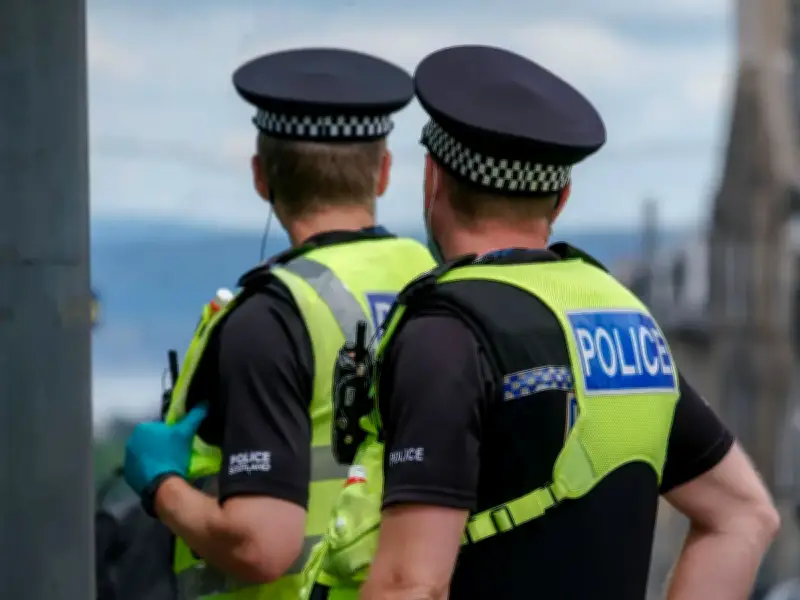
Crime in Scotland has risen sharply over the past year, with violent offending leading the increase. Between June 2025 and June 2026, offences rose by seven percent to 323,531, while murders increased by 40 percent. There were also sharp increases in attempted murders, serious assaults, sexual assaults, domestic violence, and rape.
The rise comes as other European countries report reductions in offending. Murders in France, Germany, Italy, and Spain are in long-term decline, while burglaries, thefts, and robberies are also down. In Scotland, however, crimes such as domestic violence and shoplifting are at a four-year high.
Retired superintendent cites 'perfect storm'
Martin Gallagher, who recently retired from Police Scotland at the rank of Superintendent after more than 28 years on the frontline, believes he knows why the figures are rising. He says the latest statistics are a perfect storm resulting from a combination of factors, including fewer officers on the beat, fewer police stations, fewer police cells, and increasing workloads.

Gallagher said: "Many will be asking why violent and sexual crime along with many types of dishonesty are rising in Scotland, and why they are doing so when across Europe crime is going down. There are multiple factors, many of which are now coming to a head."
He pointed out that 200 police stations have closed since Police Scotland was created, and those still open have very few 24/7 open front counters. "The consequence of this is criminals are not caught. They are emboldened to commit more serious offences," he said. "These more serious offences are being investigated by 1000 less cops than existed when Police Scotland was formed."
Officers unavailable and cells closed
Gallagher continued: "Added to that, over 2000 of our cops can no longer be deployed on the street as they are not medically fit. Police cells have disappeared across the country, meaning cops have to spend hours transporting anyone they actually do arrest."
He also noted the myriad of health and social issues officers are asked to deal with, which divert them from preventing and detecting crime. "Thrown into the mix are more habitual offenders on the streets through early release. It is a perfect storm, which is unique to Scotland. We need a police force that is on the street and controls the streets," he added.
During his time in the police, Gallagher was local area commander for Paisley, Scotland's largest town. He added: "These figures need to be a wake up call that 'being kind' is not what the police exist for. The police exist to enforce the law, without fear or favour. They need our backing, along with our courts and politicians to do so. Things must change before more Scots become victims."
Organised crime and officer numbers
Graeme Pearson, former director general of the Scottish Crime and Drug Enforcement Agency, believes some of the increase can be linked to the growth in organised crime. He said: "The rise in theft of cars reflects the pursuit by some to access and dismantle cars for their valuable parts and also the export of cars abroad generating significant profit. The huge rise in shoplifting over the two years reflects criminal activity directed towards low risk high gain crime."
Pearson added: "Experience shows that few offenders commit violent crimes in the absence of drink and or drugs in their system. In addition the rise in domestic abuse, sex crimes and prevalence of organised criminality sets a fertile ground for deaths in such circumstances."
David Kennedy, general secretary of the Scottish Police Federation, says the rise in crime can be linked directly to a fall in the numbers of police officers on the street. He said: "You cannot continually increase the workload, reduce the workforce and expect there to be no consequences for visibility, response times and the ability to investigate crime. If Scotland wants a police service that can properly respond to rising crime, protect communities and proactively target offenders, then policing has to be resourced according to the demand it is actually facing."

Police Scotland Deputy Chief Constable Stuart Houston said: "Scotland is a safe place to live and work, and officers and staff work tirelessly every day to tackle crime and protect the most vulnerable. We care deeply about violence and how it affects the communities we serve. Significant activity is being undertaken with partners to deliver early intervention, particularly for children and young people, to safeguard and prevent future violence."
Houston added: "The Chief Constable has been clear that urgent decisions are needed to address threat, harm, and vulnerability. We must focus on strengthening and modernising our frontline so our people are best equipped to prevent crime. An increase in violence against women and girls, violence and sexual crimes is a huge concern. This is a societal emergency that needs a public health, society-wide approach to address the causes."