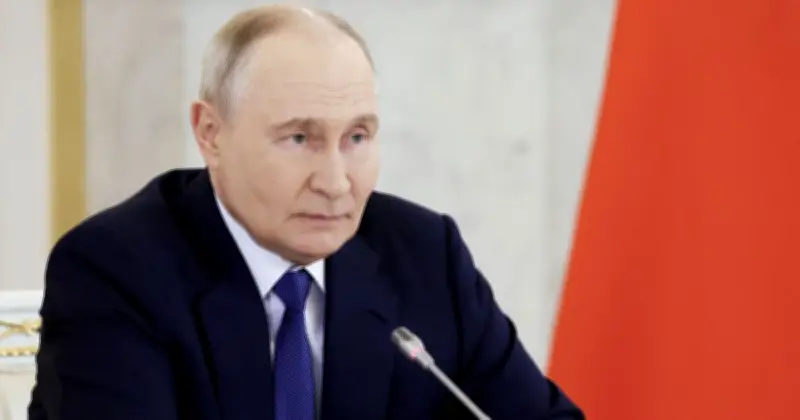
The Russian Embassy in London has accused Britain of becoming "an accomplice and co-perpetrator" of attacks on Russian territory and of "deliberately opting for an escalation" in the conflict with Ukraine. The statement, made on Monday, August 17, warned that the "deeper" UK involvement in the war and the "greater" its support for Ukraine, the "higher the price it will pay."
UK Response to Russian Accusations
The UK's Ministry of Defence responded: "Britain stands shoulder to shoulder with Ukraine and we are committed to providing the equipment Ukraine needs to defend itself against Putin's illegal invasion. Russia should be in no doubt about the resolve of this Government to stand against Russian aggression, in Ukraine and against the UK and our allies."
The UK has long supported Ukraine in its war with Russia, steadily providing more advanced weaponry, including drones that Ukraine is launching at key installations within Russian territory.

Four Potential Russian Retaliation Options
The Telegraph has reported four options if Russia were to escalate with the aim of forcing Prime Minister Andy Burnham to change policy and abandon Ukraine.
Threat one: Intensify current sabotage, drone incursions and cyber attacks
Russia has targeted Britain with a campaign of sabotage, disinformation and cyber attacks that have stayed just below the threshold of open armed conflict. Russian operatives could burn down more warehouses linked to Ukraine or hurl more petrol bombs at properties associated with Britain's senior politicians. Specialist hackers from Russia's military intelligence service could launch more cyber attacks against British targets, possibly civilian infrastructure. Cost and disruption could be inflicted by sending more drones to loiter above runways of busy passenger airports. Russia could also work to create division within British society. The Telegraph wrote that in France, Russian agents have deposited pigs' heads outside mosques, defaced synagogues, vandalised the country's Holocaust memorial, and left mock coffins under the Eiffel Tower. The French government has also blamed Russia for trying to frighten tourists away from Paris by spreading the story in 2023 that the city's hotels were infected with bed bugs. Many of those operations could be traced back to a Russian company called the Social Design Agency, closely linked to the Kremlin.
Threat two: Assassinate Brits inside the country
Russian intelligence has a long record of killing people on British soil, but targets have been Russian exiles. Russia could expand its target list to include British citizens involved in arming Ukraine. Katia Glod, the deputy head of foreign policy at the New Eurasian Strategies Centre, said: "It should not be completely ruled out, but Britain has built experience because of the Litvinenko and Skripal cases. It's harder to do that in Britain today than in Germany or France, which are probably more penetrated by [Russian] spies."
Threat three: Attack British facilities in Ukraine
This is probably the most likely option for any Russian escalation, reports the Telegraph. Britain's effort to supply Ukraine relies on a network of physical facilities inside the country. The existence of some has been publicly disclosed. If Russia knows where any of these facilities are located, striking them with missiles or drones – and probably killing any Britons working inside them – would be a possibility in retaliating against Britain. Whether the Russians have acquired such detailed information is unknown.
Threat four: Strike Britain with missiles or armed drones
If a Russian missile or drone were to slam into a British arms factory, killing scores or hundreds of people inside, the danger is that Britain might invoke Article V, the mutual defence clause of the NATO treaty. The allies would rally to respond, making this option unlikely for an already stretched Russia.