Flash flooding on the Nepal-Tibet border has killed 270 people, with 826 still missing, including 33 British tourists, according to Nepali authorities.
Death toll and missing persons
Nepali police said in an update on Thursday that emergency workers have recovered 270 bodies after a wall of grey water and dirt roared down the Bhote Koshi, Trishuli and Narayani rivers on Wednesday. The country's National Disaster Risk Reduction and Management Authority said 826 people remain missing, and the Nepal Tourism Board said 644 tourists were among them, 33 of whom are British.
An additional three deaths have been reported in villages in neighbouring Tibet, with 558 people confirmed missing in the country's Gyirong county, among them 260 foreign nationals.

Images show devastation
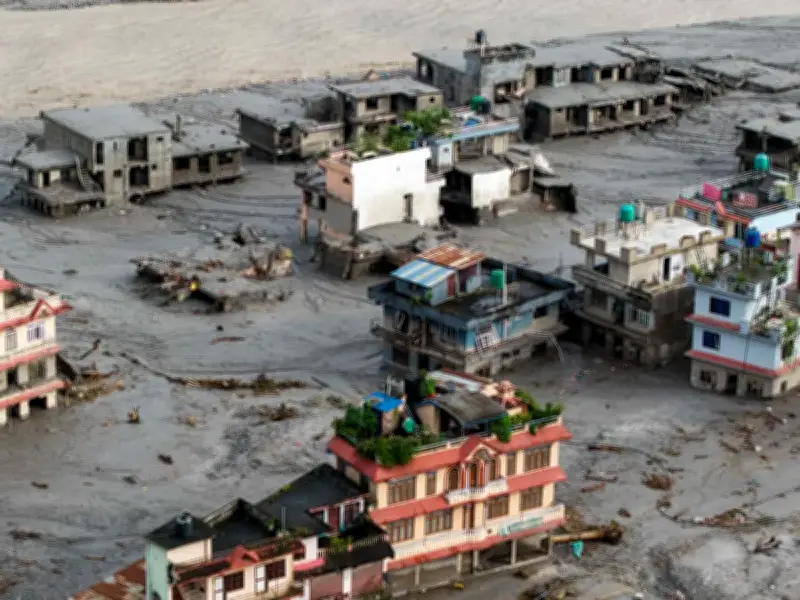
Distressing images capturing the destruction show landscapes, including residential homes and community buildings, painted in grey mud and torn apart. Others have shown locals in mourning after Nepal and Tibet fell victim to one of the worst Himalayan disasters in recent history.
An aerial view shows houses lying deluged in sludge after flash floods at Devighat, Bidur Municipality in Nepal's Nuwakot district on August 27, 2026.
Possible cause
Geologists believe the flooding may have been sparked by glacier collapse, with Simon Cook, a senior lecturer in energy environment and security at the University of Dundee in Dundee, Scotland, who specialises in geology saying satellite imagery captured a missing part of a glacier near the flooded Nepal-Tibet border.
He told the BBC this suggested there was "some kind of ice avalanche or glacier collapse". He added: "I think some people thought this was an earthquake that triggered an avalanche, but there’s a seismologist on our team who is convinced that it was actually the collapsed glacier hitting the valley bottom. That tells you the sheer magnitude of the event."