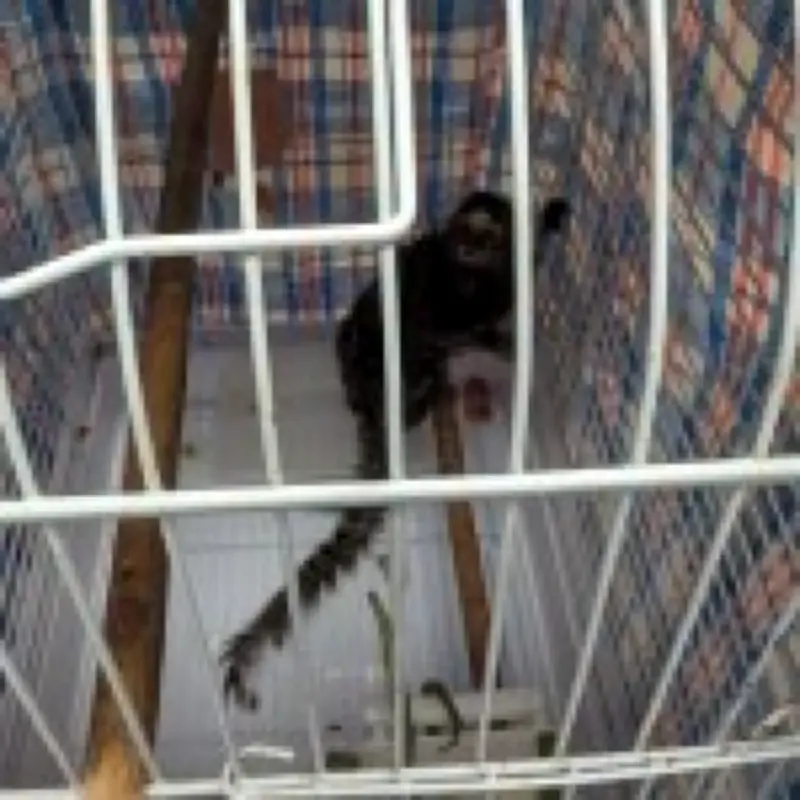
A terrified common marmoset was discovered locked in a cage and dumped on a London bus, prompting an RSPCA investigation and fears of further abandonments following new legislation.
Discovery on the 302 Bus
A mother with a pram alerted the bus driver to a distressed chirping coming from a large laundry bag blocking the aisle. Inside, the driver found a female common marmoset cowering in a locked cage. The bus was travelling on route 302 between Mill Hill Broadway Station and Kensal Rise, arriving at Kensal Rise at 11:45am on Friday.
The driver took the monkey back to the Metroline Bus Depot at Willesden Bus Station, where she received care. She has been affectionately nicknamed Oyster after the London travel card.
RSPCA Investigation
RSPCA London Chief Inspector Clare Dew said the marmoset had been hidden inside a small white metal bird cage wrapped in a plastic chequered laundry bag. 'She'd been left with some apple but was, understandably, very stressed and dehydrated,' Dew said. 'We'd like to say a big thank you to the bus driver and the team at Metroline who stayed calm, took the monkey back to their station, put her somewhere dark and cool, to keep her calm, and contacted us for help.'
Dew added that CCTV and bus scanning logs will be reviewed to trace the person responsible. 'It was clearly intentional,' she said.
Link to New Primate Licensing Laws
The abandonment is feared to be a direct result of new legislation introduced in April requiring all primates kept in England to be licensed. Exotic animals expert Evie Button said: 'Primates are highly intelligent and social wild animals who need a lot of space, mental stimulation and appropriate companions – needs that can't be met by human company alone.'
Button warned that keepers who cannot or do not want to license their pets may abandon them instead. With an estimated 5,000 primates kept as pets in England and low uptake of the new licence system, there are concerns about many animals' fates.
Chief Inspector Dew added: 'This is clearly a direct result of the new legislation and is something we feared would happen. I'd be surprised if it's the last primate we see being dumped.' She urged struggling owners to contact specialists, vets, or charities rather than abandon animals.
Oyster's New Home
The marmoset was examined by a specialist exotics vet and given a clean bill of health, though she was not microchipped. She is now settling into a specialist primate sanctuary, where she will be introduced to a lone male marmoset in need of a companion.
Dew noted a twist of fate: a sanctuary had been seeking a suitable female marmoset for a lone male they cared for, and Oyster arrived just after a planned transfer from northern England fell through. 'She's settled in really well over the weekend, and is eating well, so hopefully she'll be able to meet her new friend soon,' Dew said. If unclaimed, Oyster will remain at the sanctuary.
Evie Button concluded: 'Ultimately we believe primates should not be kept as pets. We want to see a future where monkeys are no longer kept in homes, but protected in environments that truly meet their needs.'