Three Liverpool men have been convicted after a convoy of 4x4 vehicles caused serious damage to a protected area of Welsh countryside. John Robinson and Michael Williams, both from Liverpool, were sentenced at Wrexham Magistrates’ Court after driving with a group of seven off-road vehicles onto the Berwyn Site of Special Scientific Interest (SSSI) in Denbighshire.
A third Liverpool man, Joseph Hodgson, was found guilty in his absence after failing to attend court. A warrant has now been issued for his arrest so he can be brought before the court for sentencing.
Convoy caused significant damage
The offences took place on June 1, 2025, when the group travelled from Liverpool to Denbighshire in convoy. Natural Resources Wales (NRW) launched an investigation after the vehicles entered privately-owned land and drove onto the protected site, despite signs warning that private vehicles were not permitted.

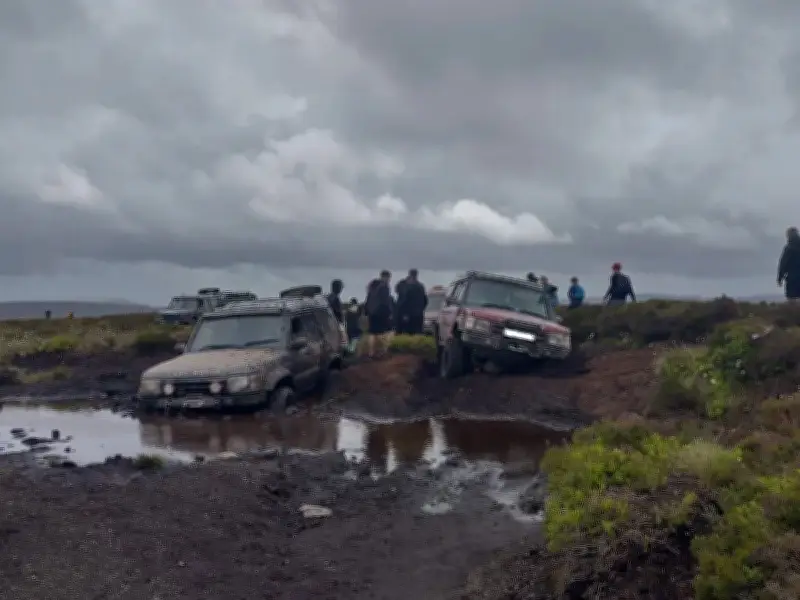
The group travelled more than 3km across the countryside towards the Moel Fferna peak, leaving deep tyre tracks and damaging areas of ancient peat and blanket bog. NRW said the damage was “significant” and could have long-lasting consequences for the fragile habitat.
Investigators found that a gate lock had been broken using bolt croppers and signs had been torn down to allow the vehicles to enter. Footage and photographs posted on TikTok accounts linked to the group helped investigators identify the men and place them and their vehicles at the scene.
Vehicles stuck in bog
The videos showed the vehicles driving across the protected habitat and leaving deep tracks behind. Two of the vehicles became stuck in the bog and had to be towed out by other members of the group, causing further damage.
During an interview under caution, Robinson admitted damaging the lock and signage to allow the group to enter and accepted that they had driven onto the SSSI. Williams also accepted that he had been part of the group which entered the protected site.
Hodgson did not cooperate with the NRW investigation or attend an interview. He claimed he had sold his vehicle, but investigators later found TikTok videos showing him driving on the protected habitat and posting footage from the site.
Court sentences and restoration
NRW classified the most serious damage as a Category 2 impact, meaning significant harm had been caused to an SSSI habitat. The organisation said deep ruts created by the vehicles had caused long-term damage to the way water moves through the peat, limiting the habitat’s ability to recover naturally.
At Wrexham Magistrates’ Court on August 20, Robinson pleaded guilty to criminal damage. He was ordered to pay £2,121.52, including £1,000 compensation for damage to the SSSI and £1,000 in costs. He was also disqualified from driving for two months. Williams was ordered to pay £2,000, including £1,000 compensation and £1,000 in costs, and was also disqualified from driving for two months.
Hodgson had previously accepted that he had caused damage to the ancient peat-bog site but was found guilty in his absence of criminal damage to the lock and gate sign which prevented access.
Kirsty Roberts, on behalf of Natural Resources Wales, said protected sites were designated because they contained some of the UK's most important and fragile wildlife. She said: “Blanket bog is particularly sensitive. Once it is cut up by deep ruts, the water balance can be altered for years, degrading habitat and reducing carbon storage. Illegal off-roading also impacts farmers and landowners who manage these privately-owned working landscapes, disrupting farming operations, increasing costs, and undermining long-term conservation efforts.”

Ms Roberts urged people visiting the countryside to follow signs and use only lawful routes. She said: “We take action where protected sites are damaged, and we urge everyone using the countryside to follow signs, stick to lawful routes, and help safeguard these nationally important places.