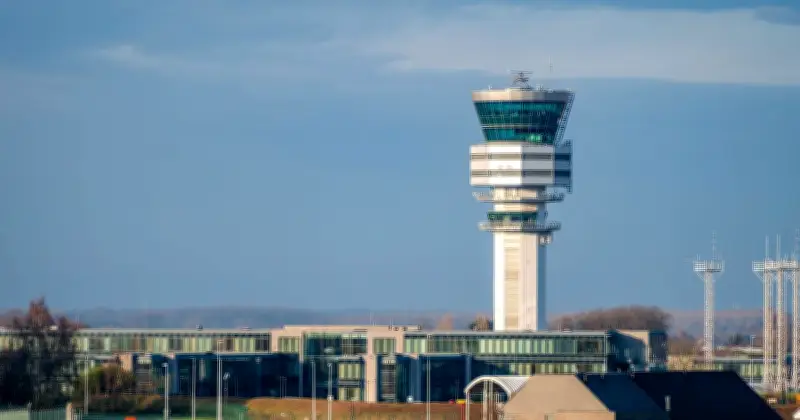
Five pilots were dazzled by laser beams while approaching Brussels Airport for landing in a series of incidents between Friday evening and Saturday morning, according to reports from foreign media. The lasers were directed at their faces as they flew over Dilbeek in Belgium.
Incidents Timeline and Reports
The first incident occurred on Friday evening at 9.45 pm, and the final one was recorded on Saturday morning at 2.43 am, as reported by Le Soir. The publication said that during the night between Friday and Saturday, five pilots were dazzled by laser beams moments before touching down.
This was corroborated by air traffic control organisation Skeyes, following reports by DPG Media. Kurt Verwilligen of Skeyes told local media: "They all had a laser pointed at their faces between 8.45 pm and 2.45 am."

Frequency and Response
Such incidents are not rare; last year, Skeyes logged 169 reports. Nevertheless, five times in a single evening remains a particularly alarming figure.
According to 7Sur7, those responsible have yet to be identified. Koen Luppens, superintendent at the Dilbeek police district, said: "We immediately sent a patrol in that direction. But without an exact location, it's an impossible task. It's like looking for a needle in a haystack." Officers are now appealing for witnesses to come forward.
UK Legal Framework
In the UK, under the Laser Misuse (Vehicles) Act 2018, a person commits an offence if they shine or direct a laser beam towards a vehicle which is moving or ready to move, and the beam dazzles or distracts, or is likely to dazzle or distract, a person with control of the vehicle.
The act also covers air traffic facilities, making it an offence to shine a laser towards an air traffic facility or a person providing air traffic services, if it dazzles or distracts them. Anyone found guilty faces, upon summary conviction in England and Wales, a custodial sentence not exceeding the general limit in a magistrates' court, an unlimited fine, or both. This could result in a 12-month prison term if proceedings are heard before a magistrates' court. Should the defendant contest the charge and the case proceed to crown court, the maximum custodial sentence rises to five years.