Pressure is mounting on FIFA President Gianni Infantino after a series of high-profile football figures demanded his resignation following the controversial Folarin Balogun incident at the World Cup. Former Liverpool manager Jurgen Klopp became the latest prominent voice to question Infantino's position, after US President Donald Trump claimed he personally requested a review of the striker's suspension.
Balogun's Red Card and Suspension Overturned
Balogun was sent off during the United States' group-stage match against Bosnia and Herzegovina, which should have ruled him out of their next game. However, a FIFA disciplinary committee suspended the ban, allowing him to play in the hosts' 4-1 last-16 defeat against Belgium. The decision quickly became one of the tournament's biggest talking points after Trump publicly declared he had contacted Infantino to request a 'review' of the punishment.
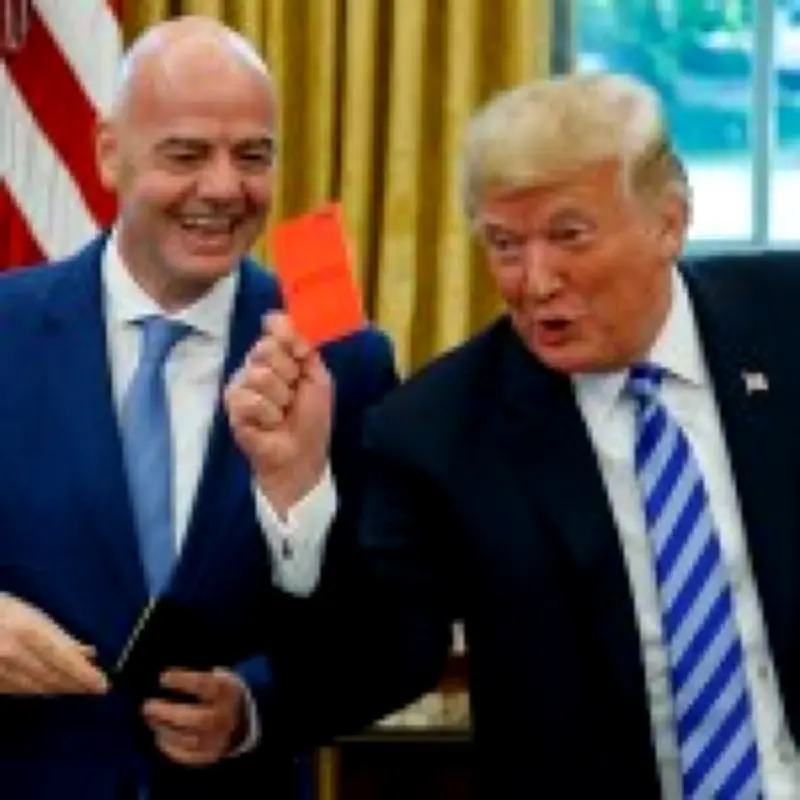
Trump and Infantino have enjoyed a close relationship for several years. In December, Infantino presented the US president with the inaugural 'FIFA Peace Prize' during the World Cup draw, fuelling accusations of cronyism from critics.
Klopp and Lineker Lead Criticism
Klopp, who is set to become Germany's next national team manager, did not hold back when asked about the controversy. 'This is our sport, not theirs,' he said. 'If Donald Trump and Gianni Infantino really sorted this out between themselves, it is madness; it calls everything into question.'
Former England striker Gary Lineker also weighed in, suggesting that regardless of whether Balogun was cleared to play, the United States could have made its own statement. Speaking on The Rest is Football podcast, Lineker praised Belgium for ignoring the surrounding noise and suggested that Mauricio Pochettino or Balogun himself might have decided the striker should not play. 'I don't think that's right for football, the integrity of the game, the integrity of the sport,' Lineker said, adding that leaving Balogun out voluntarily could have sent a powerful message.
Political and Administrative Backlash
David Bernstein, former Football Association chairman, argued that the episode struck at one of football's defining strengths: that the same rules are supposed to apply wherever the game is played. British politicians have also entered the debate. Liberal Democrat leader Sir Ed Davey called for Infantino to resign, insisting that 'the World Cup belongs to the fans, not gangsters like Trump.'
Even Sepp Blatter, Infantino's predecessor who received an eight-year ban in 2015, criticised the handling of the affair. UEFA has also criticised the situation.
Infantino's Presidency Under Scrutiny
Infantino has led FIFA since 2016 after winning the election following the corruption crisis that engulfed world football's governing body. He has since been re-elected unopposed twice and earlier this year confirmed he intends to seek another four-year term in 2027. The latest controversy is far from the first difficult chapter of his presidency. Before the 2022 World Cup in Qatar, he attracted widespread condemnation over remarks in a press conference where he said: 'Today I feel Qatari. Today I feel Arab. Today I feel African. Today I feel gay. Today I feel disabled. Today I feel a migrant worker.' Human rights groups and campaigners heavily opposed these comments.
His close relationships with political leaders in several countries have also drawn scrutiny, with some questioning whether FIFA has become too closely aligned with governments hosting or bidding for major tournaments. Infantino has defended his approach as necessary diplomacy.
World Cup Expansion and Other Controversies
FIFA's decision to expand the men's World Cup from 32 to 48 teams has divided opinion throughout his tenure. Supporters believe it gives more nations the chance to compete, while opponents argue it dilutes the tournament and creates a more congested football calendar. He has also faced scrutiny over proposals for biennial World Cups, plans ultimately abandoned after strong opposition from players, supporters, leagues, and continental governing bodies.
Whether the latest storm proves more damaging than those before remains to be seen. What is already clear is that the pressure on Infantino is no longer coming from one corner of football but from managers, former players, administrators, and politicians alike. Will he step down? Don't bet on it.