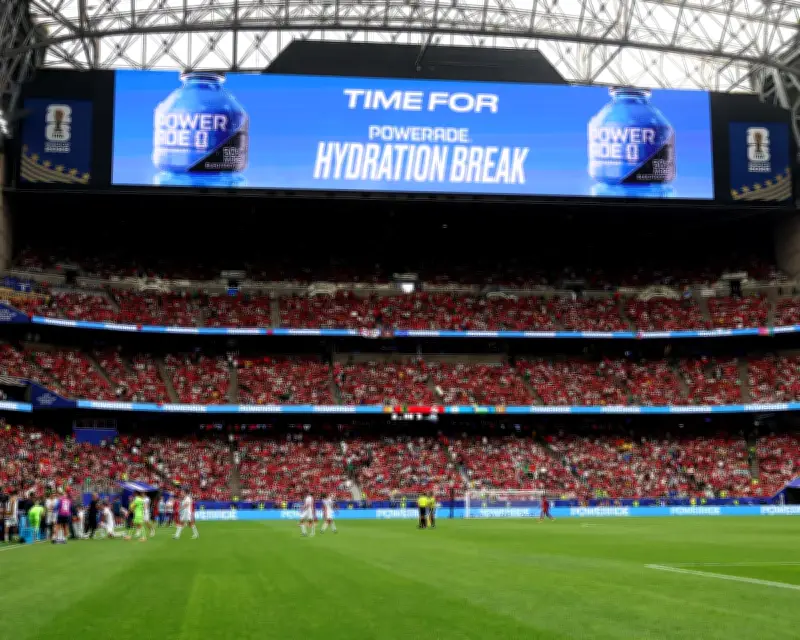
Fifa's imposition of mandatory hydration breaks, widely perceived as advertising intermissions, has ignited a storm of protest from fans, players, and coaches during the ongoing World Cup. The breaks, which occur twice per half, effectively split the game into four quarters, a structural change unseen since 1897.
The controversy escalated during the England vs Ghana match at Boston Stadium, when players attempted an unofficial hydration break before the scheduled time, prompting referees to intervene with apparent indignation. The official break that followed was met with loud boos from the crowd, a reaction that has become common across matches involving the Netherlands, Spain, Czech Republic, Mexico, Japan, Colombia, and Saudi Arabia. Only Brazilian and Haitian fans in Philadelphia seemed unbothered, distracted by dancing and national pride.
Coaches and Players Condemn the Breaks
Prominent football figures have voiced strong opposition. Thomas Tuchel has expressed hatred for the breaks, while Marcelo Bielsa spoke darkly about fissures in the sport's soul. Kai Havertz called them annoying. Only two notable figures support the change: Ralf Rangnick, who wants European football to adopt it (though Uefa has ruled it out), and Gianni Infantino, who imposed the breaks and is reportedly focused on advertising revenues.

Fifa's justification—player welfare in air-conditioned stadiums—has been dismissed as a Trojan horse. Critics note that late kick-offs and air conditioning already mitigate heat, and a quick swig would suffice instead of a three-minute stoppage. The real motive, observers argue, is to boost broadcast revenue, particularly targeting the US market, where ad breaks are standard.
Structural Impact on the Game
Marcelo Bielsa has argued that the four-quarter structure fundamentally alters football's tactics, structure, and texture. The game's essence lies in controlling rhythms across an entire half, with fatigue being integral to its beauty. With breaks and rolling substitutions, the sport becomes more manipulable. For instance, Carlo Ancelotti used a hydration break to reshuffle Brazil's pack against Morocco, stealing back momentum.
The change also affects the sport's unpredictability. Memorable moments, like Jérôme Boateng's fall against Lionel Messi in 2011, derived from the unforgiving pressure of a full half. The breaks disrupt this dynamic, potentially flattening the spectacle.
Fifa's Power Play and Commercialization
The breaks are part of a broader trend of Fifa placing itself at the center of the spectacle. Broadcast cuts frequently show Infantino frowning gravely, and the sport is increasingly rebranded as 'Fifa' in the US. The breaks also provide a platform for retired celebrities like David Beckham, whose mute advert showreels have become a fixture.
Paraguay head coach Gustavo Alfaro spoke passionately about the need to defend football from commodification, saying, 'That is what we must defend.' His words resonated with many who see the breaks as a step toward ruining the sport's unique appeal.
Football has historically been resilient to commercial pressures, but this unilateral change tests its limits. The game's power lies in its long, uninterrupted flow—a rarity in modern entertainment. Fans are urged to continue booing and rejecting the breaks as a form of protest against this fundamental alteration.