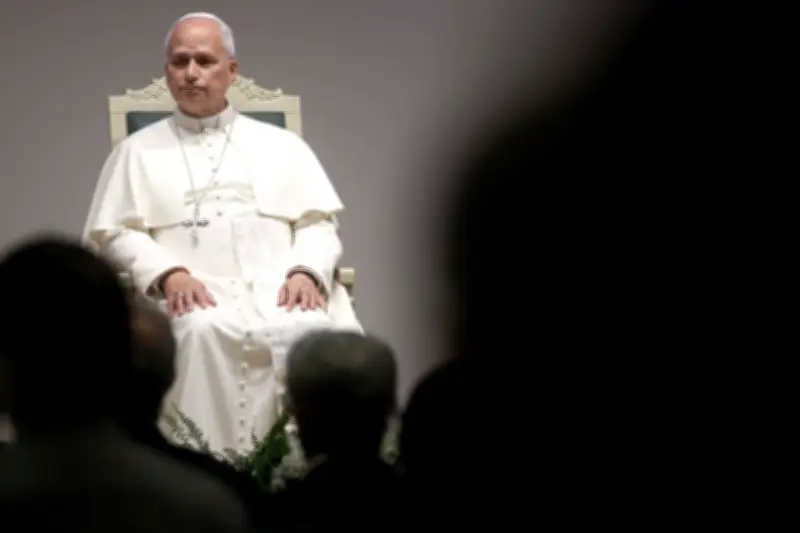
The far-right Catholic sect Society of St Pius X (SSPX) is set to ordain four new bishops on July 1, defying Vatican authority and risking immediate excommunication, according to church law. This move threatens to deepen existing tensions between the Vatican and rightwing Catholics, particularly in the United States, and poses a significant crisis for Pope Leo just over a year into his papacy.
Background of the Society of St Pius X
Founded in Switzerland in 1970, the SSPX emerged in opposition to the liberalizing reforms of the Second Vatican Council (1962-1965). The order has gained substantial followings in the US, France, Argentina, and other countries. Its headquarters in Kansas claims that over half a million people worldwide attend its masses, though these figures are difficult to independently verify. The SSPX reports nearly 1,500 priests, seminarians, and other vocational members.
Pope Leo's Response
Speaking to journalists in Rome last week, Pope Leo stated he was “considering making another appeal to say: ‘Do not do this, let us try to live in communion within the church.’” However, he emphasized that the decision rests with the SSPX, adding, “If they make that choice, I am sorry, but we must move forward.” Under Catholic canon law, unauthorized ordination of bishops automatically incurs excommunication for all participants. The Guardian contacted the Holy See and the SSPX for comment but received no response.
The Planned Ordinations
The SSPX plans to ordain four bishops—two French, one Swiss, and one American. The order insists these ordinations stem from practical necessity and “do not proceed from any desire to claim a power of jurisdiction or to establish a parallel authority within the Church.” This is not the first such confrontation; in 1988, the SSPX’s founder, Marcel Lefebvre, ordained bishops without Vatican approval, leading to excommunications that were later lifted by Pope Benedict in 2009 as a gesture of goodwill. Benedict also expanded permission for the Latin mass, favored by traditionalists.
Historical Tensions and Doctrinal Disputes
Pope Francis, Benedict’s successor, dissolved a commission established to negotiate with the SSPX but recognized the validity of the order’s sacraments for marriage and confession. The SSPX exclusively uses the Latin mass and advocates strict gender roles, discouraging women from wearing trousers and often requiring head coverings in church.
Massimo Faggioli, a theology professor at Trinity College Dublin, explained that the core dispute is doctrinal: the SSPX rejects key reforms of the Second Vatican Council, including ecumenism, religious freedom, and the condemnation of antisemitism. “It’s not something that you can solve by saying: ‘OK, you can celebrate mass in Latin,’” Faggioli said. The council promoted unity among Christian churches, affirmed universal religious freedom, acknowledged truths in other world religions, condemned antisemitism, and rejected collective Jewish guilt for the death of Jesus.
Potential Impact and Far-Right Ties
If the Vatican excommunicates the SSPX, the reaction of conservative Catholics sympathetic to the order’s views will be crucial, Faggioli noted. The tension coincides with growing willingness among rightwing Catholics to challenge the Vatican on political and theological issues. In the US, influential wealthy conservatives have supported the Trump administration despite clashes with Vatican stances on immigration and foreign policy.
The SSPX has faced persistent allegations of antisemitism and far-right connections. In 1989, Nazi collaborator Paul Touvier was arrested at an SSPX priory in France; the order said it had taken him in as an act of charity. In 2009, an SSPX bishop claimed fewer than 300,000 Jews died in the Holocaust. In 2013, the SSPX officiated a funeral for convicted Nazi war criminal Erich Priebke, who had been denied burial by the Rome diocese. The SSPX denies teaching or practicing antisemitism, calling it a “racial hatred” it completely rejects.