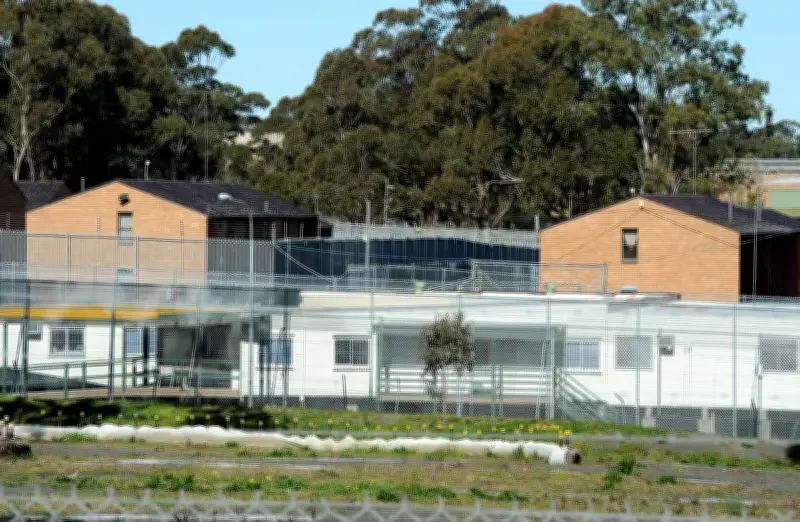
Drugs are being openly dealt inside Villawood detention centre; makeshift weapons are being manufactured amid intimidation, standover tactics and a “culture of fear”; people are sleeping outside under CCTV cameras for their own safety; and children are being kept from going to school, a scathing report from the independent monitor has found.
Report details and conditions
The commonwealth’s National Preventive Mechanism issued the report based on a three-day visit in March this year. A total of 428 people were held in Villawood at the time, including children. Some 78 beds were offline because of damage still not repaired from a fire three years ago.
Those detained had been in detention for between two days and 11 years. Three people had been held inside Villawood for more than a decade.

Villawood has experienced consistent acts of violence and of self-harm, including numerous suicides. In January, a man died in the centre after being allegedly attacked by another detainee, who was subsequently charged with his murder.
Key concerns and safety issues
The commonwealth ombudsman identified key concerns including the prolonged detention of children, safety concerns, insufficient staffing, and the hazardous damage to buildings.
People detained at Villawood also reported the “free movement” of drugs into and around the centre “alleging that substance use is commonplace and illicit substances are being traded relatively openly”.
“People in detention expressed concern and fear about the use and trade of illicit substances within the facility and the effect this was having on their sense of safety.
“They described incidents of aggressive behaviour, intimidation and standover tactics associated with the illicit drug market, which they perceived as contributing to a culture of fear within the centre,” the report said.
Some people reported that people who had not used drugs before being detained had become drug users inside Villawood.
The monitor found large shards of glass in common areas “a hazard in themselves but which could also be used as weapons”, as well as damage to concrete and brickwork “consistent with sharpening of metal objects, suggesting that some people in detention may be attempting to produce makeshift weapons”.
People were sleeping outside, or in common areas, in Villawood detention centre. Some said they were sleeping outside because air conditioners had been broken and not repaired for months, and it was too hot inside rooms.
“Others indicated that they chose to sleep in common areas rather than their assigned rooms, as they perceived these areas to be safer due to the presence of CCTV monitoring (noting that bedrooms are not monitored by CCTV in most accommodation compounds).”
Children and staffing concerns
Particular concern was raised about children in a family group who had been detained for months but were isolated and being denied access to schooling.
“There is a high risk that the continued detention of children … will be detrimental to their mental health, wellbeing and social and emotional development,” the NPM report said.
“The absence of peer engagement and meaningful activities further compounds these risks.”
The government says children in detention now have access to remote education.
The NPM report also highlighted parlous staffing levels, exposing both workers and those detained to danger. During the visit, the NPM “directly witnessed an example of staff failing to intervene to prevent escalation of a serious physical altercation”.
Insufficient staffing levels have been a consistent issue at Villawood. A Guardian Australia investigation has previously revealed that Comcare, the federal work safety regulator, issued a direct warning to the department that the “minimalist staffing model” employed by MTC, the US private prison company running detention centres, was endangering staff and detainees.
The understaffing crisis is so bad that seriously ill detainees have been denied access to healthcare and large sections of Villawood have been left without a single staff member, in one case allowing a detainee to start a fire within a staff compound.

Other security lapses have allowed the escape of high-risk detainees, caused ill-equipped staff to be stabbed and hospitalised, and prompted MTC to issue a since-abandoned edict that all detainees be handcuffed during escorts, regardless of their risk rating. Lawyers described that policy as “almost certainly unlawful”.
The situation was deemed so serious that the home affairs minister, Tony Burke, hauled in the global president of MTC to dress him down for the company’s failures just six months after it began operating the centres on a $2.3bn contract.
Urgent action required
The Commonwealth Ombudsman, Iain Anderson, said conditions at Villawood represented a “failure to provide a level of services that meet minimum standards of safety, care and support”.
“The issues observed at the Villawood Immigration Detention Centre require urgent remedial action to ensure the safety of people in detention, staff and to maintain the good order of the facility. If unaddressed, there is a risk of further deterioration in conditions and increased harm to people in detention and staff, potentially including serious injury and loss of life.”
The acting secretary of the home affairs department, Hamish Hansford, responding to the report, wrote that “we recognise the importance of ensuring people in immigration detention are treated with dignity and respect, and of maintaining immigration detention arrangements that are safe, appropriate and consistent with Australia’s obligations”.
The department agreed with eight of 15 recommendations from the ombudsman and partially agreed with the remaining seven.
“In a number of instances, matters raised have already been addressed or are currently in progress,” Hansford wrote.
“The report provides a useful opportunity to reflect on our practices and identify areas for continued improvement across immigration detention operations.”