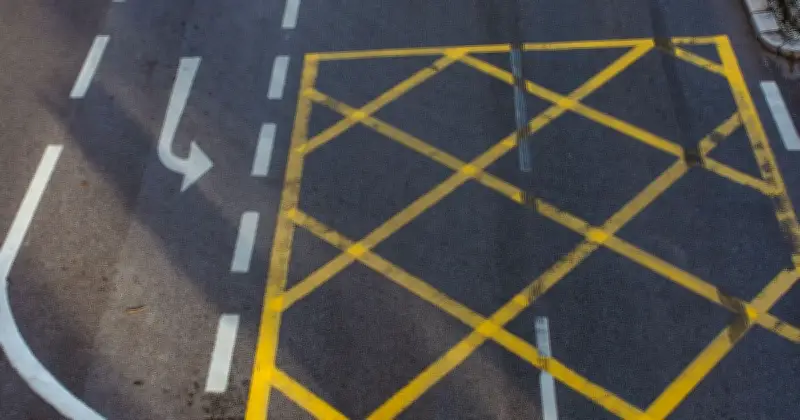
Motorists who receive a penalty for stopping in a yellow box junction may have grounds to challenge it in three specific circumstances, according to a barrister. Daniel ShenSmith, a barrister of England and Wales and creator of the BlackBeltBarrister YouTube channel, outlined the scenarios in which drivers could potentially contest a fine.
Highway Code rule on yellow box junctions
Yellow box junctions are governed by Rule 174 of the Highway Code, which states that drivers must not enter one until their exit lane is clear. There is a crucial exception for motorists waiting to turn right.
ShenSmith said: "174 of the Highway Code provides that you may enter the box junction and wait to turn right if you're stopped from doing so by oncoming traffic or by other vehicles that are also waiting to turn right."

At signalled roundabouts, however, motorists must not enter the box unless they can traverse it entirely without stopping. ShenSmith stressed the importance of the wording because these are "must not" rules.
"And when there's law that underpins it, there's usually a fine that comes along with it," he said.
Penalties and grounds for challenge
Motorists who enter a yellow box junction without a clear exit and stop could face a £70 fine in most areas of the country, while the penalty can rise to £130 in London. The regulations are designed to prevent gridlock, as stopping inside a junction can obstruct traffic travelling in another direction once lights change.
ShenSmith identified three scenarios that may give drivers valid grounds to challenge a penalty. One is where temporary roadworks make it genuinely difficult to establish whether the exit lane is clear.
"If you've got a situation where you can't really see the other side and you can't reasonably see whether the exit lane is clear," ShenSmith said, this could potentially be relevant. He also suggested motorists could investigate whether temporary road restrictions had been properly authorised by submitting a Freedom of Information request to the local authority.
Evidence is key to a successful appeal
There may also be "narrower circumstances" where it is unreasonable to expect a driver to see the exit, such as when there is a large distance between the vehicle and the other side of the junction or when the road curves over a hill.
Nevertheless, drivers should not rely on a successful appeal without solid supporting evidence. "As with all of these things, evidence is the key," ShenSmith said. He recommended motorists take photographs showing the junction from their position before entering it.
Dashcam recordings could also prove valuable. "If you have, download it, save it," he said.
Anyone issued with a penalty should also examine the notice thoroughly, verifying that all information is accurate and considering the particular circumstances surrounding the alleged offence. ShenSmith added: "Ultimately, if you want to challenge these things, there are a lot of successful challenges to these things by way of appeal."