Twelve people have died in two separate wrong-way crashes in just seven days, as fears grow over the deadly real-world consequences of reckless drivers performing dangerous stunts for social media audiences. Road safety campaigners, officials, and grieving families are now demanding that the act of filming and uploading footage of illegal or dangerous driving be made a standalone criminal offence.
Viral videos glorify risk-taking
Heavy bass music blares through speakers as an engine revs and the speedometer climbs past 90mph. On screen, a text overlay reveals a dark mantra sweeping across social media feeds: 'This and die at 20'. This is one of a slew of viral videos posted by young drivers showing high-performance cars crashing, weaving blindly through nighttime traffic, and performing dangerous stunts on public roads.
Drivers film themselves engaging in 'ghostmode' or 'ghosting'—turning off all lights before accelerating blindly down tight country lanes—or 'swimming', weaving between dense motorway traffic at dizzying speeds. In many cases, uploaders try to bypass moderation by labelling videos as "AI-generated" or overlaying an ironic caption like 'don't speed' while zooming in on speedometers rising higher.

One poster described the behaviour as the 'best feeling ever'. On the same video, a comment with more than 10,000 likes states, 'Isn't it strange? When we're closer to death, we feel more alive'. Another post with more than 46,000 likes has a commenter writing: "This s*** gives me adrenaline just watching it". One video, with 55,000 likes, shows a compilation of devastating car wrecks on the motorway with the words 'forever young' across the screen. Other comments glorifying dying young in a car wreck include 'That and kissing a tree at the end', 'last dance', and 'only way I wanna go out'. One person described such a death as a 'happy end'.
Psychologist warns of 'massive dopamine hit'
Psychotherapist Mark Vahrmeyer says that while adolescent risk-taking to impress friends is nothing new, social media has taken it up a level by introducing a massive, global audience. "What's happened with social media is you've got this potentially vast audience who are watching in real time," he told The Mirror. "You've got this immediate reward through people who are watching on social media, encouraging, offering likes, offering comments, offering views, and then subsequently sharing the content."
According to Vahrmeyer, this "massive dopamine hit" can be particularly addictive for young people wanting a sense of belonging, in a world where social media influencers are the equivalent of "the most popular kids in school". He believes constant exposure to footage glamourising destruction creates a huge disconnection from reality, adding: "Young people are in these situations where they're taking huge risks, but while they're on some level intellectually aware of the danger, I don't think they're really able to gauge the danger fully. The question, 'Is this dangerous?' is probably the wrong question because these adolescents are seeking out danger and they don't have the cognitive ability to discern really how dangerous something is. So death becomes an abstract concept rather than being killed in a horrific car crash, probably in agony."
Fatal crashes devastate families
Shortly after 3.30am on Saturday, August 22, two police officers—PC Matthew Blades, 37, and PC Tom Clough, 38—were among seven people killed in a horrific collision near Middlesbrough, Teesside. A Volkswagen Passat had been travelling the wrong way on the A66 dual carriageway when it collided head-on with a police car that was assisting in a search for the car. All five young occupants of the Passat—Michael Robert Cahill, 23, Theo Rae, 17, Cole Robert Worthy, 17, Jakub Matusiak, 23, and Makai Saddington, 18—were killed instantly.

It soon emerged that a TikTok profile believed to belong to Saddington regularly featured videos glorifying dangerous driving. One piece of footage, deleted shortly after the crash along with the account, appeared to show Saddington involved in a high-speed police chase with four other youngsters. An ongoing investigation by the Independent Office for Police Conduct (IOPC) confirmed that an armed response vehicle had previously pursued the Volkswagen Passat for nearly seven minutes after an ANPR camera allegedly detected cloned license plates. Officers aborted the chase just 10 seconds before the fatal crash when the Passat turned into oncoming traffic on the A66.
The disaster has left families devastated. Moving tributes poured in for PC Blades, a devoted dad of two young boys, whose wife described him as leaving "a space that can never be filled," and PC Clough, remembered by his commanding officer for a "cheeky nature and a wit that could lift spirits even during the most demanding shifts." A fundraising page for the officers' families has swiftly surpassed £500,000.
Tragically, the crash came less than one week after another wrong-way motorway crash in County Kildare, Ireland. Five teenagers—Jeremy O'Brien, 18, Alex McCarthy, 17, Joey Carthy, 15, Jack Kennedy, 17, and Kamil Pustkowski, 17—were killed when their BMW, travelling the wrong way down the M9 motorway at more than 74mph, slammed head-on into a Hyundai carrying three sisters Ella, Niamh, and Alma Kinsella, in their 20s and 30s, and a seven-year-old boy, who were driving to Dublin Airport for a family wedding. The five teenagers died at the scene, while the three sisters sustained serious injuries and are said to have "a long, long recovery ahead of them", and the young boy suffered a broken leg.
A friend of the injured family told the Irish Mail on Sunday: "One of them has spinal injuries and there are a lot of broken bones. People are relieved none of them is in a brain specialist hospital, so that means none of them is brain-damaged. God forbid there's a change. We think they will recover, but how long that is going to take, no one knows. Their injuries may be life-altering, but to the extent they may be life-altering, well, no one knows that at the moment."
Irish Taoiseach Micheal Martin expressed his horror at the tragedy, explicitly connecting such reckless behaviour to social media clout, noting that these appalling acts are, in far too many instances, "being done for likes on social media".
Police warn of 'baiting' and calls for action
Wrong-way motorway driving videos have gained particular popularity online, partly because police officers typically won't pursue such vehicles out of concern for public safety. Paul Williams, acting deputy national chairman for the Police Federation of England and Wales, warned that police officers are being targeted directly for social media views. He said: "Every day we can identify now numerous examples of young people sensationalising dangerous driving. Not just dangerous driving, but baiting police officers who are out there to protect the public. It's a real problem. It's causing officers concern. They shouldn't have to be going out and worrying about whether they're going to return home from their shift or not. But on top of that, wondering if they're going to be plastered all over social media. It's absolutely unacceptable, and social media platforms need to take some action."
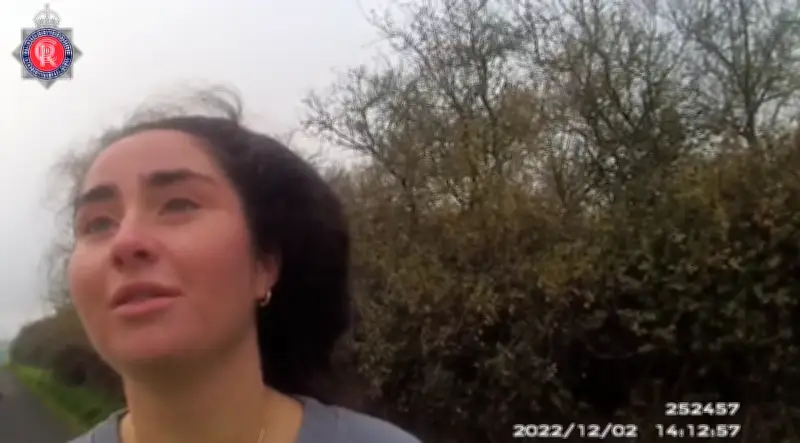
In December 2022, 18-year-old Liberty Mitchell recorded Snapchat videos of herself driving at almost 100mph in a 60mph zone, mere days after passing her test. Overtaking three vehicles on the wrong side of the road near Aldsworth, Gloucestershire, Mitchell lost control of her Mini Cooper and caused a multi-car pile-up, killing taxi driver Octavian Codreanu and his passenger, schoolteacher Moyra Whelan. Several other people were taken to hospital for treatment, and many are now living with a daily reminder of the collision after sustaining serious and life-changing injuries.
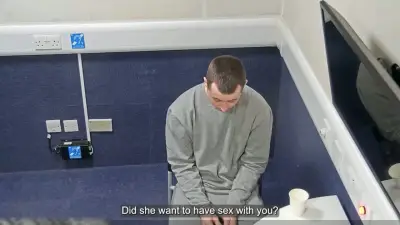
Body-cam arrest footage recorded just minutes after the crash captured Mitchell showing an apparent lack of remorse. Disgruntled at being detained while emergency workers tried to save lives nearby, Mitchell argued with the arresting officer over her mobile phone, snapping, 'That's my property,' and demanding to know what happened to her "one phone call?". Showing little remorse, Mitchell was also reluctant to hand over her keys when asked. She was initially sentenced to six years and eight months behind bars, but following an intervention by the Attorney General Ellie Reeves KC MP, senior judges increased her sentence to nine years and three months on account of the numerous videos she'd previously recorded of her reckless driving. One video showed her driving at 100 miles per hour on a county road, and another showed her veering onto the opposite side of the road towards an oncoming car as friends shouted for her to stop.
In another case in Manchester, Usmon Mahmood, 23, and Uways Hussain, 20, were sentenced to a total of 23 years in prison after videoing themselves speeding at 139mph in a 30mph zone while inhaling laughing gas. They crashed into 50-year-old Sylvester Abayomi, who died shortly after. In court, police described the incident as "one of the most extreme, dangerous driving cases officers have encountered".
Platforms respond but campaigners say more needed
In response to the growing outcry, Number 10 and media regulator Ofcom have asked social media providers to remove any content that glorifies risky driving and to prevent algorithms from recommending such material to youngsters. Platforms including TikTok, Snapchat, and Instagram told The Mirror that they strictly prohibit reckless driving content and remove offending posts. TikTok stated that between January and March this year, 99.1 per cent of content found to violate the platform's policies on Violent and Criminal Behaviour was taken down before any users reported it. The platform said it is closely monitoring such content and removing videos and accounts found to violate its rules. Snapchat similarly affirmed that content depicting illegal activity has no place on its app and that it actively cooperates with police investigations. Instagram prohibits users from promoting or encouraging participation in risky challenges, including ones involving driving, and removes such content once it becomes aware of it. Instagram users under the age of 18 are also restricted from viewing certain types of unsuitable content, including imagery depicting any form of reckless driving.
However, road safety organisations argue that self-regulation by tech-giants is failing to stem the tide. Research conducted by IAM RoadSmart found that approximately one in seven drivers aged 17 to 24 admit using a mobile phone to record video or take photographs while behind the wheel in the past 12 months. Nicholas Lyes, Director of Policy and Communications at IAM RoadSmart, called the findings horrifying. "The distraction caused by smart phone usage and driving is well documented, but it is horrifying that some people are now actively filming and flaunting such dangerous behaviours online," Lyes said. "These sorts of actions pose not only a personal threat to their lives but to many others on the road. Social media companies have a duty to ensure that dangerous criminal activities are not circulated for likes and shares."
James Gibson, executive director of Road Safety GB, echoed the urgent need for intervention before more families are destroyed. "At high speeds, a head-on collision can happen in a matter of seconds, leaving innocent drivers and passengers with little or no chance to react," Gibson warned. "The consequences can be catastrophic. We urge anyone engaging in this behaviour to stop immediately, before someone is seriously injured or killed."
Until legal frameworks evolve to explicitly criminalise the creation, uploading, and broadcasting of dangerous driving content, experts fear that the need for clicks will lead to further tragedies on the road, with more young lives claimed in the pursuit of a fleeting viral thrill.