A brutal killer who fatally stabbed a woman on a train in 1988 and then walked unnoticed from the station covered in blood may not be aware he committed the crime, a criminal profiler has told the Daily Express.
Murder on the Orpington to Victoria Train
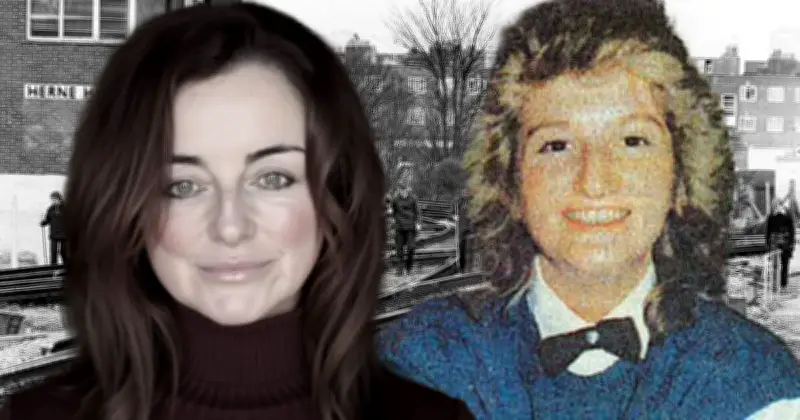
The attack took place on the 14:16 Orpington to London Victoria service on March 23, 1988. The victim, 26-year-old Debbie Linsley, was found in a closed-compartment carriage when the train reached its final destination. She had been stabbed 11 times to her neck, face, and abdomen, with five wounds to the area around her heart. The weapon, believed to be five to seven-and-a-half inches long with a heavy blade, has never been recovered.
At the time, about 70 people were on the train, but the killer managed to leave the station seemingly unnoticed despite being covered in blood. Miss Linsley fought back, and some of the blood at the scene belonged to her attacker. A full DNA profile is held by police, but the killer has never been identified.
Psychologist's Theory: Psychotic Episode
Dr Tracy King, a criminal profiler and psychologist, examined the case for the Express. She said, "In such a frenzied attack, what can often happen is that when an offender starts to do that, the person that they're killing represents someone in their own life and their own story. So it's personal in terms of how they're responding to it, but they may not know the person. It could still be a stranger attack."
Dr King noted the attack's ferocity and lack of coherence: "He had a knife, so did he leave the house expecting to kill someone? What's the plan there? Was this a pre-planned murder? He's obviously targeted somebody who was isolated, but he's done it on a train where people are coming and going."
She proposed that the killer may have been in a psychotic state: "With that lack of coherence, you might think, was it like a psychotic episode where somebody is completely detached from reality? If he was psychotic, he could have ended up in a psychiatric unit without anyone's awareness that this has ever happened."
Could the Killer Be Unaware?
Dr King explained that if the murder occurred during a psychotic episode, the offender might not have conscious awareness of it. "In the work that I've done, when someone's got enduring mental health issues like that, sometimes they will say they've killed someone and you have to take it seriously and try and work it out. But often it is put down to someone's delusions or part of their illness. So sometimes it can get lost in a system."
She added, "It's quite rare that that happens, but it could happen. And if no one outside of them, in terms of their treatment team, has any awareness of it, it's not able to be fed back and to become a part of their narrative."
Why No Second Attack?
Detectives initially believed the attack was not the killer's first offence due to its ferocity, but Dr King said the psychotic episode theory could explain why there were no known subsequent attacks. "If it was a psychotic episode, it's possible that this person doesn't have conscious awareness that that has happened," she said.
She contrasted this with a psychopathic offender: "If you've got somebody that is grandiose and perhaps more psychopathic that acts like this, you'd be more likely to see repetitive behaviours because the fact that they've got away with this is likely to feed that cycle. But we've not knowingly seen that."
Possible Death Before DNA Advances
Another reason the killer remains unidentified could be that he died before forensic science advanced enough to obtain a full DNA profile from stored evidence. Dr King said, "If we take out the psychotic episode and we think about how does someone then go on to exist in the world if they have done something like this?"
She added that even if alive, the killer is unlikely to confess. "If someone's got away with it, and there's the grandiosity, they'd be feeding on having got away with it. If somebody's got away with it, and it's completely against who they are as a person, there's going to be shame, there's going to be guilt, and that capacity to admit that, it's likely to be minimal."
Trauma and Compartmentalisation
Dr King noted that an otherwise ordinary person could commit such a violent act and then suppress it. "You can get scenarios where something escalates catastrophically and then the person themselves is traumatised by what's happened. So therefore they may sort of compartmentalize it and switch off from that as if it's never happened and then live a seemingly ordinary life."
Anyone with information about the murder can call the Met Police on 101 or, to remain anonymous, call Crimestoppers on 0800 555111.