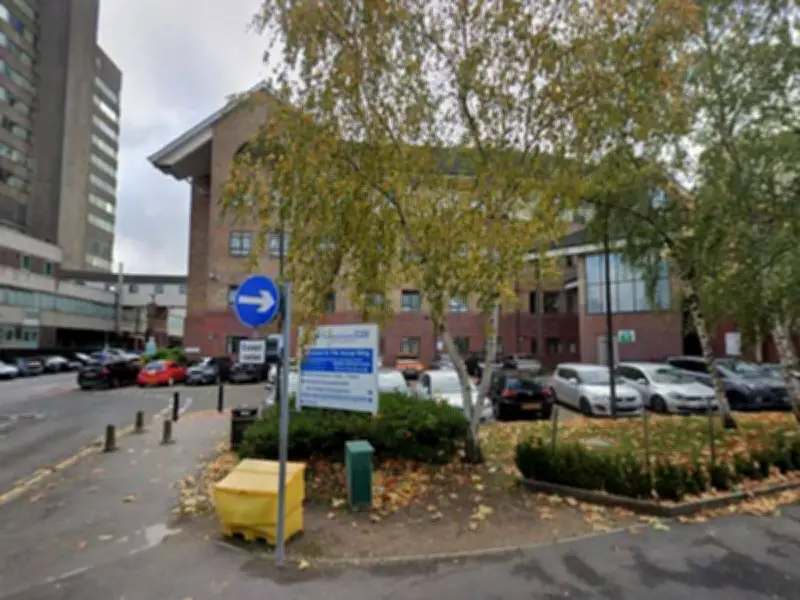
Baby Ted Stewart tragically died after his mother was discharged from a Sheffield maternity hospital, only to begin giving birth to him legs first on her living room floor before paramedics could arrive. Ted passed away days after his birth, having sustained a severe brain injury when he started to be born at home in a breech position—merely an hour after his mother had been sent home from The Jessop Maternity Wing at Royal Hallamshire Hospital.
Hospital visit and missed warning signs
Mum Stacey and dad Dan Stewart visited the hospital on December 11, 2024, after Stacey experienced bleeding and discomfort at 38 weeks pregnant. They said they were assured “everything was normal and fine.” A junior obstetric doctor assessed her and detected that Ted might be in an oblique—or diagonal—position but failed to grasp the importance of this and did not arrange an ultrasound scan. Had one been performed, an inquest heard, Stacey would have been kept in hospital and Ted would probably have survived.
Instead, the couple was reassured there was no active bleeding and discharged ahead of a scheduled C-section due six days later. The moment they reached home, Stacey’s contractions grew stronger, her waters ruptured, and Ted’s feet were immediately visible.
Emergency delivery and tragic outcome
Paramedics arrived to find Ted partially delivered, legs first. He was born unresponsive during the journey to hospital and revived, then transferred to intensive care, where his parents learned he had sustained a severe brain injury due to oxygen deprivation. Despite treatment over the following days, Ted showed no basic survival instincts. After eight days, his parents made the heartbreaking decision to turn off his life support. They had to break the devastating news to their six-year-old daughter Ivy that her baby brother had died.
In a statement following the inquest, Stacey and Dan said: “We were not aware of all the facts when we were sent home from hospital. Had we been informed of Ted's oblique position we certainly would have insisted on an ultrasound scan being carried out and would have been very reluctant to leave. They reassured us that everything was normal and fine. We are not medically trained and so we trusted the professionals. In many ways, it was their lack of concern which reassured us that everything was ok. What we went through, when Ted began to be born at home and became stuck, was absolutely horrendous. We both felt complete panic and fear.”
They added: “A lack of guidance, and also a simple lack of communication between midwives and doctors—the most basic of errors and oversights—cost Ted's life and forever changed our lives as a family. Ted's death was completely preventable. We feel so angry and incredibly let down.”
Coroner's concerns and hospital apology
Assistant Coroner for South Yorkshire Hannah Berry stated it was evident that the importance of Ted being positioned obliquely was not recognised and failed to feature in his mother's care plan. She determined that had Stacey been admitted to hospital, she would have had the chance to undergo a caesarean section or give birth in a hospital environment and, on the balance of probabilities, Ted would not have sustained the brain injury that proved fatal. The coroner expressed concern that the absence of specific national or local guidance on best practice when a baby is in an oblique position creates a risk of future deaths—and confirmed she would be writing to both the Royal College of Obstetricians and Gynaecologists and the National Institute for Health and Care Excellence.
Sheffield Teaching Hospitals NHS Foundation Trust acknowledged that Stacey should have been admitted following her visit and that, had this happened, Ted would on the balance of probabilities have survived. Professor Chris Morley, Chief Nurse at Sheffield Teaching Hospitals NHS Foundation Trust, said: “We know that no apology will ever be enough to lessen the pain of Ted's death for his parents and family, but we are so very sorry for what happened in 2024 when he was born. We took what happened extremely seriously and made changes including refreshed and ongoing training for staff on the use of the Birmingham symptom-specific obstetric triage system. We also welcome the Coroner highlighting to NICE and the Royal College of Obstetrics and Gynaecology the lack of national maternity guidance on babies in 'oblique' position.”
Family's ongoing grief
The couple, who had chosen a planned caesarean section following a traumatic first birth with Ivy, said they understood the risks of babies being in the incorrect position and would have demanded further investigations had they been informed. They added: “Ted remains a very important part of our family and is included in everything we do. When we go to the beach, Ivy always picks a rock to write Ted's name on, or she'll draw his name in the sand. Although Ted was only with us for eight days, he made an enormous impact on our lives. Ted is a little brother to Ivy who adored him from the moment that she met him. As a parent, watching Ivy grieve the loss of her baby brother has added to the heartbreak too.”
Solicitor Maria Repanos, from Hudgell Solicitors, who represents Stacey and Dan, said: “The needless loss of Ted has been utterly heart-breaking for Stacey, Dan and Ivy, and for them to know that his death was completely unavoidable is a further cause of hurt and pain for them. It had been observed that Ted was thought to be in the oblique position, but this detail was not effectively shared across the team, and this Inquest has highlighted a lack of local and national guidance which could be placing many more babies at risk across the country. Despite this, given Stacey's presentation and the bleeding and pain which prompted her to attend hospital, it was clear that she should have been admitted for an ultrasound scan and for further investigation. Events unfolded in a truly traumatic way when Stacey and Dan were discharged home. This has understandably had a significant psychological impact on them both, for which they have required counselling and support. No parent should ever have to endure the experience that Stacey and Dan have faced. Regrettably, their case reflects a wider and deeply concerning pattern of failings across UK maternity services—issues that have been clearly highlighted in both the Ockenden Report and the Amos Review. Such systemic shortcomings are entirely unacceptable and demand urgent and sustained action.”