Secretive Florida DNA Laboratory at the Forefront of Modern Crime Solving
Nestled discreetly within a quiet building in Deerfield Beach, Florida, a highly private and secretive laboratory possesses the extraordinary capability to determine the outcome of some of the nation's most significant criminal cases. This facility may now hold the crucial key to unraveling the mysterious disappearance of 84-year-old Nancy Guthrie in Tucson, Arizona. Scientists at DNA Labs International (DLI) meticulously analyze blood, bone, skin cells, and even the most minute trace genetic material dispatched to them from law enforcement agencies across the United States. Their work is dedicated to identifying suspects, exonerating the innocent, and solving crimes that were once deemed utterly impossible.
The Origins and Operational Secrecy of DNA Labs International
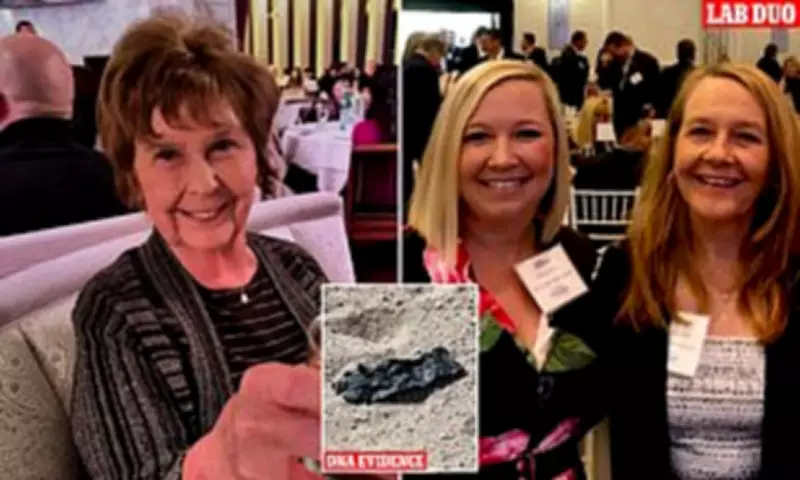
DLI was established in 2004 by a pioneering mother-daughter duo, Kirsten Charlson and Allison Nunes. Their founding mission was to ensure that women and girls who were victims of crime would not face prolonged delays in receiving critical DNA results. The pair maintain an exceptionally low public profile, a stance that is deeply rooted in professional necessity rather than mere secrecy. Forensic DNA consultant Suzanna Ryan explained to the Daily Mail that private laboratories frequently remain tight-lipped during active criminal investigations due to stringent legal and procedural constraints on information disclosure, not out of a desire for concealment.
'Private labs operate under strict case submission protocols that explicitly dictate who we are authorized to communicate with,' stated Ryan, who also serves as the lab director of Pure Gold Forensics in Redlands, California. 'I am prohibited from releasing information to unauthorized parties. They are certainly unable to discuss active cases publicly; that is an integral part of the process.'

The Nancy Guthrie Case and Advanced Forensic Techniques
In the ongoing investigation into Nancy Guthrie's abduction, DLI examined a glove discovered in close proximity to her home in Tucson's Catalina Foothills. The FBI believes this glove matches those worn by a masked intruder captured on surveillance video at her residence in the early hours of February 1. As the search for the missing octogenarian enters its third week, this clandestine Florida-based DNA lab has become centrally involved, utilizing genetic evidence recovered from the scene in a determined effort to crack the case.
The glove was found around February 12, approximately two miles from Guthrie's home in a roadside field. It was one of about sixteen gloves recovered in the area, according to the FBI, and was promptly sent to DLI for comprehensive testing. The laboratory's analytical process follows a rigorous, defined sequence. Upon arrival, evidence is meticulously documented and photographed. Biological material is then collected, sometimes employing specialized tools like the M-VAC, a wet vacuum device engineered to capture elusive trace DNA.
DLI's analysis of the glove was forwarded to the FBI on February 14 for processing through CODIS, the national DNA database containing profiles from crime scenes, convicted offenders, and missing persons. Pima County Sheriff Chris Nanos told the Daily Mail that even if the DNA does not yield a match in CODIS, the investigation is far from over. 'If the individual isn't in the database, we face a challenge, but it's not conclusive,' Nanos explained. 'We can pursue a petition for physical characteristics, essentially a search warrant, to obtain buccal cell samples from persons of interest for comparison. The DNA evidence remains vital.'
Forensic Genetic Genealogy and Historical Breakthroughs
DLI also deploys the powerful technique of forensic genetic genealogy, which can identify suspects by tracing their DNA through familial connections, even to distant relatives. This same cutting-edge method was instrumental in linking DNA on a knife sheath to Bryan Kohberger's family, leading to his arrest and subsequent guilty plea for the murders of four university students in Moscow, Idaho, in November 2022.

DNA consultant Ryan noted that it is relatively uncommon for the public to be aware of which laboratory is conducting DNA testing in real-time during an investigation. 'Typically, the testing is completed long before any public announcement is made regarding a match. This case presents a somewhat unique scenario in that regard,' she added.
The Evolution of DNA Testing and Its Modern Capabilities
DNA testing has fundamentally transformed criminal investigations over recent decades. Ryan highlighted that early methods, such as RFLP first used in Florida courts in 1987, required large, pristine samples and could take months to analyze. 'It demanded a substantial sample size that could not be degraded in any way,' she recalled.
In stark contrast, modern testing is exponentially faster and more sensitive. Techniques like polymerase chain reaction (PCR) allow analysts to amplify minuscule amounts of DNA. Current short tandem repeat (STR) analysis examines multiple specific locations on the DNA molecule to distinguish between individuals with high precision. 'Instead of requiring a large amount of very pure DNA, we can now begin with a much smaller quantity,' Ryan stated. 'We can generate a full profile from as few as ten cells, whereas previously we needed a bloodstain the size of a quarter.'
Cold Case Resolutions and the Controversy Surrounding Private Labs
DLI stands at the vanguard of modern crime-fighting, employing technology that can solve cases once considered unsolvable. It functions as a high-tech ally to police departments, prosecutors, and defense attorneys. Utilizing advanced methods like whole-genome sequencing and SNP analysis, the lab can extract genetic clues from degraded or decades-old evidence, turning cold cases into solved mysteries.
The laboratory's website details several historic cold cases it has helped crack:
- Using forensic genealogical data to identify Brian Leigh Dripps as the killer of 18-year-old Angie Dodge, who was kidnapped and raped in Idaho in 1996, leading to the exoneration of a man who had wrongly served 20 years in prison.
- Analyzing degraded DNA to identify 'Buckskin Girl,' a body found in Ohio in 1981, as Marcia King, a 21-year-old from Arkansas who had vanished years earlier.
- Helping to identify 'The Boy in the Box,' a young boy found deceased in Philadelphia in 1957, as Joseph Zarelli in 2022 through analysis of preserved genetic evidence.
Despite their effectiveness, the methods employed by private forensic laboratories have sparked civil liberties concerns. Critics argue that techniques like familial DNA searching can implicate individuals who never voluntarily submitted their DNA to law enforcement, blurring the line between investigative tool and genetic surveillance. There are also apprehensions about the government outsourcing crucial forensic work to private entities.
Ryan strongly countered these criticisms. 'Private labs are held to the exact same rigorous accreditation standards as public facilities,' she asserted. 'We undergo regular audits to ensure compliance with established guidelines. Furthermore, private labs are often at the forefront of research and can implement new technologies more rapidly than many state and county laboratories. They are used extensively and routinely, typically offering faster turnaround times and more advanced techniques.'
Supporters contend that these laboratories play an indispensable role in delivering justice to victims, providing closure to families, and ensuring that perpetrators are held accountable. 'Criminals face a significantly more challenging landscape today thanks to these advancements,' Ryan concluded, underscoring the transformative impact of modern forensic science on the pursuit of justice.