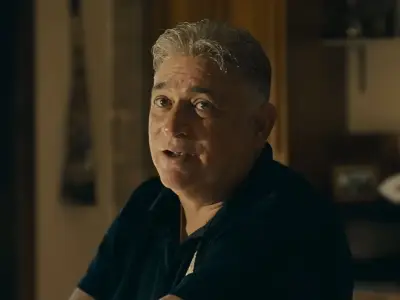
David Davies was eight and a half years old when his body was laid among dozens of dead and covered with a blanket in the Aberfan disaster. It was only when his foot moved that doctors realised he was still alive.
Sixty years ago today, the young boy was in his school in Aberfan, near Merthyr Tydfil, when an avalanche of black coal waste smashed into his classroom and buried him. Half of his class were killed on what was the last day of term. In total, 116 children and 28 adults lost their lives.
The Disaster Unfolds
On 21 October 1966, the spoil tip from the local colliery collapsed, causing waste from the mine to plummet down the mountain into Pantglas primary school, where David had started lessons for the day. For years, locals and even the school's headteacher had warned about the safety of the No 7 tip, which loomed over the village and was built over two underground streams.
After weeks of rain, water built up in the coal waste before a tsunami of slurry, mud and colliery waste was unleashed onto Aberfan. David, who recalls the weeks of drizzly weather before the disaster, told Metro: 'Debris came crashing down from above and from the side.
'Some people were trapped at their desks, unable to move because of the debris around them. Others were buried in the debris and the rubble.
'Something fell from above and struck me on the head. I was trapped and pinned at my desk. I was not unconscious immediately, but fairly quickly.'
A Narrow Escape
While David was unconscious, he was assumed dead and taken out of the classroom and into the outside playground, where his body was placed with other children who had been killed. Then, someone saw his foot move and called a doctor to reexamine him, before he was put in an ambulance and taken to hospital.
David's survival was down simply to where he was sat in the classroom, and half of his 36 classmates did not survive. He was stuck in hospital recovering from his head injury until he begged to be let out for Bonfire night on November 5.
The village he rejoined had been changed forever, with trauma permeating everyone who lost a loved one or a friend in the disaster. He explained: 'You came home and you got on with life as best as you could.
'There was an awareness that a lot of the friends and children in the class and in other classes had sadly died.
'Parents didn't really speak to the children in many cases about it all, and vice versa.'
Another Survivor's Story
The child patient on the bed opposite to David was Gaynor Madgwick, who stayed in hospital for three months due to the severity of her injuries. She was sat in her classroom 60 years ago today when she heard an overwhelming rumble from the mountains above.
Gaynor was swept away by the slurry, which sent a radiator flying off the wall and smashing her leg. It saved her from being suffocated by the build-up of waste. She was rescued from the debris by her own grandfather, Stan, and other men at the scene, but her brother Carl, seven, and sister, Marylyn, were killed.
Gaynor told Metro: 'It's taken 60 years, and it'll probably take many, many more years – until I die – to actually have some peace from it.
'You can only live in hope and try to live your life as best you can.'
Aftermath and Justice
A tribunal blamed the National Coal Board for the disaster, but nobody was prosecuted and bereaved families received just £500 in compensation. The anger in the village was renewed when the government took £150,000 from the charity fund set up for the community, in order to remove the tips around the village. That money was only returned by the New Labour government in 1997.
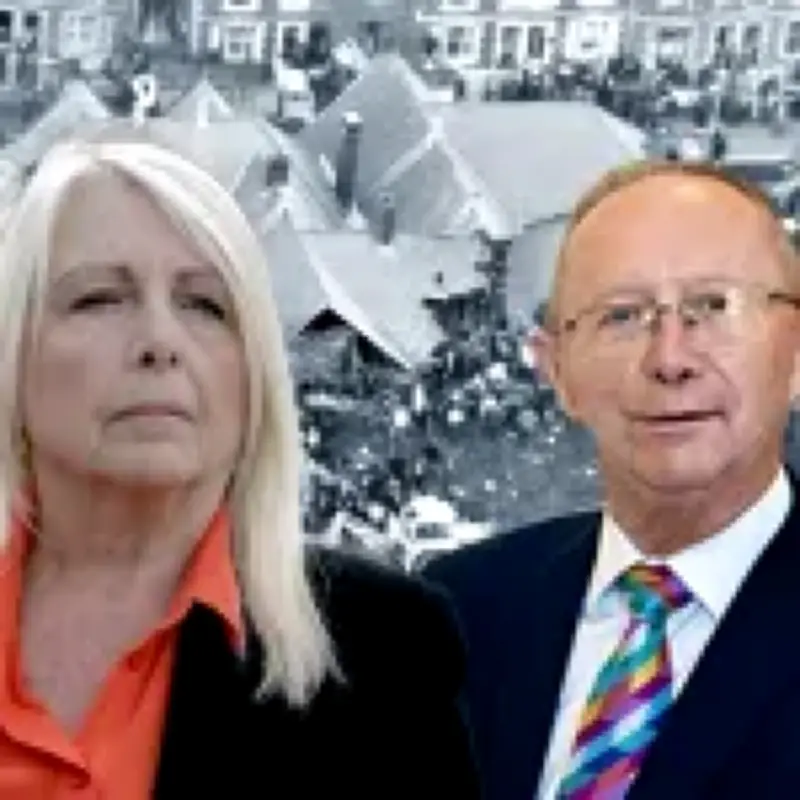
David, who now chairs the Aberfan Memorial Charity, and Gaynor have both spent decades fighting for justice. Gaynor met Andy Burnham in the village on Monday and told him that Aberfan had 'never had justice'.
'But I did say to him that it's no good being bitter now,' she continued. 'You've either got to let the demons in your life go because they will eat you up the rest of your life. So we have to now go forward with hope.'
David led efforts to negotiate a £2million grant from the Welsh government in 2007 for Aberfan memorial and education charities. He said: 'I have always had a feeling of wanting to put something back into our local community and to honour the memory of those who were not able to have the life opportunities that I was able to.'
While the country, including top politicians and royals, will mark the 60th anniversary today, David says for survivors and the bereaved 'there's not much relevance to there being a big anniversary number'. He added: 'You have the same feelings from one year to the next. You learn to live and cope with these things within reason.'
King Charles, Queen Camilla and Prince William are all set to travel to South Wales on Wednesday to pay tribute to those who died. Gaynor says the day will show the community's 'solidarity' and 'resilience'. The hardest moment for her will be the minute's silence. She explained: 'That minute silence for me is the worst part because you go back to that actual day and those feelings are so overwhelming you can't shut them out and you can't stop them.'
Gaynor has spent years carrying the feelings of guilt and isolation as she dealt with the loss of her siblings. While the many never spoke about what they all went through that day, she says people are just now starting to open up.
'When Andy Burnham visited, I was sat with a few other survivors, and we were all chatting normally about that day. That has never happened.' She went on: 'More people are talking now and they're sharing their stories and survivors are encouraging other survivors and relatives to actually come along and pay their respects.'
Her hope and goal now is to ensure that future generations in the village learn about what happened and keep her brother and sister's memory alive. 'When we all pass away, we need people to come to our cemetery every year. We need that to be carried forward. It is the chiildren of today who have to continue that legacy for Aberfan.'