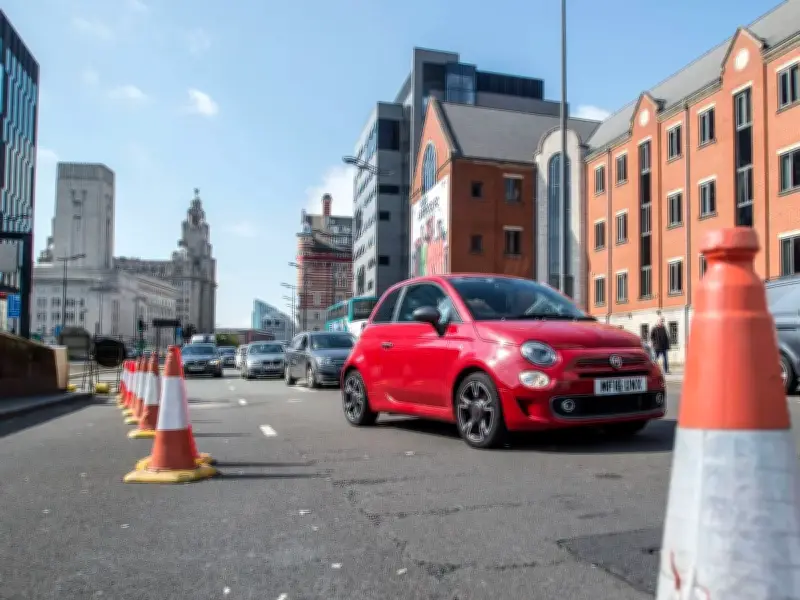
Police have clarified the rules on how you should correctly merge lanes in the UK. This is a situation thousands of drivers will experience every day, particularly when two or three lanes merge into one due to closures. This can often lead to a long line of single-file traffic in the left-hand lane while the right-hand lane remains empty.
Many drivers may have found themselves getting angry by cars in the right-hand lane driving past the queuing traffic until the merging point. Many will consider this "jumping the queue", but just because you're angry doesn't make you right, Wales Online reports.
What is zip-merging?
The correct method of merging in a situation where two lanes become one at a certain point is called "zip-merging". It means that instead of moving into one lane as soon as a lane closure is announced, drivers should merge one at a time at the point of the lane closure.
The police, Highway Code, RAC and National Highways are all agreed on this. Avon and Somerset Police said the method "helps make full use of the available road space".
Why merging early can cause delays
If you merge too early, this could cause traffic to build up in one lane. By merging at the merge point, you make use of the full available road and will save time you could have wasted queueing.
RAC said: "When motorists encounter a lane closure on a motorway or dual carriageway, the majority of drivers follow the etiquette of moving over early, but this creates one long, slow line of traffic and a near-empty outside lane. While motorists on the inside lane might think they’re doing the right thing, it can be more beneficial to continue using the open lane until the last minute, utilising all of the available road and then ‘merging in turn’ at the point at which the road narrows to a single lane."