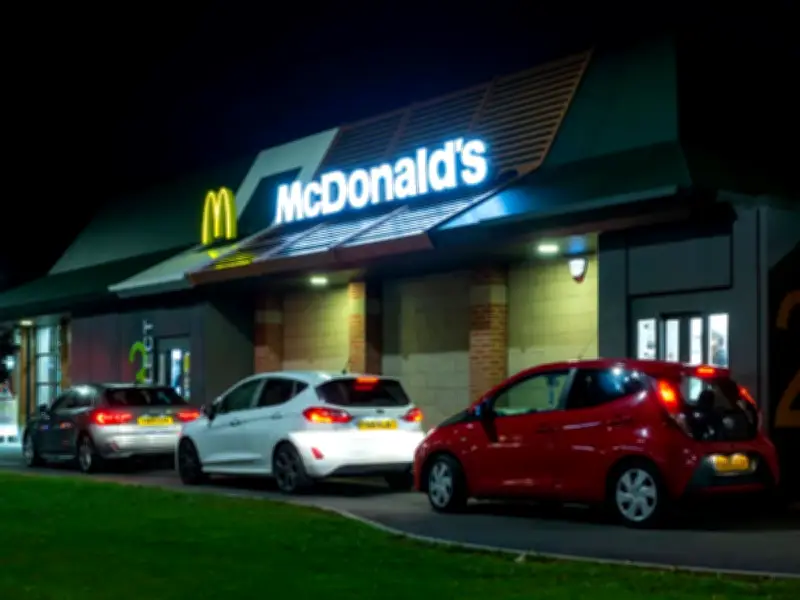
Using a mobile phone to make a contactless payment at a drive-thru is legal in the UK, but only under strict conditions, according to motoring and insurance experts. Drivers must ensure their vehicle is completely stationary and use the phone solely for the payment transaction.
Under UK Road Traffic law, a drive-thru that is open to the public is legally classified as a public place and a road. This means the mobile phone laws enforced by the Department for Transport apply exactly as they would at a red light or in a traffic jam, even if the car is travelling at very low speed or sitting completely still in a queue.
Penalties and exemptions
Drivers caught using their phone illegally face serious consequences, including a £200 fine and up to six points on their driving licence. Anam Barkan, founder at HireGo Minibuses, said drivers put themselves at risk if they use their phone while stationary to check their online banking app, open a digital coupon, restaurant app, or loyalty QR code, or scroll through social media, text, or take photos while waiting for their food.
Alicia Hempsted, car insurance expert at MoneySuperMarket, explained that there are specific exemptions that allow drivers to use their phones while sitting in the driver's seat. She said a mobile phone may be used if it is properly held in a dashboard mount, provided the device does not obstruct the view of the road and is not picked up at any time while driving.
She added that drivers are permitted to hold and use their phone to make a contactless payment, covering services like paying for food at a drive-thru window or paying at a toll booth.
Conditions for legal payment
To legally use a handheld device to pay at a drive-thru, certain conditions must be met simultaneously. The vehicle must be completely stationary, the transaction must be a contactless payment using an electronic terminal, and the goods or services being paid for must be provided at the same time or immediately after the payment, such as collecting food or coffee at the window.
Alicia said: "Under UK road law, anyone operating a vehicle is strictly banned from using a mobile phone in most driving situations – whether they're actively driving, idling, or queueing in traffic. Doing so can result in a £200 fine and up to 6 points on your driving licence.
"However, there are specific exemptions that allow drivers to use their phones while in a driver's seat, one being when the phone is properly held in a dashboard mount without obstructing your view of the road, not to be picked up at any time, and another being to make a contactless payment using your phone."
She added: "Drive-throughs and toll booths are accessible to the general public, so standard road traffic laws apply just as they would on a main road, even if you're traveling at low speed or sitting at a stop in a queue.
Therefore, it is illegal to use your phone for general activities at a drive-through. The only time you can legally use your phone in these situations is to make a contactless payment, provided your vehicle is at a complete stop. As soon as you have finished tapping, drivers are required to put their phone down completely until they are parked in a safe location and the vehicle has been turned off."
Staying safe and legal
Police officers advise that to guarantee proper control of the vehicle, the safest practice is to ensure the car is in neutral or park with the handbrake firmly engaged before picking up the phone to tap the reader. Once the payment is complete, the phone must go straight back into a mount or pocket before releasing the handbrake.
National Accident Helpline assessed more than 2,500 enquiries relating to road traffic accidents in the first half of 2026 alone. John Kushnick, Legal Director of National Accident Helpline, warned motorists about the risks of eating and drinking behind the wheel.
He said: "Taking your eyes off the road for even a few seconds to reach for a drink or unwrap food can have serious consequences. Our research shows that some drivers have already experienced near-misses while eating or drinking behind the wheel.
While eating or drinking while driving isn't illegal in itself, motorists who fail to maintain proper control of their vehicle could face a £100 fixed penalty and three penalty points, with fines of up to £1,000 if the case goes to court. We'd encourage drivers to wait until they're safely parked before eating or drinking, rather than putting themselves or others at risk."