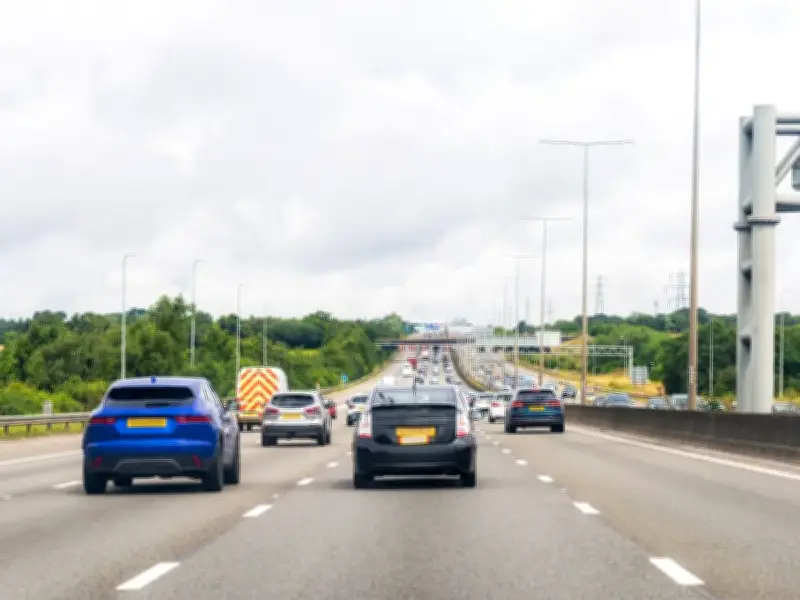
Liability in rear-end collisions is not automatically assigned to the driver behind, according to legal experts, who stress that each incident must be judged on its own circumstances. The clarification follows widespread confusion over rules such as Highway Code stopping distances and the penalties for tailgating.
Highway Code Stopping Distance Rules
Rule 126 of the Highway Code does not explicitly state who bears responsibility in a rear-end collision, but it instructs drivers to "leave enough space between you and the vehicle in front so that you can pull up safely if it suddenly slows down or stops." The rule adds: "The safe rule is never to get closer than the overall stopping distance."
The code also advises: "Allow at least a two-second gap between you and the vehicle in front on high-speed roads and in tunnels where visibility is reduced. The gap should be at least doubled on wet roads and up to ten times greater on icy roads."
Tailgating and Penalties
Tailgating is described in the Highway Code as occurring "where the gap between you and the vehicle in front is too small for you to be able to stop safely if the vehicle in front suddenly brakes." The code notes that "dangerous and careless driving offences, such as tailgating, are enforced by the police."
The RAC states: "Tailgating falls under the careless driving offence and could land you with a £100 charge and three penalty points on your licence. In the worst cases, tailgating can result in a driving ban or even a prison sentence if a serious collision occurs as a result. It's considered dangerous because it reduces the safe distance between vehicles, increasing the likelihood of accidents."
There is no specific offence for tailgating itself. Instead, officers assess whether the behaviour constitutes careless or dangerous driving. Gloucestershire Police stated in 2025: "Tailgating is a description of an event and not offence wording. Gloucestershire Constabulary records these as part of a wider group of 'driving without due care and attention' offences."
Driving without due care and attention carries a £100 fine and three penalty points for less serious incidents. More serious cases could be deemed dangerous driving, which carries an unlimited fine, a driving ban, and a possible custodial sentence.
Is the Rear Driver Always to Blame?
Darrell Kaye, a Partner at Digby Brown Solicitors, writing on The Motor Accident Solicitors Society website, says: "There is often a presumption of fault on the driver at the rear. However, it's not always this straightforward – especially when accusations are made that the collision happened because the car in front braked suddenly and for 'no apparent reason' to the rear driver."
Kaye adds: "The idea that someone is automatically and entirely to blame if they rear-end the vehicle in front is false. Blame – or liability – for rear-end collisions depends entirely on the unique circumstances of each incident."
Ropewalk Chambers barrister Shilpa Shah outlined the legal principles, stating that "the defendant will be liable in negligence if she failed to attain the standard of a reasonable careful driver and if the accident was caused as a result," but cautioned that this assessment "cannot be conducted in a vacuum; it must be done by reference to the actual circumstances of the actual collision."