Ambulance Crews Issue Critical 'Never Do' List for Drivers in Emergency Situations
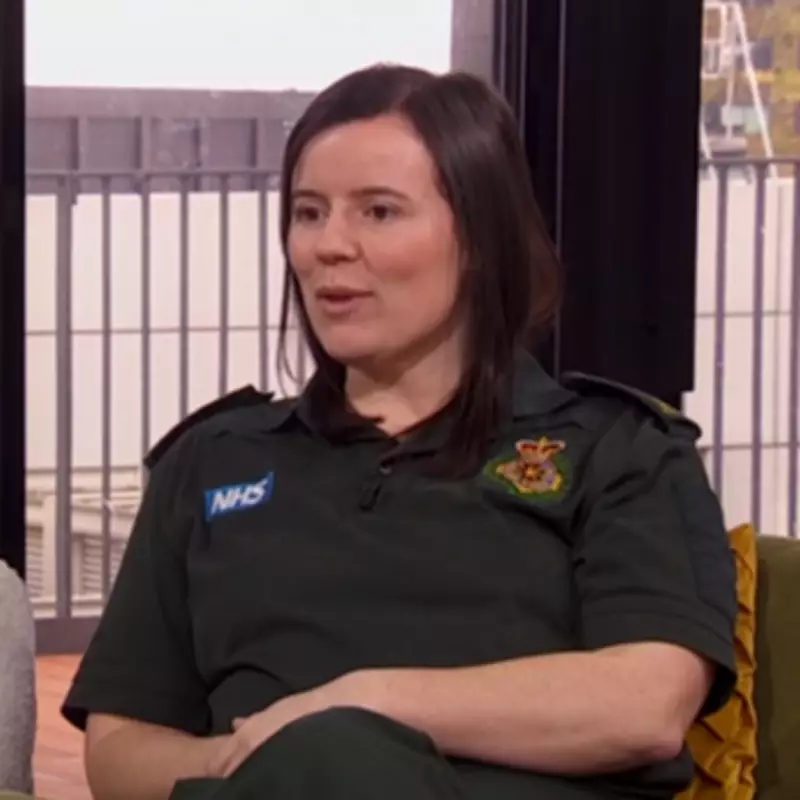
Motorists who spot the flashing blue lights of an ambulance in their rear-view mirror often feel an urgent need to clear the path immediately. However, reacting incorrectly in these high-pressure moments can not only endanger lives but also lead to significant financial penalties. Ambulance crew members Sarah Tate and Sam Quinn have outlined precisely what drivers should and should not do when an emergency vehicle is behind them, emphasising common errors that could have severe consequences.
The Three Critical Mistakes to Avoid
Speaking on BBC's Morning Live, Sarah Tate provided clear guidance for drivers. "If you can, always pull to the left or part so we can get through the middle," she advised. "But please don't ever go through red lights, just stop." She explained that if an ambulance approaches while you are stationary at red lights, the crew will typically pull back and turn off sirens to prevent panic, allowing them to navigate safely once the lights change.
Sam Quinn added two further prohibitions that drivers must heed. "Don't go into oncoming traffic. Don't go into bus lanes," he stated firmly. "We are trained to get around you. Don't put yourself and other people in danger, it's fine, don't panic." These actions, while well-intentioned, can create hazardous situations that impede the ambulance's progress and risk collisions.

Legal and Safety Implications of Incorrect Reactions
According to the RAC, standard road laws remain fully applicable even when an emergency vehicle is present. Driving through a red light to make way for an ambulance, for instance, can result in a fixed penalty notice of £100 and three penalty points on your licence. This underscores the importance of complying with all traffic signs while attempting to assist.
Rule 219 of the Highway Code explicitly urges drivers not to panic when an emergency vehicle approaches. Instead, it recommends: "Consider the route of such a vehicle and take appropriate action to let it pass, while complying with all traffic signs." The code further advises pulling over to the side of the road if necessary, but cautions against stopping before the brow of a hill, a bend, or a narrow section. It also warns against harsh braking near junctions or roundabouts, as following vehicles may not have the same visibility.
Official Guidance from Emergency Services
The NHS London Ambulance Service provides additional clarity on appropriate driver behaviour. If it is safe to do so, motorists should pull over to the left. However, if conditions are unsafe, the best course is to "continue as you were at a safe speed until there is a safe place to pull in or until the ambulance vehicle can safely overtake." This prevents sudden, dangerous manoeuvres that could block the ambulance's path.
Furthermore, the service highlights a crucial point regarding parked vehicles: "Please do not block in an ambulance vehicle as this will likely delay them either taking a patient to hospital or responding to another emergency call." Parking too close to the rear of an ambulance is particularly problematic, as this area is used for loading patients. Obstructing it can render this vital task impossible, potentially compromising patient care.
In summary, while the instinct to assist emergency vehicles is commendable, drivers must prioritise safety and legal compliance. By avoiding red light violations, entering oncoming traffic or bus lanes, and blocking ambulance access, motorists can help ensure that emergency responses proceed smoothly and efficiently, ultimately saving lives without incurring fines or causing accidents.