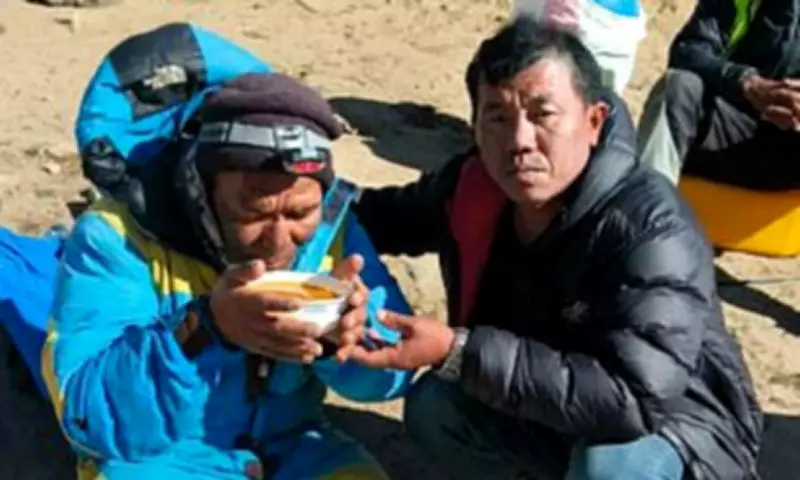
A Nepali Sherpa guide who became stranded on Mount Everest for six days without food or oxygen has been rescued in what is being described as a miraculous survival.
Disappearance and Discovery
Dawa Sherpa, 52, was returning with a Polish climber after failing to reach the 8,849-meter (29,032 ft) summit when he went missing between Camp III and Camp IV. His companion returned to base camp, but it remains unclear how they became separated. They were among the last climbers on Everest this season, which concluded last month.
Known as 'Hillary' after the legendary climber Edmund Hillary, Dawa was last seen on May 29. A team from the Sagarmatha Pollution Control Committee (SPCC), undertaking cleanup operations after the season, discovered him above base camp near the Khumbu Icefall and brought him down to safety.

'He was found by a team of SPCC this morning close to the base camp - he was crawling down,' said Pemba Sherpa of 8K Expeditions, which oversaw search and rescue efforts.
Survival Against the Odds
A base camp manager for another expedition company reported that Dawa survived by consuming a 'small packet of biscuits' and ice after losing his bag and boots. Once located, the guide was airlifted by helicopter and rushed from the helipad to hospital on a trolley.
His family confirmed he is doing well and receiving treatment for frostbite and other complications. 'He recognised me … [he] is good and speaks ... We are happy,' said Mhendo Lhamo Sherpa, the guide's daughter.
In a social media post, the Nepal Mount Everest hiking company described his survival in the extreme conditions as 'nothing short of a miracle.' The statement highlighted that 'Dawa survived alone for nearly a week without food, water, or supplemental oxygen navigating the treacherous Khumbu Icefall (even after the fixed ladders were removed for the season).'
The Perilous 'Death Zone'
The stretch between Camp III and Camp IV on Mount Everest is considered an incredibly dangerous leg of the climb, requiring entry into the notorious 'Death Zone.' This area lies above 8,000 meters (26,000 feet), where critically low oxygen levels challenge survival. The human body cannot acclimatise, leading to severe physical exhaustion, cognitive impairment, and altitude sickness.
Record Climbing Season
A record number of more than 1,000 climbers and their guides scaled Everest this season, with the government issuing 494 permits. Officials reported that five climbers and guides died on Everest this season. Many climbers were stranded at base camp earlier in April after a towering block of glacial ice delayed the opening of the route to the world's tallest peak.
Just last week, a deaf BBC presenter was left stranded on Everest's 'death zone' for several hours after losing his local guide. Michael Woods, a Sign Language presenter, summited the peak on Thursday but lost contact with his Sherpa during descent near the Hillary Step, at nearly 29,000 feet. After safely returning, Woods described the exhaustion and isolation he felt while stranded. Initial reports suggested he required rescue at the summit, but he insisted he survived the most dangerous phase of descent before reuniting with his guide halfway down.