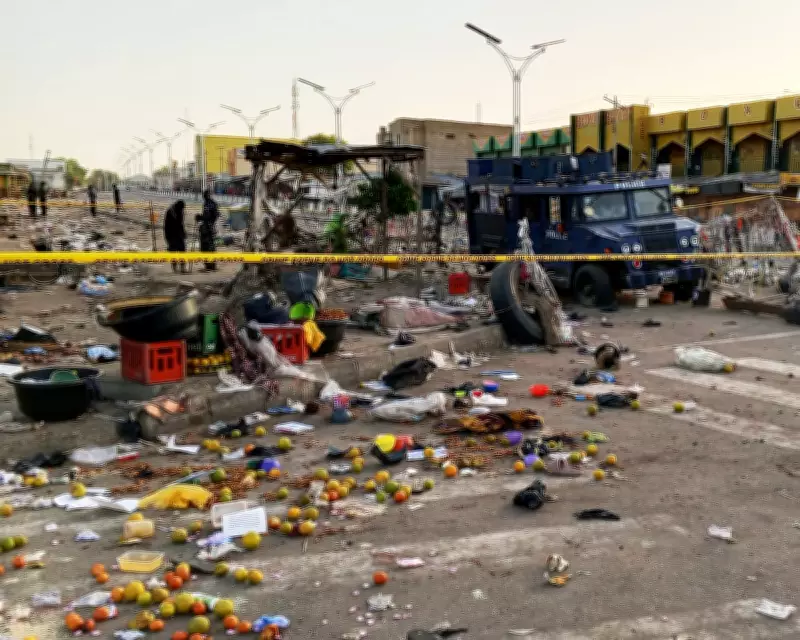
Deadly Suicide Attacks Rock Maiduguri, Claiming 23 Lives and Injuring Over 100
In a devastating series of events, at least 23 people have been killed and more than 100 others injured in multiple suspected suicide bombings in the north-eastern Nigerian city of Maiduguri. The explosions, which occurred on Monday evening, targeted key public areas including the post office, market zones, and the entrance to the University of Maiduguri teaching hospital. This tragic incident has shattered Maiduguri's recent reputation as a relative oasis of calm, as a long-running insurgency had been largely pushed to rural hinterlands in recent years.
Targeting Ramadan Iftar and Historical Hotspots
The bombings took place during iftar, the breaking of fast in the holy month of Ramadan, a time when public areas are typically crowded. Authorities confirmed that the explosions went off at the post office and Monday market areas, locations that were regularly targeted by suicide bombers at the height of Nigeria's Boko Haram insurgency. This attack marks a grim reminder of the city's violent past, as Maiduguri was once a major conflict hotspot during the insurgency's peak.
Notably, ten years ago this month, Maiduguri experienced one of its deadliest days in history when 58 people were killed and over 140 injured in four separate suicide blasts, including attacks in the same post office and market areas. The latest explosions follow closely on the heels of an assault at a military post on the outskirts of the city, which serves as the capital of Borno state, occurring from Sunday night into Monday morning.

Suspected Boko Haram Involvement and Military Response
While no group has yet claimed responsibility for the bombings, Nigerian authorities have attributed the attacks to suspected Boko Haram terrorist suicide bombers using improvised explosive devices. In a statement, military spokesperson Sani Uba condemned the cowardly attacks, stating that they targeted crowded public areas in an attempt to inflict mass casualties and create panic within the metropolis.
The insurgency, led by Boko Haram and its offshoots such as the Islamic West Africa Province (ISWAP), has resulted in catastrophic consequences for the region. Over 2 million people have been displaced, and hundreds of thousands have been killed as these groups battle the Nigerian state in their quest to establish an Islamic caliphate. Boko Haram, founded in 2002, intensified its attacks after the extrajudicial killing of its then-leader, Mohammed Yusuf, in July 2009. Under his successor, Abubakar Shekau, the sect splintered, with ISWAP emerging as a dominant faction and engaging in lethal turf wars with rivals.
Concerns Over Resurgent Terrorism and Political Reactions
Most terrorist activity in recent years has occurred in rural areas outside Maiduguri, the birthplace of the insurgency. However, this attack signals a potential resurgence in urban centers. Until a Christmas Eve bombing at a mosque last year, which killed at least five people and wounded dozens, there had not been a major attack in the city since 2021. That mosque attack occurred just a day before airstrikes by the US in conjunction with Nigeria against Islamic State militants in the north-west.
In April of last year, Borno governor Babagana Zulum raised alarms that jihadists were staging a comeback, a warning that led to a spat with federal authorities and, many fear, was not properly heeded. In response to the latest bombings, President Bola Tinubu, who is currently on a state visit to the UK, has directed security chiefs to relocate to Maiduguri to take charge of the situation, with orders to locate, confront, and completely defeat the perpetrators.
As the city grapples with this tragedy, the international community watches closely, hoping for a swift resolution to the ongoing violence that continues to plague north-eastern Nigeria.