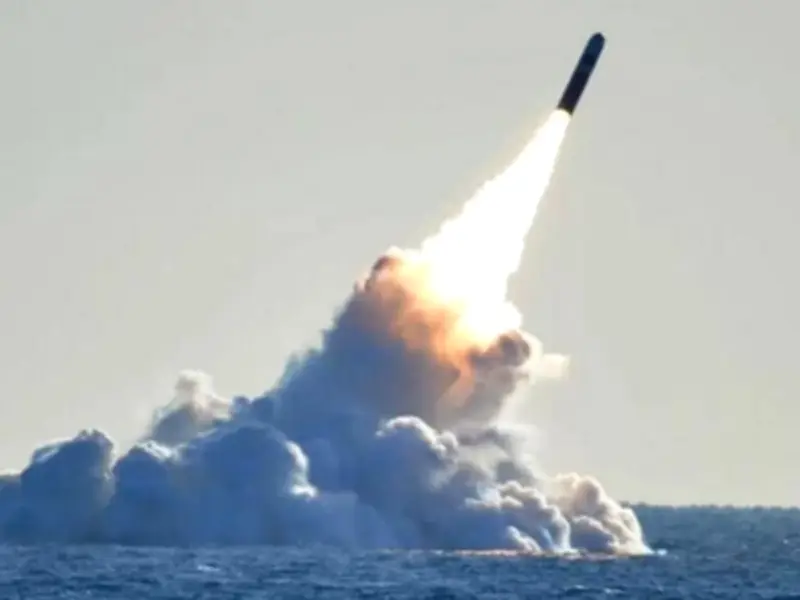
China has ignited fears of World War III after a nuclear submarine conducted a long-range ballistic missile test into the South Pacific on Monday, drawing sharp criticism from Australia, New Zealand, and Japan. The launch occurred on the same day that Australia and Fiji signed a mutual defence treaty aimed at countering Chinese influence in the region.
Australian and Regional Reactions
Australia's Foreign Minister Penny Wong condemned the test, stating: "Australia has been clear with China that we regard this as destabilising to the region." The New Zealand government revealed it was notified only hours before the test and noted that the missile was launched into the South Pacific Nuclear Free Zone, established by the 1986 Treaty of Rarotonga. China ratified the treaty's protocols in 1987, pledging not to test nuclear weapons within the zone.
China's Military Posture
Chinese state media reported that the missile carried a dummy warhead. This test follows China's previous long-range missile test in 2024, the first since 1980, which experts saw as a demonstration of China's growing superpower status. Japan's Defence Ministry expressed concern over China's escalating military activity and called on Beijing to "rethink" its missile testing to avoid risks to Japan. Chief Cabinet Secretary Minoru Kihara said: "China's military activities, combined with its lack of transparency, have become a grave concern for Japan and the international society."

China's Response
In response to the criticism, a Chinese Foreign Ministry spokesperson said: "We hope that the relevant countries will avoid overinterpretation." China maintains a "no first use" policy regarding nuclear weapons but continues to modernise its People's Liberation Army. According to the Nuclear Threat Initiative, China operates six ballistic-missile submarines and 59 nuclear-powered attack submarines. The Pentagon's 2025 report to Congress estimated that China had about 600 nuclear warheads in 2024 and is on track to deploy over 1,000 by 2030.